
http://mctiernan.com/mtest.htm 6-14-2026
 Sheskin McTiernan / McTernan
Family
Armorial Coat of Arms & Crest
Sheskin McTiernan / McTernan
Family
Armorial Coat of Arms & Crest
The Sheskin McTernan family motto:
The broader McTernan family background: In John O'Hart's first book, "Families in Ireland from the 11th century to the end of the 16th century" he list a McTiernan family from Co Fermanagh and a Lord McTiernan from Co Cavan. In his second book, "Families in Ireland at the beginning of the 17th century" he list only the McTiernans without the title Lord in Co Cavan. The one in Co Fermanagh may have moved or died out. The one mentioned from Co Cavan may well be from the parish of Killashandra, Barony of Tullyhunco.
The following is from John D. Loughlan of the Clan McLoughlan Society: "The O'Clery Book of Genealogies lists four Mac Tighearnain or Clann Tighearnain lines, all of which may have taken the surname MacTiernan.
Of these families, only the Mac Tigernains of Tellach Dunchadha in the barony of Tullyhunco in Co Cavan are easily identifiable, since they appear prominently in the annals of Ireland. The earliest entry in the annals on the MacTiernans is 1258 about a Magrath MacTiernan, chief of Teallach-Dunchadha who was slain by Donnell, son of Conor O'Rourke. The territory of the Meg Tigernains of Clann Ferghail is now unknown; but since they appear in O'Dugan's Topographical Poem in both the territories of the Cenel Conaill and the Airgiallaigh, it is likely they held lands along the Donegal-Fermanagh border.
The other two lines in O'Clery pose a definite problem. Are they merely branches of the O'Rourkes, as some claim? Or were they in fact distinct MacTigernain families? O'Farrell's Linea Antiqua describes the line of the Clann Tigernain na Buannaidh as "McTernan Naban," Naban here probably being a corrupt misanglicisation of Na Bunnaidh. I don't yet have definitive proof but if memory serves he also described the line of the Clann Tigernain na Corradh as McTernans as well." [end of Loughlan's comments]
It is written in
Irish history, that the McTernans of
Bréifne
decend from both The O'Rourkes who were kings of Drumahaire, Co Leitrim
and
Tiernan, grandson of Turlough Mor O'Connor, past king of Ireland who
lived
in north Co Roscommon. The DNA test
that 141 MacTighernans took proved that both The O'Rorke and
the O'Connor
Don are not linked genetically to us. Based on the
DNA test for 141 MacTighernans, it appears that the tested
McTernans fall into 21 separate genetic groups. The 141
MacTighernans
are from 13 countries and 5 continents from around the
world. Most of us originate in North Leitrim, North Roscommon and the
Geevagh parish area of Co Sligo.
The first identifiable Kernan ancestor of the Utica Kernans is Bryan Kernan, gentleman of Ned, in the parish of Killeshandra, Barony of Tullyhunco, Co Cavan, Ulster. Deducing from historical leases that Bryan's oldest son, John was of age by 1763, Bryan was most likely born c. 1712, married c 1733 and died in 1766, ten years before the American Revolution. Bryan's wife was Jane Brady, c 1740-->1810. Bryan Kernan was the scion of the Ulster family Mac Tigearnain of the Brefny. The seat of the family for many hundreds of years was Cruacan mic Tigearnain where The O'Rourke was inaugurated Prince of the Brefny. It is now called Croaghan, aka Coolnashinny, lying six furlongs northerly of the village of Killeshandra in Co Cavan, three miles from the townland of Ned and about 30 miles from Skeskin.
Sometime before 1622, the family had lost ownership of this property, probably supplanted by Scotsmen in James I's Plantation of Ulster. Nonetheless, at the time of his death in that year, the Mac Kernan who was called "Brien bane" [Blond Brien] was still in possession by demise from James Craig who had been granted it by James Auchmuty. By 1641, however, the family had even lost this possession, for, in that year, John mac Kernan was one of the gentlemen who led the rebels in a siege of Croaghan then occupied by Sir James Hamilton.
West Bréifne covers north Co Leitrim and the two baronies in Co Cavan, Tullyhunco and Tullyhaw. Lorcan O'Runai in his book "From Rosclogher to Rooskey" list the more well known families of North Leitrim. The ancient principalities of North Leitrim were chiefly Dartry, Tullyhaw and Tullyhunco, Dromahaire, Cineal Luachain, Clannfearnmaigh (Glenfarne) and Muintir Kenny lying between Lough Allen and Co Roscommon.
The rulers of Muintir Kenny were of the family of Mac Con Snamha of Lough Allen. The MacTernans, a Sept of the O'Rourkes, descended from Tighearnan O'Rourke ruled Teallach Donnchadha signifying the tribe or territory of Donogh, anglicized [Tullaghonoho] Tullyhunco in the present Co Cavan. The O'Rourkes ruled Drumahaire, Co Leitrim. The great Clan McGovern renowned for religion and learning ruled long and well in their mountain kingdom of Tealach Eachach now Tullyhaw, Co Cavan. The MacDarcy clan ruled Kincluachain which comprised the present parish of Oughteragh at the foot of Slieve an Iarainn, and the McClancy ruled Dartry, the present Barony of Rosclogher.
While the Barony of Tullyhunco or
Teallach Donnchadha as it was called in Co Cavan, Ulster is the
histroical seat of the McTernans, the earliest known member of my
McTernan family line came from the Townland of
Sheskin, Killargue Catholic parish, Killarga civil
parish, Barony of
Drumahaire, PLU of Manorhamilton, County Leitrim. Tullyhunco
and Sheskin are about 30 miles apart as the crow flies.
Leitrim largely
escaped the Viking raids between 874 and 950 and was
one of a handful of counties that escaped the 12th century Norman
invasion. Subsequently, however it was one of the first to be
settled
by the English in the 1600s. That meant that the old Irish feudal
system and traditions continued in Leitrim far longer than in other
counties but then disappeared much quicker with the arrival of English
settlers. The significant social, economic and political shifts
that
took place during the mid nineteenth century thus had their roots in
the changing patterns of land ownership and society in the centuries
and decades before.
In 1367 MacRaghnaill, O'Connor and MacTiernan accompanied by a troop of
gallowglasses, attempted to take Moylurg in Roscommon but returned
without having gained booty or consideration. Moylurg was the name of a
kingdom located in the north-east of Connacht,
the western province of Ireland, from c.956-1585. The Kings of Moylurg were a branch of the Sil Muiredaig, who were
themselves of the Ui Briuin who descended from The
Connachta.
The kingdom's first king, Maelruanaidh Mor mac Tadg, was a son of Tadg mac Cathal (King of Connacht 925-956) and brother to Conchobar mac Tadg, who succeeded as king in 967. Maelruanaidh is said to have made a deal of some nature where, in return for abandoing any claim to the provincial kingship, he would be given Moylurg. His dynasty were known as the Clan Mulrooney, and later still took the surname of MacDermot.
In South Leitrim from the mid 1500s, the clan way of life was under serious threat. An increasingly powerful English administration was slowly but surely extending its influence and dominion. In a visit to Mohill in 1540, the Saxons destroyed the monastery and beheaded the guardian and several of the friars. By 1590, the English government forces were actively routing the local clans. In or about 1620 several Leitrim locals were given lands in James I plantation effort. A Mulmory MacTernan is listed as a lesser grantee during James I Plantation effort in Leitrim. In 1641, Mulmory MacTernan, of Lisnanorrus, chief of the clan, was a resident justice of the peace for Co Leitrim. Some years earlier he was the Co. Leitrim Sheriff. As such he was the important man in the county also owning the neighboring townlands, Drumbrahade, Lisacoghil, Lisnanaw, Tullintowell and possibly Greaghnaglogh. The 1847 Griffith's validation list possible descendents: Thomas in Lisnanorrus and James in Greaghnaglogh. The 1901 and 1911 census list a Thomas, 1871--, and his wife Mary, 1873--, in Lisnanorrus with two children, John Francis, 1897--, and Anne, 1902--. The undertakers were listed as receiving the divided lands of The O'Rourke. Mulmory MacTernan is listed as receiving 500 acres of O'Rourke land which was at the lower end of the scale. The expectation was for the grantee to keep the local natives in check. The grants to lesser sub chiefs [like MacTernan] were to help crush the power of the O'Rourkes once and for all. In February 1642, Hamilton sent a force of 80 horse and foot to relieve the protestants at Parke Castle. On their return to Sir Frederick's castle they were attack by a 1000 Irish rebels. After a fierce battle the English won and killed 60 of the rebels. Mulmory MacTernan was one of the 60 killed.
My earliest known ancestor, Hugh McTernan I was born in 1708, most likely in the Townland of Sheskin, civil parish of Killarga, Catholic parish of Killargue, civil diocese of Kilmore, Barony of Drumahaire, Poor Law Union and Superintendent Registar's District of Manorhamilton, Dispensary and Registar's District of Drumahaire, Probate District of Ballina, Connacht, West Bréifne, Co. Leitrim, Ireland, NW from Lough Allen. The townland of Sheskin is 94 acres in size. The McTernan family originally owned 72 of the 94 acres. Alice McTernan, nee O'Connor sold 25 acres in the mid 1850s to a Patrick Feeney. Hugh McTernan V is listed as the occupier of 47 acres in the 1856 valuation.
Of all the many different McTernans from the Co Leitrim area, only three families seem to be historically well off and holding high office. They were James and Constantine McTernan, --c 1831, of " Rockfield" from the townland of Gortgarrigan, Cloonlogher civil parish, Drumlease Catholic parish, Barony of Drumahaire. Cloonlogher is the parish right above Killargue. James and Constantine McTernan, --1831, may have had a son by the name of Patrick that was the signator on Constantine's will in 1831. This family may have died out in the 1850s. John C. McTernan, the historical arthur believes that the McTernan families from MtAllen, Leonagh, Sheskin and the Rockfields are all related. Somewhere back in time there was a legal court case between the Leonagh McTernans and the MtAllen McTernans that involved a family dispute over an inheritance. This James McTernan of the Rockfield McTernans was in the British Naval squadron which protected St. Helena during -the residence there of Napoleon, and was present on the island at the death of that distinguished, but unfortunate monarch in 1821. This line may be extinct and therefore not match any of the DNA tester in the MacTighernan DNA test.
The Rockfield McTernan line as it appears to be. The family appears
to have died
out some time ago.
Constantine McTernan, 1747--12-1830, married Mary Brady and
had 6 sons and 3 daughters
1. James McTernan, 1791--1873, the eldest son lived in Paris for a
year then qualified as a surgeon in the Royal Navy. He was
eventially made Deputy Inspector General of Fleets & Hospitals and
died at his residence, Blackheath, [Kent] on the 26th November 1873, in
the 83rd year of his age. In 1813 [American War of 1812], in the
Dragon, commanded by Sir Robert Barry, during the American wars, he saw
the various naval exploits in the Chesapeak Bay.
Dr. James McTernan was in the squadron which protected St. Helena
during the residence there of Napoleon, and was present on the island
at the
death of that distinguished, but unfortunate monarch in 1821.
James McTernan married Harriett Hart in London and they had one son, Constantine L. H. McTernan, 1831--1864, who was married with one daughter. Constantine was a Captain in the Royal Artillery and is buried in the family vault at Brockley Cemetery, Parish of Lewisham, Kent, England
2. Patrick McTenran, c1793--1838, the 2nd son also qualified as a
surgeon and for 20 years would voyage to Australia on convict ships
3. Michael McTernan, the 3rd son immigrated to Jamaica as a young
man and returned home to Sligo in 1839 where he married Susan Kelly of
Camphill, Collooney and had issue.
4. John McTernan, MD may have been the 4th or 5th son. John
was a staff surgeon with the Royal Navy between 1840 and 1864
5. Unknown son
Another well known
landed gentry from Rockfield was the family of
Henry Stuart, 1740--9-8-1812. He and his wife Elizabeth Cullen,
1756--6-7-1830, and their son, Henry Stuart, 1824--6-9-1889, are buried
in the Protestant Graveyard in Drumlease.
The other McTernan
family is the Mount Allen line with their three
family seats at Mountallen
townland, Heapstown townland and Lyonstown townland.
Mountallen is in Kilronan parish, Barony of
Boyle, Co Roscommon, [Mountallen's PO is Drumshanbo, Co Leitrim] and
Lyonstown is in Ardcarne parish, Barony of Boyle, Co Roscommon. Their
third family seat was Heapstown,
Barony of Tirerrill, Kilmacallen civil parish, Riverstown Catholic
parish, Co Sligo. The family originated in the townland of Sweetwood,
Co Leitrim. This Mt Allen family had five deaths
in one year. The father, Hugh McTernan and five of his six sons, Hugh,
Bryan,
Charles, John and Francis all died in 1832. Local history states that
it was
from Colora which was an epidemic in Co Leitrim in the early 1830s. His
daughter Eleanor had died sometime before 1832. The only surviving son,
James left with his mother to live in Heapstown, Co Sligo where his
mother's family was from. The family stayed in Heapstown about 100
years more or
less before the last male descendent Hugh Murrough MacTiernan emigrated
to Australia in the early 1940s. Hugh Murrough MacTiernan's five
children live in Australia as of 2004. His Great Grandson, Ben
MacTiernan is living in Dublin in 2004.
Like most of the Irish, all other McTernan families appear to always have been tenants on other people's land.
Counties in Ireland began with King John in 1210 when he constituted twelve counties that still exist today. Kings Co and Queens Co were constituted during the reign of Queen Mary while the rest were formed during the reign of her sister, Elizabeth I. The four current Provinces of Ireland were named after the ancient kingdoms, Uladhm, Laighean, Connacht and Mumha. The fifths of Ireland as they were known in the very old days were the five Provenances, Meath being the 5th. Learning was in the west, war in the north, wealth in the east, music or art in the south and kinship in the center (Meath).
Hugh McTernan I, born in 1708, died in Sheskin, Co Leitrim on Saturday, March 17, 1781. Hugh I's exact date of birth is unknown. The names of Hugh I's parents are unknown, most likely, they were born by 1688. They were alive when the first English Penal Laws were enacted in 1695.
|
|
|
|
|
|
|
|---|---|---|---|---|---|
|
|
nee O'Connor |
|
|
|
|
|
|
|
|
|
|
|
|
|
|
|
|
|
|
|
|
|
|
|
|
|
|
|
|
|
|
|
|
|
|
|
|
|
|
|
|
|
Hugh McTiernan V |
|
|
|
|
|
|
|
|
|
|
|
|
|
|
|
|
|
|
|
|
|
|
|
|
|
|
|
|
|
|
|
|
|
|
|
|
|
|
|
|
|
|
|
|
* Ellen McTiernan James Sherdan |
|
|
|
|
|
|
|
|
|
|
|
|
|
|
|
|
|
John Croan |
|
|
|
|
|
|
Eleanor Kilkenny |
|
|
John Feeny |
|
|
|
|
|
|
|
|
|
|
|
|
|
|
|
|
|
|
|
|
|
|
While the history of humans goes back more than 3 million years which equals about 100,000 generations at 30 years a generation, the PAF chart for the 10 known generations list all known descendants of Hugh McTernan I, 1708--1781, from Sheskin.
Ireland's famous Flight of the Earls in 1607 was only 101 years before Hugh McTernan I was born. The Earls left from Portnamurry Bay in Co Donegal which is not to far from Co Leitrim. In 1608, a 100 years before Hugh McTiernan I was born Queen Elizabeth I's Ulster Plantations began. This English Plantation effort centered in Ulster but went as far south as Parkes Castle on Lough Gill very near Sheskin in Co Leitrim. Tullyhunco, Co Cavan was planted with Scottish Undertakers at the time.
Hugh McTernan I, 1708--1781, was seventy three years old when he died on St. Patrick's Day in 1781. He is buried near the foot of the High Altar in the main room in front of two O'Rourke graves and the Leonagh McTernan's grave in the Abbey of Creevelea. The Abbey of Creevelea located in Killanummery civil parish, was built by the O'Rourke's as their family chapel. One of the O'Rourkes buried in the Abbey was Bishop Thady Francis O'Rourke, 1659--3-2-1734. The last O'Rourke king, Sir Teigue O'Rourke, 1576--1605, was buried in the Abbey of Creevelea in 1605. Creevelea means "gray branch" in Gaelic and is also known as Carrickpatrick.
The oldest grave stone [stone not grave] in the abbey right next to ours is the one for Hugh O'Rourke and Catherine McTernan both buried on 5-22-1721. In 1997, my 1st cousn, one generation removed, Hugh McTernan VIII, 1916--2006, stated that they were part of our McTernan family. Hugh McTernan I, 1708--1781, was a contemporary of George III who was the German king of England at the time of the American Revolution. He spoke only German during his whole life and ended up being chased by squirrels at the end. Hugh McTernan I was also a contemporary of Jonathan Swift who was born in 1720. In 1714, only seven percent of the land in Ireland was owned by Catholics. In 1766, Killarga civil parish had 315 families, 96 % of which were Catholic. Co Leitrim had 5,574 Catholic families which was 85 % of the total families.
Hugh McTernan I's, 1708--1781, wife is unknown. They would have married by 1728, or later. Hugh I's large flat grave stone at the Abbey of Creevelea was put there by his son, Hugh McTernan II, >1728-->1781. The gravestone reads:
"Hugh McTernan I, from Sheskin died March 17, 1781, at 73 years of age. This gravestone put here by his loving son, Hugh McTernan II."
According to the early
written Abbey records done by the local
caretaker, Thomas O'Loughlin, 5.4.5. John McTernan, 1874--1949,
and his wife, Ellen McTernan, nee Woods, 1878--1940, are also buried in
the same grave as is their son, Hugh VIII along with Jeremy Patrick
McTiernan, 1978--2017.
The Abbey of Creevelea has two additional grave markers for McTernan's. They may be connected to Hugh McTernan I, 1708--1781. Both the markers are for the same McTernan family from Mount Allen, Mountallen townland, Kilronan parish, Barony of Boyle, Co Roscommon, [PO is Drumshanbo, Co Leitrim]. The McTernans also had family seats at Lyonstown, Co Roscommon and Heapstown, Co Sligo. A photo of their Mount Allen house. The two markers are:
"This Monument was erected in the memory of Charles McTernan, by his father, Hugh McTernan of Mount Allen, July 1829."
"Pray for the soul of Hugh McTernan, Esq. of Mount Allen, born 1760, who departed this life June 9, 1832, aged 72. Also, his five sons: Hugh, --1832, Bryan, --1832, Charles, --1839, John, --1832 and Francis, --1832, all of whom died young."
The last remaining son of this generation, James moved to Heapstown, Co Sligo where his mother's family was from. Mount Allen is the name for the house in the Mountallen townland, Kilronan parish, Barony of Boyle, Co Roscommon, [PO is Drumshanbo, Co Leitrim] near the southern end of Lough Allen on its west side. The townland of Mountallen is 138 acres big and was back in time the seat of one of the branches of The O'Conor Don, past king of Ireland. The seat of the O'Connor Don, Clonalis House was not that far from Mountallen both in Co. Roscommon. Rory MacTiernan, one of the male descendents of the MountAllen line is in the baseline of the T Group of the DNA test.
The Mount Allen Hugh McTernan, 1760--1832, and his wife, Catherine Dolan's 6th son was James McTernan, <1815--1856. James' wife was Maria Anne [Marian] McTiernan, nee Loughnan, 1818--7-29-1839, born in Clorinka or Clogharinka which means stone of dancing in the barony of Fassadinin, civil parish of Muckalee, Co Kilkenny and living in Heapstown, Co Sligo. James' son, Hugh was the famous [photo] Captain McTernan, 1837--1911, from Heapstown, Co Sligo and Mount Allen, Co Roscommon. This is the Mount Allen line of McTernans On February 25th and 26th in 1886, Captain McTiernan was in command of a large force of Constabulary that protected the local sheriff and bailiffs during many evictions in the townland of Glan, Co Cavan. Riots were prevented due to the intervention of Fr. James Coyle and the exertions of Captain Hugh McTiernan.
Captain Hugh McTernan held several high offices in the area. Justice of the Piece for Cos. Roscommon, Leitrim and Sligo, D.L. Co Leitrim, High Sheriff of Co Leitrim, 1862, Resident Magistrate Co Fermanagh and Barrister-at-Law. He also had been a Captain in the Leitrim Militia [photo]
This McTernan family from Mount Allen, Mountallen townland, Kilronan parish, Barony of Boyle, Co Roscommon [PO is Drumshanbo, Co Leitrim], Heapstown and Lyonstown, Co Sligo is also associated with the McTernan families from the townlands of Killavoggy and Sweetwood Lower in Co Leitrim. The extract of wills for James McTernan, <1815--1856, mentioned previously makes provisions for other McTernans from those townlands.
The Abbey of Creevelea built in 1508 burned in 1536, and the Franciscan Monks left the Abbey sometime after 1750. The Abbey was the last to be built in Ireland before the dissolution of the Monasteries (1535-1539) by Henry VIII. It was founded by Margaret O'Brien, wife of Eoghan O'Rourke in 1508 and was consecrated in 1511.
The O'Ruaric's were blamed for sheltering the survivors of the Spanish Armada in 1588. In 1590, Sir Richard Bingham stabled his horses in the Abbey during his pursuit of Brian na Murtha, for sheltering the Spanish survivors of the Armada. Sir Teigue O'Rourke, --1605, was buried there as was the Franciscan Thady O'Rourke, 1659--1734, Bishop of Killala. The Abbey of Creevelea is also the final resting place for the region's famous family, the O'Donnells of Larkfield.
As of 1990, the last of the Irish O'Donnell's is a Franciscan missionary named Father Aodh O'Donnell that lives and works in Zimbabwe, Africa. Upon his death the title of The O'Donnell's passes to O'Donnell, Duke of Tetuan in Madrid, Spain, all as a result of the Flight of the Earls in the early1600s.
The Abbey of Creevelea is a national monument of Ireland and is located only a few hundred yards from the town of Drumahaire, on the other side of the Bonnet River in Killanummery parish. It is only about four miles from the townland of Sheskin. The name Creevelea means "Gray branch". The Abbey of Creevelea is the family chapel of the O'Rourke's, the Kings of Drumahaire. It was burned by Cromwell in the mid 1600's and only the walls are standing in 1997. The MacDermots are also a branch of the O'Rourkes.
The following is a poem written by Sean Mor O'Dubhagain (John O'Dugan), historian and poet of O'Kelly of Ui Maine in the 14 th century. This section of the poem relates to the tribes and chieftains of Brefine during the reign of Tigherman O'Ruairc, Inghine Murchadh. Brefine means hilly country in Gaelic.
Let men go by order;
From the lands in which we are,
The provinces let us go round.
From the spirited Sil-Muiredhaigh,
Let us pass into the territory of Sean Ferghal,
To the host of Bréifne of ripened sense,
It is time, through no slow passing.
Chief King of Breifne of lasting sway
Is O'Ruairc, to whom the tributes of Connacht is due,
The sub-kings, of that region are not scarce
With their chiefs around them.
MacTighearnain of cloaks,
Support of the fair Gaoidhil,
The purchaser of the poets and their friend
Is over the vehement Teallach Dunchadha [
Tullyhunco ],
Co Cavan and so on with other chiefs.. ..
The name McTiernan is
written, MacTigearnain in its Irish form, and
has been anglicized at different times to various spellings and may be
a form of McTier or Mctear, which are shortened forms of McIntyre. The
family name can be spelled either MacTiernan, McTernan or McTiernan,
with or without the "i" or the "a" in Mac. My family
lines eventually added the "i" in Australia and America but not in
Co Leitrim. The "Mc" appears to have been added to the family
line of Sir Edward McTiernan of Australia and Leo McTiernan of
Boston. There are 4 MacTighernan families that were either chiefs
or part of the landed gentry. None so far in the DNA test relate
to these four listed below with the exception of Rory MacTiernan of the
Mount Allen, Co Roscommon and Heapstwon, Co Sligo Rory's
family relates maternally to the Rockville McTiernans.
| Unconnected McTernan Ancestors | Townland of Origin | County | Barony | Civil parish | Catholic parish |
Dioceses | P L U | Probate District |
DNA Group |
|---|---|---|---|---|---|---|---|---|---|
| McTernans of Rockfield |
|
|
|
|
|
|
|
Ballina |
|
| McTernans
|
Fermanagh |
? |
|||||||
| McTernans of Tullyhunco |
|
|
|
|
|
|
|
Cavan |
|
| Mullimory
MacTernan |
Lisnanorrus |
Leitrim |
Drumahaire | Inismagrath |
Inismagrath | Kilmore | Manorhamilton | Ballina | ? |
The seventeenth century saw the curtain begin to fall on Celtic Ireland. Events such as the Plantation of Ulster, the Cromwellian invasion, the Williamite Wars and the hated Penal Laws were to profoundly affect all aspects of Irish life.
Ireland's saddest defeat was at the battle of Kinsale in 1601. This battle signified the complete collapse of the old Irish Order. The local regional chieftains lost all power after the defeat of the Great O'Neill. Native Irish power was now in the dust and the laws of Elizabeth Tudor reigned over the four green fields of Ireland.
The town of Drumahaire, in Drumlease civil parish in County Leitrim, was the seat of power for the O'Rourkes since before the 11th century. The name Drumahaire [Drom-da-eithir] means the ridge of two air-demons. Drumlease means the ridge of huts. It is in its own valley surrounded by the hills of North Leitrim. It sits on the bank of the River Bonnet and was laid out by the chief land-lord of the day, Lord Lane-Fox based on a Summerset village in England.
The area is referred to as the area of "The Wild Rose". The other inference is that it is the area of the "Howling Dog". The "Howling Dog" might be from the two well known hills known as Dog Little and Dog Big, which refers to a stretch of hill between Kiltyclougher in North Leitrim and Derrygonnelly across the Co Fermanagh border. It is not clear what the "Howling Dog" saying means, what it symbolizes or where it came from. The "Wild Rose" might come from a book by Patrick G. Smith, "The Wild Rose of Lough Gill" where the heroin was at last freed due to some extraordinary efforts on her part. Most likely, it comes from the necklace-like layers of white and pink dog roses that festoon the local hedgerows in summer. Today, the Manorhamilton summer festival is called "The Wild Rose Festival". The last two lines of a poem written by Joseph Brady, 1936--, entitled "Sweet Dromahaire" are "the Wild Rose of Leitrim with her beauty so fair was born in the village of Sweet Drumahaire" .
The Abbey of Creevelea is on the other side of the Bonnet River [Lasting River] from the town of Drumahaire in Co Leitrim. Counties in Ireland began with King John in 1210 when he constituted twelve counties that still exist today. Kings Co and Queens Co were constituted during the reign of Queen Mary while the rest were formed during the reign of her sister, Elizabeth I. The four current Provinces of Ireland were named after the ancient kingdoms, Uladhm, Laighean, Connacht and Mumha.
The history of the main landlords: The Duke of Buckingham was granted the surrounding lands in 1626. Buckingham gave this estate of Drumahaire and its surrounding 11,000 acres to his brother, Sir William Villiers. Villiers sold the estate to Sir George Lane of Tulsk, civil parish of Oguila, Poor Law Union of Strokestown, Co. Roscommon and through inheritance it passed to a wealthy and long established Yorkshire family named Fox. The Fox family adopted the name Lane, becoming Lane-Fox. The Lane-Fox family were the main landlords in the town and the surrounding land for the next 150 years.
The Lane-Fox family sold all their holdings to the Irish Land Commission in 1902. The Drumahaire property of the Lane-Fox's came to them in 1665. County Leitrim which in Gaelic means Gray Ridge was named after the British Lord Leitrim. Drumahaire is about 11 miles from Sligo and Manorhamilton and in 1836, the village of Drumahaire had 64 houses with a population of 336.
On August 22, 1721, Hugh O'Roirk and Catherin McTernan died and were buried together in the same grave at the Abbey of Creevelea. Their gravestone is the oldest one in the Abbey. Catherin McTernan might have been the aunt or older sister of Hugh McTernan I. A drawing of a suit of cards, i.e. heart, club, diamond and spade is on Hugh Orirk and Catherin McTernan's gravestone in the Abbey. The meaning of the cards is unknown. A figure of a cat is also on the gravestone.
The origin of the cat on the original O'Rourk Arms and on our gravestones in Creevelea Abbey is a quaint story dating back to the tenth century before the O'Rourkes branched from the O'Connors, kings of Connacht. It states that a chieftain of their clan at war became separated from his men and lay down in an open glade to rest. Being weary he fell into a deep sleep. A spotted wild cat crept out of the woods and wakened him just in time to escape the enemy who were just then entering the glade.
The O'Rourkes are from the earliest times, part of the history and culture of Leitrim. There may be a connection to our McTernan line. The proximity of the Hugh McTernan I grave to the O'Rourke graves in the Abbey may mean that the families are connected. Any firm connection is as yet unknown. The Mount Allen McTiernan line may be connected based on what James McTernan, <1815--1856, the first of the Mount Allen McTernans to settle at Heapstown, Co Sligo wrote. He was the arthur of a pamphlet entitled "An Address to my Fellow Countrymen", in which he claimed descent from Tiernan O'Rourke, Prince of Breffni. [Found by John C. McTernan.
The County of Leitrim was created under the reign of the British Queen, Elizabeth I. In the sixth and seventh centuries, Leitrim was inhabited by various population groups. The groups included the Dartraige, Calraige and the Conmaicne Rein. Niall of the Nine Hostages had a brother named Brion who formed a kingdom west of the Shannon River around Co. Roscommon. Leitrim in Gaelic is "Liath Dhroim" or gray ridge.
From Brion, are descended a group of families known as Ui Briuin. One of these families pushed north between 700 and 800 A.D. and had taken over much of the area now called Leitrim. They were referred to afterwards as the Ui Briuin Bhreifne. It was not until the eleventh century that family surnames came into general use in Ireland.
Around 750 A.D., the oldest brother of Niall of the Nine Hostages was Bryan, the first king of Connacht. Bryan's son was Duachas Golach, the first Christian king. His son was Owen Sreibh, his son was Muredach, his son was Fergus and his son was Eochy Tiorm Charna.
Eochy Tiorm Charna had two brothers, Fergus and Duach Teary-Unk. Fergus was the ancestor of O'Rourke, (West Breffine), lord over O'Reilly, MacTernan or Kiernan and MacGauran, down the line to Tiernan, Prince of West Breffine. West Breffine consist of County Leitrim and two baronies in Co Cavan, Tullyhunco and Tullyhaw. Brefine means hilly country in Gaelic. At this time in history the term O'Rourke may mean a set of people living in a certain area rather than just one single family.
In 1470, the Annals speak of Tullyhunco [Teallach Donnchadha] as MacTiernan's country. The Barony of Tullyhunco was the site of the ancient O'Ruairc inauguration place, a round hill named Corhanagh [Cruachan] mic Tighernain or Corann Cruachan. This is now called Croaghan. This hill in Co. Cavan is less than a mile northwest of Killashandra in Killeshandra civil parish, PLU of Cavan. The Barony of Tullyhunco comprises three civil parishes: Kildallan in the NW, Killashandra in the center and Scabby in the SE, all bordering Co Leitrim. In the Ordinance Survey Letters (Co Cavan), O'Donovan gives a pedigree of the McTiernans from Teallach Donnchadha [ Tullyhunco ].
The historical motto in Latin attached to the traditional McTernan Arms is Serviendo Guberno meaning By Ruling I Serve
As noted earlier, James McTernan, <1815--1856, the first of the Mount Allen McTernans to settle at Heapstown, Co Sligo was the arthur of a pamphlet entitled "An Address to my Fellow Countrymen", in which he claimed descent from Tiernan O'Rourke, Prince of Breffni. [Found by John C. McTernan].
Again in 1470, the O'Donnell's hoped to inaugurate Domhnall O'Ruairc as King of Bréifne in Cruachan. The territory was no longer the property of the O'Ruairc's. The MacTiernan's who were sub chieftains of the O'Ruairc's of Bréifne denied O'Donnell and Domhnall O'Ruairc access to Cruachan.
Down further in the O'Rourke line there was Ualarg, who had two sons named Tiernan and Donald. Donald was an ancestor of MacTiernan of Corry and Tiernan O'Rourke was the last Prince of West Brefney. Tiernan O'Rourke, nicknamed "One Eye" married Dervorgill, daughter of Murcha, last king of Meath.
The local Irish song, "The valley lay smiling before me" talks about Tiernan O'Rorke.
Did Dermot MacMurrough cause the English invasion? Did O'Rourke provoked him? It may be that Tiernan O'Rourke was the root cause of the English invasion of Ireland.
Owen O'Rourke's son, Brian Ballach, <1542--1562, built the Castle of Drumahaire, next to the Bonnet River (lasting river).
Brian's parents, Owen O'Rourke and Margaret O' Brian, built the Abbey of Creevelea near the Castle, on a spot called Carrick Patrick. It is widely believed that St. Patrick visited the area. The Abbey of Creevelea is also called Carrickpatrick.
Sir Brian O'Rourke, 1566--1591, also known as Brian na Murth and Brian of the Ramparts was hung by the English. His son, Sir Teigue O'Rourke, 1576--1605, was the last king of Drumahaire. Sir Teigue died in 1605 and was interned at the Abbey of Creevelea.
Sir Teigue O'Rourke's, 1576--1605, sons, Hugh O'Rourke, 1600--, and Brian O'Rourke, 1599--1641, were never able to gain the titles or the O'Rourke lands in Co. Leitrim. Brian was sent to the Tower of London at the age of 20 and died there in 1641. Hugh fled to Europe to join the Irish Wild Geese never to be heard from again.
Both Hugh McTernan I from Sheskin, the McTiernans from Leonagh, the Mount Allen McTiernans and Sir Teigue O'Rourke, 1576--1605, are buried in the Abbey of Creevelea. So far, the proximity of the gravestones in the Abbey of Creevelea, the common burial place and similar armorial arms are the only connection between the O'Rourke's and the McTernan's. The Armorial Arms of the traditional McTernans and the O'Rourkes are also very similar. The DNA test has added some mystery to this part of Irish history in that after 900 years The O'Rorke and the 21 DNA groups of MacTighernans do not match genetically so far.
In 1691, right before Hugh McTernan I, 1708--1781, was born, the Treaty of Limerick was signed ending the Jacobite Wars between the British under William of Orange and the Irish Catholics under James II. In that same year part of the army left to serve the French, ever after known to Ireland and the world as the flight of the Wild Geese
Hugh McTernan I, 1708--1781, is the first known ancestor of the Sheskin McTernan family. The name of Hugh McTernan's I wife is unknown. In all probability they were married between 1728 and 1743. This is the time of the first major famine in Ireland which ran between 1740 and 1741. That union produced at least one child, a son named Hugh McTernan II. I have put Roman numerals next to all the McTiernans from Sheskin named Hugh to keep them straight.
Rev. Kelly's paper, titled "Defenders", gives a very good account of what the farmers in Co. Leitrim were concerned with in the 1790's. The Leitrim Defenders or Croppies as they were known had a password used to recognize yet another unknown Defender during this time, Elishimorta.
Two of our ancestors were most likely living during the turmoil that is described in Rev. Kelly's paper. They were Hugh McTernan II, born between 1728 and 1743, died sometime after 1781. His son, Hugh McTernan III, born sometime before 1763, died sometime after 1835.
Perhaps both Hugh II and Hugh III were living in 1796 when the French invaded Ireland with the famous Wolf Tone on board a French man-of-war in Bantry Bay. The French were defeated in 1798 and Wolf Tone was tried and executed. In the 1760s, there existed much violence within the landlord / tenant system throughout Ireland. There were many barn burnings, beatings and sabotage of livestock by peasant secret societies such as the "Whiteboys" in the south, centering in Munster and the "Oakboys" and "Hearts of Steel" in Ulster. By 1790, soon after the American Revolution one sixth of the three million citizens of the United States were of Irish birth or descent.
The concern that must be put into perspective is the one where the Leitrim farmer would be put into the Leitrim Militia and sent far from his family and farm to fight the English wars. That may have meant that the man's family without him did not have any chance to survive. The man brought in the food and paid the rents. Sending the man away from Leitrim in the Militia may easily have meant that his family starved to death. A balanced view is that the Irish demanded for the first time in history to have the right to bear arms. They got it but also the responsibility to join the local Militia to help keep law and order. The draft for the Militia had not been expected.
Hugh McTernan II was most likely born on Sheskin between 1728 and 1743 and lived past 1781. The exact dates of Hugh II's birth and death are unknown. Hugh McTernan II would have lived to be at least 38 years of age. The name of his wife is also unknown. Hugh McTernan II, >1728-->1781, and his wife had at least one child.
Hugh McTernan III, <1763-->1835, was born sometime before 1763 and died sometime after 1835. Hugh III lived to be at least 72 years old, his wife's name was most likely, Mary Dolan, 1772--7-29-1845. Mary Dolan was born in the Townland of Killavoggy, Killanummery [church of the ridge] civil parish in Co. Leitrim. Mary McTernan, nee Dolan, died on Tuesday, July 29, 1845, at 73 years of age.
Hugh III may have seen the capture of the French Army in 1798 that had landed in the west of Ireland and marched through Leitrim to fight in the Irish Revolution against the British. The McGrail / McGreal family married into my McTernan family from Sheskin. A man named McGrail, possibly one of my McGrail ancestors from the townland of Lisfuiltaghan, was killed in Ballinamuck during the French invasion.
Hugh McTernan III, <1763-->1835, and his wife Mary Dolan, 1772--1845, had at least five children. Hugh III's five children below were born much too close to Mary McTernan, nee Dolan's date of birth. Additional research is necessary to clarify this conflict of dates. The six children were
| # in history |
Children | Birthplace | Married on / in |
Spouse | Birthplace |
|---|---|---|---|---|---|
| 1. | Bryan McTernan 1783--6-18-1845 |
Sheskin | <1811 / Killargue? |
Alice O'Connor 1780--3-30-1866 |
--- |
| 2. |
Patrick
McTernan
|
Sheskin |
c 1835 |
Mary McNiff <1817-->1837 |
--- |
| 3. |
Hugh McTernan IV c. 1791-->1851 |
-Anne --c 1866 |
--- |
||
| 4. | Peter McTernan <1815-- |
--- | 1835 | AnneMcNiff <1815-- |
--- |
| 5. | Honor McTernan c. 1798--1847 |
Sheskin | --- | --- | --- |
| 6. | Anne >1807-- |
Sheskin | --- |
--- |
--- |
1. Bryan McTernan,
1790--6-1848, his wife Alice O'Connor,
1786--3-1866, who was living in Sheskin c. 1860 based on Griffith's
Valuation. Bryan and Alice are buried in the old cemetery behind
Killargue chapel.
2. Patrick
McTernan, c.1783--1843, born in Sheskin. Around 1835,
married Mary McNiff, <1817-->1837
5. Honor McTiernan, 1806--1847, born in and living in Sheskin in 1821 [census extracts from Groves genealogical note]
6. Anne McTernan,
>1807--,
It appears most likely that the families of Bryan, Peter, Patrick, Honor and Hugh McTernan IV all lived on the Townland of Sheskin. The descendants of Bryan lived there till after 1901. Hugh IV's descendants left for America, England and most likely Australia. Nothing more is known on Honor McTiernan, c. 1798--1847. One of Hugh IV's descendants, Hugh McTernan V, 1836--1909, and his son, John McTernan, 1874--1949, stayed on Sheskin.
Sheskin or Sescenn in Gaelic means marsh or quagmire. The townland is a little over 94 acres big and is located at N 54.14' 26.8" Latitude and W 8.13' 46.5" Longitude in North Leitrim. Co Leitrim means "gray ridge" in Gaelic. While in 1901 there were two houses only the walls of both McTernan houses on Sheskin were still standing in 2002.
According to the Irish census Sheskin had these demographics for the census years. 1841: population of 22 with 3 houses. 1851: population of 16 with 4 houses. 1861: population of 21 with 4 houses.
<> The photo on the left
is the McTernan ancestral home of Sheskin
with Hugh McTernan VIII, 1916--2006,
and his niece Maureen Bower, nee Flynn from England. Hugh is my 1st
cousin, one generation removed. Maureen and her siblings are my 2nd
cousins.
The photo on the left
is the McTernan ancestral home of Sheskin
with Hugh McTernan VIII, 1916--2006,
and his niece Maureen Bower, nee Flynn from England. Hugh is my 1st
cousin, one generation removed. Maureen and her siblings are my 2nd
cousins.To explain in more detail, Hugh McTernan III, <1763-->1835, from Sheskin and his wife Mary Dolan had at least the following five children. While Sheskin as of 2002 is no longer occupied by McTiernans. Their descendent, Hugh McTernan VIII, 1916--2006, still owned and farmed Sheskin until he died.
1. Bryan McTernan, 1790--6-18-1848, one of Hugh McTernan III and Mary Dolan's five children. Bryan was most likely, born in Sheskin and died in Sheskin on Wednesday, June 18, 1845. Bryan married Alice McTernan, nee O'Connor, 1786--3-30-1866, sometime before 1811. Alice died at the age of eighty. Bryan dying at the age of 58 is listed in the Tithe Books.
Bryan McTernan and his family are buried in the old grave yard directly behind the Chapel of Killargue in the village of the same name in Leitrim. The information on the flat grave stone states that Bryan McTernan's family was from the Townland of Sheskin, the ancestral home of my McTernan line, which is about a mile from the Chapel of Killargue
The grave stone for Bryan McTernan's family, put there by their son, Rev. Stephen McTernan, 1811--1906, states that Bryan's daughter, Sibby McTernan, 1826--8-18-1852, and Bryan's son, John McTernan, 1828--5-2-1854, died at the age of 26. There is a Bryan McTiernan that is listed in the Irish Land Deeds Records as having sold land to a man named McLoughlin in the years 1819 to 1821. Additionally, Griffith's Primary Valuation lists a Bryan McTiernan that held land in 1856 in the Townlands of Curry and Corratawy both in the civil parish of Killarga. The townland of Corratawy bordering Sheskin on the south is where the family of John C. McTernan, the historical arthur is from. That same land record states that an Alice McTiernan had a house in the townland of Corrasra, civil parish of Killarga. While the Sheskin McTernans fall into the T Group, John C. McTernan is in the T3a Group. This is a graphic of the townlands in Killargue parish.
Land records of Ireland state that Alice McTernan sold 25 acres in Sheskin to a Patrick Feeney in the mid 1850's. Griffith's Evaluation of 1856, list a Hugh McTernan occupying 47 acres and an Alice McTernan occupying 25 acres in Sheskin. This Hugh McTernan was most likely Hugh V, 1836--1909. The owner of the land at the time was George Lane Fox. This Alice McTernan was most likely Alice O'Conner, wife of Bryan McTernan, mentioned previously.
Griffith's Evaluation of 1856, also list Hugh McTiernan as owing land in the Townland of Gortahork?, civil parish of Killarga. A Bryan McTiernan also is listed as owning land in the Townland of Gortnacorkoge right next to Sheskin. The two townlands are most likely one in the same.
Bryan McTernan and his wife Alice O'Connor had at least five children all born in the Townland of Sheskin, civil parish of Killarga, Barony of Drumahaire, Co. Leitrim. While 1.5. James McTiernan is from Sheskin and even though he is listed as one of Bryan's children it is not known for sure if he is one of Bryan's children. James could well be Bryan's first cousin or uncle. Bryan McTernan and Alice O'Connor children are,
1.1. Sibby
McTernan, 1826(1846)--8-18-1852, died at the age of 6. She is
buried in the same grave
as
her parents, Bryan and Alice McTernan and her brother John, behind the
Chapel of Killargue in the old
grave yard. Sibby's death like her brother, John's might have been
caused by the famine or its immediate aftermath.
1.2. John McTernan, 1828--5-2-1854(1864), died at the age of 26. He is buried in the same grave as his parents, Bryan and Alice McTernan and his sister, Sibby McTernan, behind the Chapel of Killargue in the old grave yard.
 1.3. Rev. Stephen
McTernan, 1811--4-4-1906. Rev. Stephen died at
Cartontemple, parish of Killasnet. The death register was signed by
Rev. T. C. Connolly. Rev. Stephen's schooling in theology was at
Maynooth, ordained on June 2, 1849, curate at Drumreilly in 1849,
Glenade in 1857, Glenfarne in
1859, Cavan in 1865, Castleradan in 1866. Parish Priest of Upper
Drumreilly from 1867 to 1878, of Killasnett in 1878. Father Stephen is
buried at the rear of the Church of the Annunciation in Mullies, off in
the far
corner away from the other graves.
1.3. Rev. Stephen
McTernan, 1811--4-4-1906. Rev. Stephen died at
Cartontemple, parish of Killasnet. The death register was signed by
Rev. T. C. Connolly. Rev. Stephen's schooling in theology was at
Maynooth, ordained on June 2, 1849, curate at Drumreilly in 1849,
Glenade in 1857, Glenfarne in
1859, Cavan in 1865, Castleradan in 1866. Parish Priest of Upper
Drumreilly from 1867 to 1878, of Killasnett in 1878. Father Stephen is
buried at the rear of the Church of the Annunciation in Mullies, off in
the far
corner away from the other graves.
The April 7, 1906 Anglo-Celt newspaper noted Rev. Stephen's death in the following manner. Died, Very Rev. Stephen McTernan Parish Priest MRIA Killasnett on Monday last; 97 years old, 69 in the ministry. In the election of 1852, worked for Brady and told Cal Clemsils he was a peace breaker not maker. Twenty five years ago he formed classes in his parish aided by Mr. Cox of Sligo, to have the children learn Gaelic. Poor Irish speaking roving men were able to remain for months in Killasnett and to obtain seed oats and potatoes for the poor.. .
Rev. Stephen McTernan had been the parish priest at Killasnet parish since 1878. He was interested in historical and Gaelic matters for which he was made a member of the Royal Irish Academy in 1884. In addition, Rev. Stephen McTernan was a member of the Societe Generale in Paris, France for which he received an annual sum of money.
Reverend Stephen's personal papers were uncovered in 1907, by Rev. Charles Comey, curate of Cloonclare, Manorhamilton. The papers were found in St. Claire's Chapel in Manorhamilton. Cloonclare was in the ancient parish of Cloonloger, now included in the Catholic parish of Drumlease, Co. Leitrim. Drumlease means the ridge of the huts. His personal papers are called the "Copybook" This is the key to unlocking the McTernan family history. Rev. Stephen kept this diary from childhood and it should give a daily record of the McTernan family. Rev Stephen's gravesite.
All records and the gravestone behind the Chapel of Killargue state that Rev. Stephen McTernan and his family were from the Townland of Sheskin. The name Sheskin simply means "marsh" or "quagmire". There are two ring forts located on Sheskin that are very old and noted on early Irish maps.
The paper, "The McTernans of Killargue" was written in the late 1980's by John C. McTernan. John was the chief librarian at the County Sligo Library in Sligo City and recently has published several well done historical books on Sligo. His family is from the townland of Corratawy, Killargue Catholic parish which is on the southern border of Sheskin. Based on John's book, "In Sligo Long Ago" on page 612 he refers to 1.4.6. Bernard McTiernan from Sheskin as a kinsman. Based on the DNA test done by 141 MacTighernans, it appears that John's family in the T3a DNA Group which is a different genetic group from the Sheskin McTernans who are in the T Group.
In many respects the most distinguished of the Killargue branch of the McTernan family was the Rev. Stephen McTernan, P.P., M.R.I.A., one of the most prominent Nationalist of his day. He was born in 1810 and studied classics in Sligo before completing his studies at Maynooth. After his ordination in 1848 he was appointed curate in Glenfarne and quickly became the inspiration and leader of his flock. He championed the cause of his oppressed countrymen, and his unquenchable spirit exemplified in stirring appeals from both the church pulpit and the election platform, played no insignificant part in the Nationalist success in the famous Leitrim election of 1852.
Speaking as one of the Leitrim Delegates to the great Nationalist Convention in Dublin in September, 1881, he declared: "We care not whether the Land Bill be a success or not, we are determined to have justice for Ireland...We must never lose sight of the great goal of patriotic Irishmen, namely self-government..."
Stephen McTernan was in the fore-front of every movement, religious, political and industrial, that promised to improve the lot of the ordinary people. He was one of the first in the West of Ireland to recognize the value of co-operation. In the words of the "Irish Homestead", he was "one of the pillars of the co-operative movement in Leitrim, a sturdy pioneer of every movement for the betterment of the masses for well over half a century". Shortly after his appointment as Parish Priest of Killasnett in 1877, he founded the Killasnett Co-Operative Society; and one of the great joys of his old age was the success attained by this venture during his lifetime.
One of his greatest ambitions was the restoration of the Irish language as the spoken tongue of the people. For over 50 years he was in the forefront of the Gaelic revival and that at a time when it was neither fashionable or profitable to do so. He was an active member of the Gaelic League from its infancy and he demonstrated his enthusiasm in a most practical manner by donating 100 Irish Pounds to the Council for the Preservation of the Irish Language for the writing and publication of the two essays in Irish dealing with the entire field of Irish Literature. The "McTernan Prize Essays", one on prose by Rev. Patrick Dineen, and the other on poetry by Dr. Douglas Hyde, were published in 1902. As a token reward for his unflagging devotion and support, he was elected Vice-President of the Society for the Preservation of the Irish Language some years before his death.
In 1884 he was elected a member of the Royal Irish Academy. Reporting on the event the "Sligo Champion" newspaper commented as follows:
"This institution which has on its roll of membership the names of so many distinguished men of letters has not failed to recognize the unquestionable merit of our highly-cultured reverend friend ....We think we are safe in assuming that he will be found possessed of ample capabilities to contribute much that will be found of surpassing interest from the abounding lore of North Leitrim..."
Stephen McTernan, the patriotic and scholarly pastor of Killasnett, died there in April, 1908, at the ripe old age of 98 years. His mortal remains rest at the rear of the Church of the Annunciation Mullies (District of Lurganboy, Union of Manorhamilton) where a large memorial, in the form of a Celtic cross, erected to his memory by the Society for the Preservation of the Irish Language, is thus inscribed:
"Stephen McTernan / M.R.I.A. / Member of the Council of the Society for the Preservation of the Irish Language / died April, 1908, age 98 years / 60 years in the Priesthood / Pray for his soul."
Father Stephen was also very active in the Land League. He was a major speaker at the 1885 meeting held just outside the village of Kinlough.
Reverend Stephen's personal papers were uncovered in 1907, by Rev. Charles Comey, curate of Cloonclare, Manorhamilton. The papers were found in St. Claire's Chapel in Manorhamilton. Cloonclare was in the ancient parish of Cloonloger, now included in the Catholic parish of Drumlease, Co. Leitrim. Drumlease means the ridge of the huts. His personal papers were called the "Copybook" This is the key to unlocking the McTernan family history. Rev. Stephen kept this diary from childhood and it would give a daily record of our McTernan family from Sheskin and others.
1.4. Owen McTernan, 1831--5-27-1900, of Sheskin, Catholic parish of Killargue, brother of Rev. Stephen McTernan, died in 1900 at the age of 79. He was a widower when he died. His daughter, Ellen signed the register at his death. Owen had been living on Sheskin when he died. On one of the legal records he was listed as Eoghan which is Gaelic for Owen. His wife was Mary McMorrow, <1840--<1900.
Owen was also a
staunch Nationalist and an ardent patriot. In the
days of O'Connell he was an enthusiastic repealer and subsequently a
keen supporter of the Land League Movement. He held the office of
President of the Killargue branch of the Land League for many years,
and chaired a large public meeting held there in 1879 which was
addressed
by P. A. McHugh and Owen's brother, Rev. Stephen McTernan. P. A. McHugh's full name was Patrick
Aloysius McHugh, born on 9-29-1858 in the townland of Annagh, Glenfarn.
He went from the bogs of Annagh as a barefoot boy to the Mayor's parlor
in Sligo City.(above taken from a paper by
John C. McTernan, chief librarian of Sligo Co. Library). Owen
along with Hugh V owned dogs.
Owen McTernan and his wife Mary McMorrow, <1840--<1900, had six or more children. One of their sons reached local prominence, to be known as The Champion of Sligo. Owen and Mary's children were,
1.4.1. Mary McTernan, 8-20-1860-->1901, daughter of Owen McTernan, 1821--1900, and Mary McMorrow, <1840--<1900. Baptized at the Chapel of Killargue, Killarga civil parish, Co. Leitrim. Sponsors were John McTernan and Ellen McMorrow. Mary may have been known as Maggie. Mary was living in Sheskin in 1901.
1.4.2. John McTernan, 2-18-1862-->1916, son of Owen McTernan, 1821--1900, and Mary McMorrow, <1840-- <1900. Baptized at the Chapel of Killargue, Killarga civil parish Co. Leitrim. Sponsors were John O'Brien and Biddy Rourke. John had immigrated to America sometime before 1906. This may be the John McTernan that 5.4.2.3. John Francis McTiernan, 1901--1989, remembered visiting his family in St. Louis, MO in 1906. He used to give John Francis McTiernan, 1901--1989, five dollar gold pieces.
1.4.3. Ellen
McTernan, 5-28-1864-->1916, daughter of
Owen McTernan, 1821--1900, and Mary McMorrow, <1840--<1900.
Baptized at the Chapel of Killargue,
Killarga civil parish, Co. Leitrim. The sponsors were Patt O'Brien and
Catherine Gallagher. Ellen was the Ellen McTernan living on Sheskin
in 1901. Below is the photo of the remains of her house on my
right. On my left is the second smaller room used to sleep the 4
sons of Hugh V and Mary Carney. The main room of Sheskin is
on the other side of the taller rock wall on my left.

1.4.4. Mick McTernan, 5-7-1866--, son of Owen McTernan, 1821--1900, and Mary McMorrow, <1840--<1900. Baptized at the Chapel of Killargue, Drumahaire, Co. Leitrim. The sponsors were Andrew McMorrow and Beesy McMorrow. Most likely this Mick McTiernan is the same as Rev. Michael McTernan directly below.
1.4.5. Rev. Michael McTernan, 5-7-1866--12-19-1926, born in Sheskin and was ordained to the priesthood in Maynooth on 6-24-1890. After serving as a curate for a number of years in the diocese of Kilmore he was appointed Parish Priest of Glenade on 9-17-1915 and retired in May 1925. He was a curate at the Parish of Drumlease between 1891 and 1895. In 1906, he was the curate of the Catholic Church in Swanlinbar, Kinawley parish, Co. Cavan. Like his uncle, Rev. Stephen, he took a keen interest in the co-operative movement and acted as Secretary of the Newtownmanor Co-Operative Society for a time.
He is said to have cycled to the Dublin Show in the Spring of 1895 and during his visit called at the office of the Irish Agricultural Society to discuss the latest trends in the co-operative movement. He died in December 1926, in Ballinaglera Catholic parish in Co. Leitrim. Rev. Michael was the curate for Ballinaglera Parish from 1895 to 1897. In 1856, there were 8 individuals named McTiernan living in Ballinaglera Catholic Parish (Drumreilly civil parish), in 1975 there were 3. (taken from a paper written by John C. McTernan, chief librarian of Sligo Co. library)
1.4.6. Bernard
McTernan T.C., 5-18-1868--5-19-1916, born in
the townland of Sheskin, Killargue, known as the
Champion of Sligo. Bernard was the sub editor of the "Sligo
Champion" newspaper working with P. A.
McHugh [in below photo c. 1911]. In the late 1800s or
very early
1900s Bernard was
tried for the crime of "Conspirecy to Boycott" and was convicted. Upon
appeal the sentance was reduced from 2 months in jail "as a common
criminal" doing hard labor to 6 weeks in jail, no hard labor. The crime
was not that he was the sub editor of the Sligo Champion, the local
opposition newspaper but rather that he was the Sligo Chairman of the
United Irishman", the political party against the land tax. He also
asked for and received the use of paper, pen and ink while in jail. The
judges opinion was
based on the fact that they could not punish the sub editior more
than they had already punished P.A. McHugh who was at the time in jail.
If only we might find his writings while he was in jail. Bernard
employed Martin McTernan as a newspaperman in his early youth. Martin
known as Matt was 3.1.4.4. John C. McTernan's father.

This photo is
taken on the island of Innishmurry in the 1890s. Bernard and his
cousin John are marked in the photo.
Below are the family members present at Bernard's funeral. Bernard's mother's maiden name was M'Murrow and his wife's maiden name was Donohoe.
Mrs. M'Ternan his
wife, Sadie Donohoe.
1.4.5. Rev Michael McTernan, 1866--1926, PP of Glenade, his
brother
1.4.2. John M'Ternan, 1860-->1916 his brother
Miss E. M'Ternan, 1864-->1916, his sister [most likely 1.4.3.
Ellen
W. V. Donohoe, brother-in-law,
H. F. Donohoe, brother-in-law
J.P. M'Morrow, J.P. [justice of the peace]
Martin M'Murrow, cousin
James M'Ternan, cousin [unknown family connection]
Bryan M'Ternan, cousin [unknown family connection]
Martin M'Murrow, cousin
Miss M'Murrow, cousin
Mrs. M'Murrow, cousin
Terrence Rooney, D.C., cousin, [unknown family connection]

John M'Ternan, 1872--8-22-1963, [1st cousin] died at Sligo Hospital at
91 years of age. John married Agnes Donegan on 10-29-1913 in
Lisburn. Agnes was from
Donegal and the youngest daughter of the late Thomas Donegan from
Lisburn. Agnes had worked as a seamstress in Sligo which is where
they met. They had a daughter, Maureen McTernan,
10-21-1915--4-27-2008, who lived at 3 Union St. in Sligo right up the
street from the pub. John was Bernard's 1st cousin [in photo
above] born in
Co
Leitrim, a Publican,
Grocer and
Ship-Chandler located at 9 Lynns Place in Sligo town. The Pub is now
called TDs Pub. A John
Francis McTernan, 1897--, who was also born in Co Leitrim is listed in
the 1911 census as his shop assistant. Both John and John Francis are
most likely related. Both are listed in the 1931
Sligo Trade Directory at this address. The 1st photo below is
the pub as it looks in 2011, 2nd photo below is how it looked in the
early 1900s. John is standing in the doorway in the photo below.
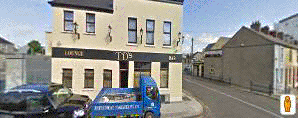

1.5. James McTiernan, ?1777--, born in the townland of Sheskin. Known as Seamie Halfpenny. Where exactly James connects into the McTiernan family is not known for sure but since he was born in the townland of Sheskin there has to be a connection. James was married to Anne McKernan and had the following two children.
1.5.1. Michael McTiernan,
1.5.2. James McTiernan, 1808--, born in Co Leitrim, Ireland. Married to Anne Carney. It is not clear as yet if Anne is related to the Carney family that married 5.4. Hugh McTiernan V, 1836--1909. James and Anne had the following two children.
1.5.2.1. Unknown McTiernan,
1.5.2.2. Patrick McTiernan, 1850--1933, born in the townland of Boggaun, Cloonlogher parish, Barony of Drumahaire, Co Leitrim. Married Ellen Travers, 1869--1958. They had the following children.
1.5.2.2.1. James McTiernan, --1928,
1.5.2.2.2. Anne McTiernan, --1977,
1.5.2.2.3. Mary Rose McTiernan, --1981,
1.5.2.2.4. Katey Ellen McTiernan, --1996,
1.5.2.2.5. John McTiernan, 1896--1988, born in the townland of Greaghnaglogh, Inishmagrath parish, Drumahaire, Co Leitrim. John married and had at least one daughter.
1.5.2.2.5.1. Unknown McTiernan, married a man by the name of Murphy. They had at least one son.
1.5.2.2.5.1.1. James Murphy, lives in upstate New Jersey as of 2001.
2. Peter McTernan, <1815--, one of Hugh McTernan III and Mary Dolan's five children. Peter married Anne McNiff on Monday, July 20, 1835. No additional information is known about Peter McTernan or his wife Anne McNiff. Anne McNiff may be related to Mary McNiff, the wife of Patrick McTernan, c.1783--1843, mentioned below. Peter McTernan and Anne McNiff may have had at least one son.
The below line of McTernans are real and did exist. They seem to originate in Co Sligo in the Geevagh Catholic parish area and have the surname Tiernan first and then later in time took the Mc, making the surname McTernan. The specific link to our McTernan line from Sheskin is not yet clear. The results of the DNA test state that there is no link between our families. Leo, Eoghan, Phyllis and Melanie McTiernan's [T3 DNA group] branch starts with 2.1.
Based on the DNA test recently done by 141 MacTighernans it appears that Leo McTiernan's family falls into a different genetic group than my McTernan family from Sheskin. See below chart for the DNA outline of the 19 distinct and geneticly separate septs. The Genetic and Geographic map of all know MacTighernans is at this web site: http://mctiernan.com/McTmaps.htm
|
MacTighernan
testers in 21 separate DNA Groups, each group in its own color
|
|||||||
|
#
|
Tester |
DNA Group |
Townland
of Origin
|
#
|
Tester
|
DNA Group |
Townland
of Origin
|
|
1
|
John (USA) |
T A |
Feenagh
|
2 |
Joe
|
T3 |
Greaghnaglogh
|
|
3
|
Tom
|
T |
Curry
|
4
|
Charles
|
T3 |
Knocks /
Glebe
|
|
5
|
Jim (CA)
|
T |
Derryvalannagaher
|
6
|
John C.
|
T3 A |
Corratawy
|
|
7
|
Mark
|
T |
Leonagh
|
8
|
Eoghan
|
T3 |
Tap, Co Leitrim / Ummeryoe, Co Sligo |
|
9
|
Scott (AU)
|
T A |
Derrinvoher
|
10
|
Leo
|
T3 |
Ummeryoe,
Co Sligo
|
|
11
|
Michael
|
T |
Sheskin
|
12
|
Jim (NJ)
|
T3 |
Tullycorka
|
| 13 |
Michael (CN) |
T |
TBD |
14
|
David (NJ)
|
T3 A |
TBD
|
| 15 |
Martin |
T |
Leonagh |
16 |
Scott (CO) |
T3 |
Ballinamore |
|
17
|
Douglas
|
T |
TBD
|
18 |
Ed (NJ) |
T3 C |
Tulcon |
| 19 |
Rory
|
T |
Sweetwood, Co Leitrim,
Mount Allen, Co Roscommon & Heapstown, Co Sligo |
20 |
Gus |
T3 B |
TBD |
| 21 |
Thomas
(CA) |
T |
Killinagh
parish Co Cavan |
22 |
Bernard Jr. | T2 | TBD |
| 23 |
Geoffrey |
T2 |
Co Sligo |
24 |
Michael (Eng) | T2 |
Corglancey |
| 25 |
Jim
(MA) |
T3 |
Tap, Co
Sligo |
26 |
Gene |
T | Greaghnafarna,
Killanummery parish / Drumahaire Town |
| 27 |
Adam |
T2 | Drumahaire
(T) |
28 |
Larry | T |
Drumahaire
(T) |
| 29 | Sgt Chris McTurnan | T C |
TBD |
30 |
John W |
T3 |
Kilcoosy |
| 31 |
David (CN) |
T |
TBD | 32 |
Jim (P) |
T2 |
Co Leitrim |
| 33 |
John (ST) |
T |
TBD |
34 | Paul |
T2 |
Co Leitrim |
| 35 | Max |
T2 |
TBD | 36 |
Michael (NJ) |
T |
Scotland |
| 37 |
Bob (CN) |
T |
TBD | 38 |
Tony |
T |
Tullynacross |
| 39 |
Adrian |
T A |
TBD | 40 |
John Frank | T D |
Gortermone,
Killarga |
| 41 |
Cathal |
T3 |
Cleenaghoo | 42 |
Jim III |
T3 |
Lavaur? |
| 43 |
Sean-sol |
T |
Doonkelly-5
mile bourne |
44 |
Sean | T3 D |
Gleneige, Glencar New Town Manor |
| 45 |
Eugene | T2 | Greaghnafarna Killanummery parish |
46 |
Sean-SF |
T3 | Cleenaghoo |
| 47 |
Kevin-mus |
T2 | Lisgavneen | 48 |
Richard |
T A |
Derrinvoher |
| 49 |
John-P |
T |
Moneenatieve | 50 |
John-Con |
T |
Corcusconny |
| 51 |
Mick |
T |
Caddagh Glebe | 52 |
Thady |
T3 D |
Moneyduff,
Conray, Mulkaun |
| 53 |
Philip |
T2 |
Co Leitrim |
54 |
Peter |
T3 E |
Drumshanbo
parish |
| 55 |
John-Rev |
T |
Beagh /
Killavoggy |
56 |
Jim-SGL |
T |
Drumahaire
(T) |
| 57 |
Greg |
T2 |
TBD |
58 |
Hugh-K
McKiernan |
T |
TBD |
| 59 |
Mike-UK |
T |
Beagh |
60 |
Jim-SP |
T2 |
TBD |
| 61 |
Dan-W |
T2 |
Drumshanbo Parish | 62 |
Gary* |
T3 |
Bellanagh, Co Cavan |
| 63 |
Barry |
T2 |
Drumahaire (T) | 64 |
Gerard |
T |
Killavoggy |
| 65 |
KevinM |
T2 |
Drumahaire (T) | 66 |
Kevin-CN |
T3 C |
Blacklion
/ Gubaveeny Co Cavan |
| 67 |
Paul-UK |
T3 |
Drumshanbo Parish | 68 |
Paul-NI |
T3 D |
Gleneigh |
| 69 |
Mike-Eng |
T2 |
Co Leitrim |
70 |
Mike-PA
& Ronnie |
T2 |
Bargowla |
| 71 |
Lary-CT |
T3 |
Co Leitrim |
72 |
JohnT |
RIP |
Drumshanbo
Parish |
| 73 |
Myles |
T E |
TBD |
74 |
Sinead |
? |
Killargue
parish |
| 75 |
Colin | T F |
Co Leitrim | 76 |
Edwin-RIP |
T3 |
TBD |
| 77 |
Stephen |
NA |
Manorhamilton
(T) |
78 |
Kevin-UK | ? |
Drumshanbo parish |
| 79 |
Joe-NY |
T 5 |
TBD |
80 |
Sam |
T |
Scotland |
| 81 |
Patsy |
T2 A |
Killanummery |
82 |
Cathal-NI |
T3 A |
Gortermone,
Killarga |
| 83 |
Noel |
T |
Doonkelly-5 Mile Bourne | 84 |
Jerry |
T2 |
Manorhamilton |
| 85 |
SeanM | T2 | TBD | 86 |
John-w |
? |
Drumahaire
(T) |
| 87 |
Warren |
T4 |
TBD |
88 |
Nigel |
T2 A |
Killanummery |
| 89 |
JohnL | T3 D |
Moneyduff, Conray, Mulkaun | 90 |
Pat Joe |
T |
Morerah |
| 91 |
SeanJ |
T2 |
Bargowla | 92 |
JohnV |
T3 A |
Co Sligo ? |
| 93 |
JoeT |
T3 C |
Strokestown,
Co Roscommon |
94 |
Terry |
T |
TBD |
| 95 |
Michael-S |
T2 |
Scardan | 96 |
John-EN |
T3 A |
Drumahaire
(T) |
| 97 |
Paul-C |
T3 A |
Gortnacorkoge |
98 |
Martin-Red |
T |
Friarstown |
| 99 |
100 |
Brandon |
T2 |
Manorhamilton |
|||
| 101 |
Tim |
T2 |
TBD |
102 |
KevinE |
T |
Co Sligo
> Boley Hill, Co Leitrim > Manorhamilton, Co Leitrim |
| 103 |
Bill Tiernan |
T |
Co Leitrim |
104 |
Josh
Patton |
T |
TBD |
| 105 |
LeoJ |
T |
Co Leitrim |
106 |
Ted |
NA |
TBD |
| 107 |
Robert |
T 3 |
Riverstown,
Co Sligo |
108 |
Roy Rice |
T2 |
Ballinamore |
| 109 |
Matt |
T2 |
Co Leitrim |
110 |
Ray |
T |
Greaghnafarna Killanummery parish |
| 111 |
PeterS |
T 3 |
Drumkeeran |
112 |
MartinJ |
T |
Killanummery |
| 113 |
Rey |
T |
Sweetwood,
Co Leitrim, Mount Allen, Co Roscommon & Heapstown, Co Sligo |
114 |
JimT |
T2 |
Co
Roscommon |
| 115 |
Jason |
T 3 |
Tap, Co Leitrim /
Ummeryoe, Co Sligo |
116 |
Dave |
see Sam, cousin # 80 |
Co Sligo |
| 117 |
DaveS |
T 6 |
TBD |
118 |
MattT |
T |
TBD |
| 119 |
Neil |
T |
Co Leitrim |
120 |
Hugh |
T |
Co
Cork? |
| 121 |
Michael-MH |
T 3 C |
Mohill |
122 |
Michael-PA* |
T3 |
Ballinlough, Co Cavan |
| 123 |
JohnN |
T 2 |
Scotland
/ Drumahaire |
124 |
MichaelS |
T |
Greennock,
Scotland |
| 125 |
David-CA |
T 3 |
Co Sligo |
126 |
James |
T A |
Co. Mayo |
| 127 |
Alan |
T 2 |
TBD |
128 |
Raymond |
T3 A |
Larkfield,
Co Leitrim |
| 129 |
Donald |
T 7 |
India
> St
Ann's parish, Jamica |
130 |
Bernie Joe |
T2 |
Blasthill
/ Ardvarney |
| 131 |
Paul-Aus |
T |
Deer Park |
132 |
SeanP |
TBR |
Killargue
parish, Co Leitrim |
| 133 |
Brian |
T2 |
TBD |
134 |
Patrick |
T |
TBD |
| 135 |
MartinNI |
T3 A |
Lurganboy |
136 |
Declan |
T |
Manorhamilton
/ Keshcarrighan |
| 137 |
Nicholas |
T 3 |
Co Leitrim |
138 |
Paul-Eng |
T |
TBD |
| 139 |
Victor | T
2 |
TBD |
140 |
Seamus
Tiernan |
T |
TBD |
| 141 |
Mike-SA |
T |
Co
Roscommon |
142 |
Bill Tierney | T3 | TBD |
| 143 |
JohnB |
TBR |
TBD |
144 |
Mick-A McTiernan | T G |
Co Leitrim |
| 145 |
Mike-LA |
transferd
|
TBD |
146 |
Brandan | T2 | Drumlease |
| 147 |
Allan Mitchell |
TBR |
TBD |
148 |
Nick |
T |
Leonagh |
| 149 |
MickQ |
T3 A |
TBD |
150 |
DanM |
T2 |
Co
Sligo |
| 151 |
Adrain |
T |
Manorhamilton |
152 |
Gearoid
|
T |
Flaughanagh |
| 153 |
Gerry |
T L |
Glenerge |
154 |
Allen |
T |
Co Leitrim North |
* = related. Item 41 and 46 are from the same townland.
2.1. Thomas Tiernan, c. 1805--, ran a publican and blacksmith shop in the Catholic parish of Geevagh, civil parish of Killadoon, Barony of Tirerril, Co Sligo. Based on John C. McTernan's book, "In Sligo Long Ago", page 116, "In February 1825, "An occurrence, marked by a daring spirit of turbulence and, we fear, tragic results, took place at Geevagh last week. A party of Revenue Police proceeded to that neighborhood and after destroying a quantity of pot-ale, made their way to Heapstown where they had reason to suppose they would find a large concealment of malt etc. They had not proceeded far when they perceived a mob of several hundred persons approaching in different directions, sounding horns, etc. and armed with pitch forks, loys and stones. All efforts to induce them to disperse quietly having failed and with the situation every minute becoming more perilous, the fatal signal was given and a volley discharged which resulted in their immediate retreat.. . It is stated that one man was killed and two wounded." This is one link between Heapstown and Geevagh.
2.2. Unknown Tiernan, c. 1800--, his first name was most likely Terrence and had most likely four children.
The name of Terrence's wife was Catherine Lane. They were married in 1858 in Quincy, MA. This family appears to have owned land in the townlands of Carrowmore, Carrowdargny, Tap and Rannatruffaun in the parish of Killadoon, Co Sligo.
2.2.1. James J. McTiernan Sr., c 1835--11-21-1911, from the townland of Carrowmore, Catholic parish of Geevagh, civil parish of Shancough, Barony of Tirerrill, PLU of Boyle, Co Sligo. There is some evidence that he might be from the townland of Carrowmore, Catholic and civil parish of Ardcarne, Barony and PLU of Boyle, Co. Roscommon. More research on this slight possibility is being done. One of two known children of the 2.2. Unknown Tiernan. James married Bridget Rogers, 1840--9-20-1890. This is the Heapstown Line of Sir Edward McTiernan of Australia and Leo McTiernan of Boston, MA, USA. The Sligo area map. They were married 12-14-1857 in the townland of Cootehall, in the Catholic parishes of Ardcarne and Killucan and the civil parish of Tumna, Barony and PLU of Boyle, Co Roscommon. Cootehall is about 4 or 5 miles from Mountallen, Co Roscommon. Bridget's parents were William Rogers and Mary Moran. The name of Mary Rogers, nee Moran was spelled Rodgers on her death certificate in 1890. The name on the marriage license was spelled Tiernan, without the "Mc". It may be that there is no direct relationship between this Tiernan family line from Cootehall and mine from Sheskin. James added the Mc to the name as did his children in both America and Australia later in life. James and his wife, Bridget are buried in the Holy Cross Cemetery in Malden, MA.
Below are the siblings of Bridget McTiernan, nee Rogers the wife of 2.2.1. James McTiernan Sr.
 James J. McTernan Sr. was a
Stewart or Baliff on the estate of Captain
Hugh McTernan, 1837--1911, of Heapstown,
Co. Sligo and Mount Allen, Co. Roscommon until he resigned
in 1886. It is not known if James and Captain Hugh McTernan were
related but letters from both
published in the Sligo Champion in 1887 in a dispute make it
sound like they were not.
James J. McTernan Sr. was a
Stewart or Baliff on the estate of Captain
Hugh McTernan, 1837--1911, of Heapstown,
Co. Sligo and Mount Allen, Co. Roscommon until he resigned
in 1886. It is not known if James and Captain Hugh McTernan were
related but letters from both
published in the Sligo Champion in 1887 in a dispute make it
sound like they were not.
In 1881, Captain Hugh McTernan offered a rent reduction of 33% to his tenants and due to it being one of the lowest offered was refused.
In the 1860's Captain McTernan carried out a mining trial in one of his land holdings by the name of Clerhanmore in Ballinaglera Catholic parish. The coal was of poor quality and when peat production increased this mine was closed.
Captain McTernan [Photo], 1837--1911, who won the Kilmactraney division elections c. 1898 was described by the Sligo Champion as a "castle hack". The Sligo Champion was described as a leading source of mischief in Sligo and surrounding Counties. Later on P. A. McHugh, the publisher of The Sligo Champion Newspaper was found bankrupt and the court took possession of his home and office. This was serious as it prevented him from sitting in the House of Commons. During this time his manager 1.4.6. Bernard McTernan published the newspaper for several months under the new title, The Sligo Nationalist . 3.1.4.4. John C. McTernan, a contemporary historical arthur is the son of 3.1.4. Matt McTernan, 1891--. Matt in his early days was a newspaper man working with 1.4.6. Bernard McTernan who was from Sheskin.
Captain McTernan and James McTiernan's letters published in the Sligo Champion in 1887.
The 2.2.1. James J. [Mc]Ternan Sr., c 1835--11-21-1911, family immigrated to Boston, MA on the ship SS Pavonia on 8-21-1887 and settled there. One son, 2.1.1. Patrick left Ireland directly for New South Wales in Australia. The reason that Patrick went to Australia and not to America like the rest of his family was his girlfriend, Isabella Diamond whom he later married in Australia. The Diamond family was quite famous. James J. McTiernan Sr., c. 1835--1911, married Bridget Rogers, 1840--9-20-1890, on 12-14-1857, in Ireland. They had at least eleven children.
2.2.1.1. Mary Tiernan, 11-14-1859--, the first child of James McTiernan and Bridget Rogers born in Cootehall, parish of Ardcarne and Tumna, Co Roscommon. Her baptismal sponsors were Patrick Rogers [perhaps great grand uncle] and Winfred Tiernan [perhaps great grand aunt].
2.2.1.2. Patrick McTernan, 9-6-1861--2-6-1941, the second child of James McTiernan and Bridget Rogers born in Heapstown, Parish of Tawnagh, Barony of Tirerrill, Co. Sligo and christened in the RC parish of Tawnagh, Co Sligo. Joined the RIC in 1879 and resigned in 1887 to immigrated to NSW, Australia from Ireland and married Isabella (Mabel) Diamond, 2-28-1870--1945, at Tenterfield, NSW in 1888. Patrick died at Petersham, NSW and Isabella died at Burwood, NSW. Mabel was born in Belfast but was most likely from the PLU of Ballymena, Co. Antrim and arrived in NSW sometime before Patrick. Patrick reached the level of Lieutenant [Sargent] in the Australian Police Force. He lived in Armidale, N.S.W. in 1887. Patrick was 5' 11.5" and appointed a RIC man [45083] on 12-12-1879 for Co Tipperary and then Co Leitrim at the Bourne Police barracks. Patrick resigned on 6-6-1887 to emigrate.
Isabella (Mabel) Diamond's parents were Hugh Diamond and Elizabeth Kirkpatrick. Her siblings were Mary Diamond, 4-7-1866--, born Co. Antrim and Edward Diamond, 7-21-1868--, born in the Poor Law Union of Ballymena, Co. Antrim, Ireland. Most likely the whole family is from the Poor Law Union of Ballymena, Co. Antrim area.
Patrick and his wife Isabella had three children. They were,
2.2.1.2.1. James J. McTernan, 1891--6-2-1958, the first child of Patrick and Isabella born in Glen Innes, NSW, Australia and married Una Minnie Dorncy, --10-12-1964, in 1922 at St. Leonards (suburb of Sydney). Una Minnie Dorncy died in Roseville, NSW, Aus.
2.2.1.2.2. Sir Edward Aloysius McTiernan, 2-16-1892--1-9-1990, the second child of Patrick and Isabella born on Tuesday in Hillgrove, N.S.W., Australia. Sir Edward served as one of Australia's High Court Justices appointed by the Scullin Labor Government in 1930, for which he was Knighted. He is the longest serving Justice on the High Court in the history of Australia. On 12-27-1948, Sir Edward married Kathleen Lloyd, --<3-1997, daughter of Sidney and Ann Lloyd of Melbourne, NSW, Australia on 12-27-1948.
The family visited their Boston uncles and aunts in the 1928 and again in the 1950s. Sir Edward McTiernan and his wife lived on a 3000 sq meter estate at Breffni, Chilton Parade, 2074 Wurrawee, NSW, Australia. At Kathleen's death her 1.3 million pound house went up for auction.
2.2.1.2.3. John Patrick S. McTiernan, 1894--3-6-1927, the third child of Patrick and Isabella born in Australia. John married Dorothy Rose Florence Watson, 1892--3-3-1969, in 1918 at Goulburn. John died in Petershiem and Dorothy died at Strathfield. They had two children.
2.2.1.2.3.1. John Patrick McTiernan, 1920--1-27-1920, died as an infant.
2.2.1.2.3.2. Mary Lloyd, nee McTiernan, 1921--, born in NSW. At about the age of seven after her father died, Mary went to live with her grandparents and was very close to them. Her grandfather used to walk her to school. Later Mary moved to Sydney to go to Catholic Boarding School. Mary married Tom Lloyd, --1992, on May 4, 1958. Tom was the brother of Lady Kathleen McTiernan, nee Lloyd, Sir Edward McTiernan's wife. Tom Lloyd retired from the National Service and became a well to do sheep farmer. Mary lives in Nyngan, NSW about 400 miles NW of Sydney in the Outback. Mary and Tom had two daughters. They are,
2.2.1.2.3.2.1. Anne O'Donovan, nee Lloyd, married Tom O'Donovan lives in Queensland and has six children. They are,
2.2.1.2.3.2.1.1. Unknown O'Donovan, born in Queensland, Aus.
2.2.1.2.3.2.1.2. Unknown O'Donovan, born in Queensland, Aus.
2.2.1.2.3.2.1.3. Unknown O'Donovan, born in Queensland, Aus.
2.2.1.2.3.2.1.4. Unknown O'Donovan, born in Queensland, Aus.
2.2.1.2.3.2.1.5. Unknown O'Donovan, born in Queensland, Aus.
2.2.1.2.3.2.1.6. Unknown O'Donovan, born in Queensland, Aus.
2.2.1.2.3.2.2. Margaret Lloyd, married and lives in Germany with her family. They have one daughter.
2.2.1.2.3.2.2.1. Unknown, 2001--, born in Germany
2.2.1.3. Catherine McTiernan, 10-30-1864--, the third child of James McTiernan and Bridget Rogers, born most likely in Heapstown and christened in the parish of Tawnagh, Barony of Tirerrill, Co Sligo, Ireland. Catherine was not listed on the boat that the rest of the family came over on so she may in fact have stayed in Ireland.
2.2.1.4. Thomas McTiernan, 10-23-1866--1866, the fourth child of James McTiernan and Bridget Rogers, died at a young age.
 2.2.1.5. Thomas McTiernan,
10-23-1866--4-22-1946, the fifth child of James McTiernan and Bridget
Rogers, born in
Heapstown, christened in the RC Parish of Tawnagh, Barony of Tirerrill,
Co. Sligo, immigrated to Boston, MA on 5-29-1886 on the SS Cephalonia.
Thomas, as a policeman was one of Boston's finest. He was appointed to
the Boston Police Reserves on 7-21-1896, and then made Patrolman
on 7-30-1896, assigned to Division 15. Thomas received several
citations/awards throughout the years as a policeman. Most awards given
were for arresting deserters from the army which was fairly lucrative
at $20 to $33.33
each. Apparently, in those days (pre-strike - 1919) there was no
guaranteed paid time-off. "They" voted on whether or not you should
receive full/part/none of your pay. They also recorded any time away
from the job, e.g. sickness/death/personal/etc.
2.2.1.5. Thomas McTiernan,
10-23-1866--4-22-1946, the fifth child of James McTiernan and Bridget
Rogers, born in
Heapstown, christened in the RC Parish of Tawnagh, Barony of Tirerrill,
Co. Sligo, immigrated to Boston, MA on 5-29-1886 on the SS Cephalonia.
Thomas, as a policeman was one of Boston's finest. He was appointed to
the Boston Police Reserves on 7-21-1896, and then made Patrolman
on 7-30-1896, assigned to Division 15. Thomas received several
citations/awards throughout the years as a policeman. Most awards given
were for arresting deserters from the army which was fairly lucrative
at $20 to $33.33
each. Apparently, in those days (pre-strike - 1919) there was no
guaranteed paid time-off. "They" voted on whether or not you should
receive full/part/none of your pay. They also recorded any time away
from the job, e.g. sickness/death/personal/etc.
Thomas received "no pay" for 10 hrs of "personal time" in 1897. 2.2.1.8.5.5. Leo McTiernan believes that was about the same time that he served as a witness/sponsor for two of his younger brothers as they became naturalized US citizens. Thomas received several days off (with full pay) to attend a funeral (1911), most likely James (Mc)Tiernan who passed away in 1911. Thomas was sick for 3 days in 1912 and received all 3 days with "Full Pay" which totaled $11.50.
Thomas married Helen V. Sherin, 6-28-1899--, who was born in Hopkinton, MA. Helen's parents were Thomas Sherin and Johanna Burke, both born in Ireland. Helen was a 25 year old school teacher living in Hopkington, a suburb of Boston when she apparently died in child birth or soon thereafter of septic peritonitis in 1901. Thomas and Helen had one child, a daughter,
2.2.1.5.1. Helen V. McTiernan, 1-24-1901--11-1971, Thomas McTiernan and Helen Sherin's only child, born in the family's house at 25 Union St in Charlestown, MA. Helen died in Rutherford, NJ in November of 1971.
 Thomas asked for and
got two weeks off to get married in 1907 with
"Full Pay" to Margaret [ Nellie or Marge ] Nary; photo at left. Nellie
seems to have had
several nicknames, one of which was "Nellie-with-her-hat-on" as she was
reported
to be always ready to go anywhere. Nellie Nary had relatives on her
side
of the family that linked to the Clan Campbell and also to the Clan
Ross. The 1920 census list the family as living on Green St. in Boston.
Thomas
and Nellie are buried in the Holy Cross Cemetery in Malden, MA. They
had
three children. They are,
Thomas asked for and
got two weeks off to get married in 1907 with
"Full Pay" to Margaret [ Nellie or Marge ] Nary; photo at left. Nellie
seems to have had
several nicknames, one of which was "Nellie-with-her-hat-on" as she was
reported
to be always ready to go anywhere. Nellie Nary had relatives on her
side
of the family that linked to the Clan Campbell and also to the Clan
Ross. The 1920 census list the family as living on Green St. in Boston.
Thomas
and Nellie are buried in the Holy Cross Cemetery in Malden, MA. They
had
three children. They are,
2.2.1.5.2. Mary Buckley, nee McTiernan, Thomas McTiernan's second child but his first child by Margaret Nary. Mary married a man by the name of Buckley but had no children. Mary was Director of Reading Programs for the Lexington, MA School System for absolute ages (1950's--1960's) - and she did extended and extensive grad/post-grad work in Japan during the 1960's on same.
 2.2.1.5.3. Thomas
Joseph McTiernan, 5-25-1911--4-1977,
born in Charlestown, MA, photo on left. Thomas McTiernan's third child
but his second
child by Margaret Nary married Virginia Margaret Dalton, --1989, of
Arlington Heights, MA. After graduating from Boston College, Thomas
Joseph McTiernan served as a career U.S. Navy officer (Line, ordnance).
His WW II service in the South Pacific and other locations was
meritoriously decorated. Among many distinguished and high-profile
assignments, he frequently represented the United States to NATO on
ordnance issues during the 1950's.
2.2.1.5.3. Thomas
Joseph McTiernan, 5-25-1911--4-1977,
born in Charlestown, MA, photo on left. Thomas McTiernan's third child
but his second
child by Margaret Nary married Virginia Margaret Dalton, --1989, of
Arlington Heights, MA. After graduating from Boston College, Thomas
Joseph McTiernan served as a career U.S. Navy officer (Line, ordnance).
His WW II service in the South Pacific and other locations was
meritoriously decorated. Among many distinguished and high-profile
assignments, he frequently represented the United States to NATO on
ordnance issues during the 1950's.
Tom's final Tour of Duty, which brought him home to Massachusetts after eighteen years living in Northern Virginia, was the DoN Bureau of Ordnance Representative to General Electric's Pittsfield, MA operations. Upon retirement from the U.S. Navy, he served the Archdiocese of Boston for several years until ill health overtook him. Thomas and Ginny retired to York Harbor, ME in 1966. Tom died in April 1977.
In 1940, Thomas married Virginia Margaret Dalton, --1989, of Arlington Heights, MA. She was the youngest of nine children of James Dalton and Margaret Meany. Margaret Meany's family was from Co Limmerick. James Dalton was previously from Newton, MA and was a manager of United Fruit's operations.
Thomas Joseph McTiernan and his wife, Ginny Dalton had a daughter.
2.2.1.5.3.1. Phyllis McTiernan, 11-16-1948--, as her dad's work involved periodic sea duty with regular rotations at the Pentagon and "Main Navy" (as the Department of the Navy's headquarters were then called), Phyllis grew up in the Northern VA suburbs.
 2.2.1.5.4. Ellen
Lee, nee McTiernan, 10-16-1914--10-2-1996, born in Charlestown,
MA, the fourth child of
Thomas McTiernan and the third by Margaret Nary. Ellen married Robert
B. Lee, 3-20-1911--1-29-1994, born and died in Boston, MA. [photo on
left] Ellen
McTiernan and Robert
B. Lee had seven children.
2.2.1.5.4. Ellen
Lee, nee McTiernan, 10-16-1914--10-2-1996, born in Charlestown,
MA, the fourth child of
Thomas McTiernan and the third by Margaret Nary. Ellen married Robert
B. Lee, 3-20-1911--1-29-1994, born and died in Boston, MA. [photo on
left] Ellen
McTiernan and Robert
B. Lee had seven children.
2.2.1.5.4.2.
Carolyn Babin, nee Lee, 1943--, the second of seven children of
Ellen McTiernan and Robert
B. Lee born in
Boston, MA. On 9-8-1963, Carolyn Lee
married James E. Babin, <--2020. Carolyn Lee and James E.
Babin had one child.

2.2.1.5.4.6.
David Lee, the sixth of seven children of Ellen McTiernan and
Robert
B. Lee born in Boston, MA David Lee married a woman by the
name of Grzybinski, given name Unknown. David Lee and Unknown
Grzybinski had two children.
2.2.1.5.4.7. Diane Murphy, nee Lee, the seven of
seven children of Ellen McTiernan and Robert
B. Lee born in Boston, MA Diane Lee married a man named
Murphy and had one child.
2.2.1.6. Bridget McTiernan, c. 1869--2-16-1962, the sixth child of James McTiernan and Bridget Rogers, born in Heapstown, Co. Sligo, immigrated to Boston, MA on 8-21-1886 on the SS Pavonia. Bridget was a Practical Nurse and visited her brother, Patrick in Australia from November 20, 1928 until February 9, 1929 staying at James McTiernan's house in Santa Rosa-Hollywood Crescent. Bridget who never married was referred to as Bessie.
2.2.1.7. Honora E. Foley, nee McTiernan, 10-13-1872--, the seventh child of James McTiernan and Bridget Rogers, born in Heapstown, christened in the RC Parish of Tawnagh, Barony of Tirerrill, Co. Sligo, immigrated to Boston, MA on 8-21-1886 on the SS Pavonia. Honora, known as Annie married Timothy J. Foley on 1-8-1897 and both may have lived in Washington, DC for some part of their life. Honora is buried in St. Joseph's Cemetery in West Roxbury, MA. They had three children. They are,
2.2.1.7.1. Anne E. Foley, 1903--6-20-1973, buried in St. Joseph's Cemetery in West Roxbury, MA.
2.2.1.7.2. George Foley, 1904--10-2-1918, may have died from the widespread flu during the Great War era. Buried in St. Joseph's Cemetery in West Roxbury, MA.
2.2.1.7.3. Timothy J. Foley, 1926--1-8-1931, buried in St. Joseph's Cemetery in West Roxbury, MA.
Photo of Katherine, Honor and Marion.
2.2.1.8. Michael
J. McTiernan, 1-1875--, the
eighth child of James McTiernan and
Bridget Rogers, born in Heapstown, Co. Sligo, immigrated to Boston, MA
arriving on the ship SS Pavonia on 8-21-1886. Michael worked for the
Boston Schools as a Truant Officer and was a cousin to Frederick W.
Mansfield, 1877--1958, who was a famous Mayor of Boston (1934-1938).
Mayor Mansfield was referred to by Himself, James Michael Curley "as
spectacular as a four-day-old codfish and as colorful as a lump of
mud". Michael J. McTiernan married Katherine E. Morrissey in 1904 in
the Boston, MA area. They are buried in St. Joseph's Cemetery in West
Roxbury, MA. They had five children.
the
eighth child of James McTiernan and
Bridget Rogers, born in Heapstown, Co. Sligo, immigrated to Boston, MA
arriving on the ship SS Pavonia on 8-21-1886. Michael worked for the
Boston Schools as a Truant Officer and was a cousin to Frederick W.
Mansfield, 1877--1958, who was a famous Mayor of Boston (1934-1938).
Mayor Mansfield was referred to by Himself, James Michael Curley "as
spectacular as a four-day-old codfish and as colorful as a lump of
mud". Michael J. McTiernan married Katherine E. Morrissey in 1904 in
the Boston, MA area. They are buried in St. Joseph's Cemetery in West
Roxbury, MA. They had five children.
 Boston McTiernan family photo taken about
1943, front row, L to R: Phillip McTiernan, Joseph McTiernan, Anne
McTiernan, nee Burbank and Kathleen Burbank. Back row, L to R: Edward
McTiernan and Charles McTiernan.
Boston McTiernan family photo taken about
1943, front row, L to R: Phillip McTiernan, Joseph McTiernan, Anne
McTiernan, nee Burbank and Kathleen Burbank. Back row, L to R: Edward
McTiernan and Charles McTiernan.
2.2.1.8.1. Charles F. McTiernan, 8-12-1906--4-2-1959, the first child of Michael J. McTiernan and Katherine E. Morrissey. Married Irene M. McKeogh on 11-30-1933. Charles was a Postal Worker. They had two children. They are,
2.2.1.8.1.1. Maureen McTiernan, 5-5-1940--,
2.2.1.8.1.2. Marilyn McTiernan, 4-19-1945--,
2.2.1.8.2. Katherine Duffy, nee McTiernan, 1910--1983, a school teacher known as Kay, the second child of Michael J. McTiernan and Katherine E. Morrissey married Lawrence Duffy in 1945 and had two children.
2.2.1.8.2.1. Anne Marie Duffy, 1-18-1948--,
2.2.1.8.2.2. John Lawrence Duffy, 10-2-1950--, may be living in Philadelphia, PA area.
2.2.1.8.3. Marion Louise Ganzel, nee McTiernan, 1914--1993, the third child of Michael J. McTiernan and Katherine E. Morrissey born in Boston, MA. Marion married Frank W. Ostromecki on 6-11-1944 and had one child, Mary Anne. After Marion's annullement, she married John Cameron Ganzel around 1958. Marion worked as a school teacher. John Ganzel adopted Marion's daughter, Mary Ann when she was about 16 or 17. Marion Louise's and John Ganzel had three children.
2.2.1.8.3.1. Marianne Keddy, nee Ganzel, 1945--c. 1994, married Alan Keddy and had three children. Died in Flordia.
2.2.1.8.3.1.1. Wayne Keddy,
2.2.1.8.3.1.2. Leah Keddy,
2.2.1.8.3.1.3. Michael Keddy,
2.2.1.8.4. Phillip R. McTiernan,1917--1975, born in Boston, MA the fourth child of Michael J. McTiernan and Katherine E. Morrissey. Phillip married Eleanor Schworer in 1946 who was a school teacher in the Boston Schools. They had three children. They are,
2.2.1.8.4.1. Linda Marie Francis, nee McTiernan, 1948--, married Philip Francis.
2.2.1.8.4.2. Janet Anne McTiernan, 1952--,
2.2.1.8.4.3. Susan Ellen McTiernan, 1953--,
2.2.1.8.5. Joseph Edward McTiernan, 1920--11-1995, the fifth child of Michael J. McTiernan and Katherine E. Morrissey. Joseph was a Guidance Counselor in the Boston Schools. In 1943, Joseph Edward McTiernan married Anne L. Burbank, --7-29-2005. Anne also had a brother by the name of Edward and a sister by the name of Kathleen. Joseph and Anne had five children, they are,
2.2.1.8.5.1. Kevin Joseph McTiernan, 1944--1959, the first child of Joseph Edward McTiernan and Anne L. Burbank.
2.2.1.8.5.2. Judith Anne McTiernan, 1948--, the second child of Joseph Edward McTiernan and Anne L. Burbank.
2.2.1.8.5.3. Joan Catherine Lebeter, nee McTiernan, 1949--, the third child of Joseph Edward McTiernan and Anne L. Burbank. Joan married Richard D. Lebeter in 1969 and had three children. They are,
2.2.1.8.5.3.1.
Christine Lynn Schlegel, nee Lebeter, 1970--,
married Curtis Schlegel and have two children.
2.2.1.8.5.3.1.1.
Kyle Donald Schlegel, 1996--,
2.2.1.8.5.3.1.2.
Craig Ryan Schlegel, 1998--,
2.2.1.8.5.3.2.
Kevin D. Lebeter, 1972--, married Gail Reese
and have the following three children.
2.2.1.8.5.3.2.1.
Dean Joseph Lebeter, 1996--,
2.2.1.8.5.3.2.2.
Jack Travis Lebeter, 1999--,
2.2.1.8.5.3.2.3.
Luke Edward Lebeter, 2003--,
2.2.1.8.5.3.3.
Brian Joseph Lebeter, 1975--, married Jamie Conley in 2000 and have
adopted three childre.
2.2.1.8.5.3.3.1.
Brandon Lee Lebeter, 1993--, the first of three children of Brian
Joseph Lebeter and Jamie Conley born in the Boston area.
2.2.1.8.5.3.3.2. Mystery
Eileen Lebeter, 1998--, the second of three children of
Brian Joseph Lebeter and Jamie Conley born in the Boston area.
2.2.1.8.5.3.3.3. Jacob Reilly Lebeter, 1999--, the third of three children of Brian Joseph Lebeter and Jamie Conley born in the Boston area.
2.2.1.8.5.4. Paul Joseph McTiernan, 1951--, the fourth child of Joseph Edward McTiernan and Anne L. Burbank. Paul married Judith Goldstein in 1981 and they have two children. They are,
2.2.1.8.5.4.1. Elizabeth McTiernan, 1985--,
2.2.1.8.5.4.2. David McTiernan, 1989--,

2.2.1.8.5.5. Leo
Vincent McTiernan, 7-24-1953--8-23-2011, the fifth child
of
Joseph Edward McTiernan and Anne L. Burbank, RIP. Leo and 5.4.2.3.1.
Michael
McTiernan met in NYC and then marched up 5th Ave. on St. Patrick's Day
in
2000.
Photo at left, taken c
2012, are all the local Irish MacTighernans and those from Amrica that
attended Leo's funeral services. His ashes were scattered over
the
foundation of his grandparents home in Co Sligo.. Leo was a good
friend. RIP
2.2.1.9. James J. McTiernan Jr., 4-12-1877--6-23-1948, the ninth child of James McTiernan and Bridget Rogers, born in Heapstown, Aghanagh (Diocese is Elpin not Ardagh / Aghanagh), Co. Sligo, immigrated to Boston, MA on 8-21-1886 on the SS Pavonia. James was a Boston Fireman, married Mary Griffin and had four children. They are,
2.2.1.9.1. Alice McTiernan, 1907--, James J. McTiernan Jr. and Mary Griffin's first child.
2.2.1.9.2. Joseph A. McTiernan, 10-25-1911--3-7-1981, James J. McTiernan Jr. and Mary Griffin's second child. Joseph was known as JA. JA married Ruth Daly and had a son.
2.2.1.9.2.1. Joseph Warren McTiernan, 1942--1984, married and had two children.
2.2.1.9.2.1.1. James McTiernan, 1973--, born in Boston, MA and known as Jimmy.
2.2.1.9.2.1.2. Melanie McTiernan, 1974--, born in Boston, MA
2.2.1.9.3. Rita Urban, nee McTiernan, 10-25-1911--, James J. McTiernan Jr. and Mary Griffin's third child. Rita married a man by the name of Urban and had two children. They are,
2.2.1.9.3.1. Ann Urban, 1951--,
2.2.1.9.3.2. Claire Urban, 1951--,
2.2.1.9.4. James McTiernan, 1912--, James J. McTiernan Jr. and Mary Griffin's fourth child.
2.2.1.10. John
[Francis] Patrick McTiernan, 3-19-1879--3-31-1921, the
tenth child of James McTiernan and Bridget Rogers, born in Heapstown,
Aghanagh, Co. Sligo, immigrated to Boston, MA on 8-21-1886 on the SS
Pavonia. (Diocese is Elpin not Ardagh / Aghanagh). He was a
Customs Inspector in Boston
and died from Diabetes. On 6-5-1907, John McTiernan married Mary
Loretta Gertrude Sullivan, 6-17-1888--9-9-1968, born in Somerville, MA
and had one child.
2.2.1.11. Edward Joseph McTiernan, 4-8-1884--6-22-1950, the eleventh child of James McTiernan and Bridget Rogers, born in Heapstown, Aghanagh (Diocese is Elpin not Ardagh / Aghanagh), Co. Sligo, immigrated to Boston, MA on 8-21-1886 on the SS Pavonia. Edward never married.
2.2.2. Catherine McManamy, nee Tiernan, one of the three children of the 2.2. Unknown [Terrance?] Tiernan. Catherine married Kelly McManamy in the parish of Geevagh, Co Sligo on 1-23-1860. They had three children. Their two daughters lived with their uncle, 2.2.1. James McTiernan in Boston at the end of the 1800s. A Hugh McVanamna, 10-19-1861--, was born in Killanny, Co Sligo. His father was Michael McVanamna and his mother was Catherine Tiernan. Catherine McTiernan and Kelly McManamy's children were.
2.2.2.1. Patrick McManamy, 12-28-1864--, born in Ballyfarnon, Co Sligo. The birth record states that he was born in the townland of Killanny, Geevagh parish, Co Sligo.
2.2.2.2. Kate Gillooly, nee McManamy, c. 1869--, married James J. Gillooly who was a cook from NYC on April 18, 1902. Kate and her sister were living in Boston with the family of 2.2.1. James McTiernan in 1900.
2.2.2.3. Lizzie McManamy, 1882--, Lizzie and her sister were living in Boston with the family of 2.2.1. James McTiernan in 1900.
2.2.2.4. Honora McManamy, 11-16-1862--, born in the townland of Killamy, parish of Geevagh, Co Sligo.
2.2.3. Winfred
Tiernan, born in Ireland and the 3rd
probable
child of 2.2. Unknown [Terrance?] Tiernan.
2.2.4. Michael McTiernan, 10-28-1836--,
born in Ireland and the 4th
probable
child of 2.2. Unknown [Terrance?] Tiernan. Earnest
persistent labor constituted the foundation upon which Michael
McTiernan built the success that now enables him to live retired. He is
in possession of a comfortable competence, as a result of his former
labor and is pleasantly located in an attractive home in Victoria. He
was born in county Sligo, Ireland, on the 28th of October, 1836, and is
a son of Terrance and Anne McTiernan, who were farming people. He was
educated in the parish schools which he left to assist his father on
the farm, being thus engaged until he reached mature years, when he
left home and came direct to Victoria, arriving on the 3d of June,
1865. The journey was made by way of the isthmus of Panama and San
Francisco. After reaching his destination he began farming and spent
some time clearing land. In 1867 he went to the Cariboo where he
engaged in prospecting for two years, after which he was in the employ
of the Hudson's Bay Company for nine years at Victoria. He severed his
connection therewith, to engage in the draying business in which he
continued for twenty-six years, doing most of the draying for the
Hudson's Bay Company. He is ane of the few survivors among the early
pioneer representatives of business life in Victoria. He retired some
years ago and because of his former unfaltering industry and his
careful investments is now able to live in ease in his old age.
On the 2Oth of August,
1883, Mr. McTiernan was married to Miss Ann Behan, a daughter of John
and Ann Behan, who came from Ireland in 1854 and settled in Bytown, now
Ottawa. Mrs. McTiernan first came west to Victoria with Lord Lome and
the Princess Louise, as a maid. Here she met her future husband and
some time later the wedding was celebrated. Their religious faith is
that of, the Roman Catholic church and Mr. McTiernan also belongs to
the Ancient Order of Hibernians, while his political support is given
to the Conservative party. In the early days of his residence in
Victoria he worked for a short time in the office of the Colonist but
with that exception was always identified with the Hudson's Bay Company
or with the draying business, and indefatigable energy, and persistency
of purpose at length brought to him a creditable and gratifying measure
of success. For almost a half century he has made his home in British
Columbia and therefore well deserves mention among its pioneers.
3. Patrick McTernan, c.1783--1-18-1843, one of Hugh McTernan III and Mary Dolan's five children died on Wednesday, January 18, 1843, in Killerry, Co. Sligo. Most likely, Patrick McTernan, son of Hugh McTernan III and Mary Dolan, was born in Sheskin c.1783. The exact date of birth and place of birth is unknown. The name of Patrick's wife was Mary McNiff. They would have been married c.1835. Mary McNiff was born sometime before 1817, and died sometime after 1837.
Mary McNiff's exact place and date of birth is unknown. Patrick McTernan and his wife, Mary McNiff, may have had the following nine children. At this point in time I wanted to list the possibilities. They are,
3.1. Margaret McTernan, 2-24-1837--, (unconfirmed link) may be one of Patrick McTernan and Mary McNiff's nine children. Margaret was born on Friday, February 24, 1837, in Killanummery parish.
(This below is Mark McTernan & Elizabeth Lovett's line. Those that make up the baseline of the T Group in the DNA test are Mark, along with Martin from Ireland, Rory from Indonesia, Thomas (CA) from California, Tony from England, Michael (CN) from Canada and John (ST) from Scotland, John-P from Ireland, John-Rev from America, Gerard from Canada and Terry from Scotland. As yet, it has not been connected to 3. Patrick McTernan, c.1783--1843).
Based on written notes from Betty Lovett dated Aug. 12, 2001 it appears that the father of the below 3.5. Patrick was most likely Charles McTiernan and his father was James McTiernan. Of great interest is the Griffin's Evaluation of 1857 which shows a James McTiernan owning the entire townland of 487 acres. A current lookup of Leonagh puts the acreage at 487 acres while Griffin's 1857 evaluation list the entire townland as having 241 acres with 58 acres being underwater and part of Belhavel Lough. Griffin's evaluation also gives the names of all the McTernans living on the townland of Leonagh. How they fit into the McTiernans from the townland of Leonagh is still not well understood. This also would be Gerry and Domenic McTiernan of Dublin family line. They are;
| Occupiers | Lessers | Description | Acres |
|---|---|---|---|
| Charles & Henry M'Tiernan | James M'Tiernan | House,Office Land |
11 |
| Phillip Keoghan | James M'Tiernan | House,Office Land |
24 |
| James M'Ternan [Farrell] | James M'Tiernan | House,Office Land |
38 |
| James Scott | James M'Tiernan | House,Office Land |
14 |
| Patrick M'Tiernan [the widow] | James M'Tiernan | House,Office Land |
15 + 1 |
| James M'Tiernan [the widow] | James M'Tiernan | House,Office Land |
22 |
| Sarah M'Tiernan [the widow] | James M'Tiernan | House,Office Land |
14 |
| Chas. M'Tiernan [John] | James M'Tiernan | House,Office Land |
15 |
| Charles M'Tiernan [Charles] | James M'Tiernan | House,Office Land |
10 |
| Patrick Hargidan | Charles M'Tiernan [Charles] | House | . |
| Pat M'Tiernan [Charles] | James M'Tiernan | Land | 6 |
| Owen Woods | Pat M'Tiernan [Charles] | House | . |
| Jas. M'Tiernan | James M'Tiernan | House, Office Land |
8 |
3.2. Patrick McTernan, 1823--6-6-1883, even with no firm connection as yet except the DNA test, this Patrick McTernan, 1823--6-6-1883, may be one of 3. Patrick McTernan, c.1783--1843, and Mary McNiff's nine children. This Patrick was most likely born in the Townland of Leonagh, Killarga civil parish, Barony of Drumahaire in Co. Leitrim. Patrick McTernan died in the Townland of Leonagh. The townland of Leonagh is now in the Catholic Parish of Creevelea. Back in time it was in the Catholic Parish of Killargue. Leonagh lies near Belhavel lake at the upper end of Killargue parish today and is a sub parish of Drumkeerin. [6-7-2001 letter from Padraic Cullen]
Patrick McTernan, 1821--6-6-1883, married Elizabeth Gallagher, <1837-->1911, before 1857 most likely in Co. Leitrim. Elizabeth McTernan, nee Gallagher, <1837-->1911, was born in Co. Leitrim and died sometime after 1911. Patrick McTernan, 1823--6-6-1883, is buried in the Abbey of Creevelea right up against the high altar about 4 feet from Hugh McTernan I's, 1708--1783, grave.
Patrick's grave site at the foot of the high altar in the Abbey of Creevelea is No. 74. Patrick McTernan, 1823--6-6-1883 from the townland of Leonagh. Also his daughter, Elizabeth C. Flannery, nee McTernan, 1863--5-26-1895. Interred in Derry his son Francis McTernan, 1854--11-27-1910, also his daughter Beatrice Maud McTernan age 16 months, and Elizabeth McTernan wife of above? (Patrick?), and Patrick McTernan, 1830--6-3-1922. Erected in fond remembrance by Francis and James McTernan.
3.2. Patrick McTernan's, 1823--1883, father might have been named Martin McTernan, c. 1790--, as there was a Martin listed as being from Leonagh.
Possible four siblings of 3.2. Patrick McTernan, 1823--1883,
A James McTernan from Leonagh, a farmer signed the Defender's Oath of Allegiance on March 11, 1785.
3.2. Patrick McTernan, 1823--1883, and Elizabeth Gallagher's five children were,
3.2.1. Elizabeth Flannery, nee McTernan, 7-1857--5-26-1895, born in Leonagh, Drumahaire, Co. Leitrim. Elizabeth married John Flannery on 4-25-1894 at the Chapel of Killargue, in Co. Leitrim. John Flannery's father was Thomas Flannery, --<1894. Elizabeth was buried in the Abbey of Creevelea.
3.2.2. Francis McTernan, 1854--1910,
3.2.3. Beatrice Maud McTernan, died at the age of 16 months.
3.2.4. James McTernan, c. 1859-->6-1883, most likely born in Leonagh, Killarga civil parish, Barony of Drumahaire, Co. Leitrim.
3.2.5. Charles McTernan, 1860--7-14-1928, born most likely in Leonagh, Barony of Drumahaire, Co. Leitrim. Charles died in Hamden, CT, USA. He is buried in New Haven, CT.
Charles married Elizabeth O'Rourke, c. 1857--1-16-1931, on November 27, 1882, in New Haven, CT, USA. Elizabeth born in Ireland, died in Hamden, CT, USA. Her father was John O'Rourke. Charles McTernan and Elizabeth O'Rourke had the following five children.
3.2.5.1. Mary Elizabeth McTernan, 9-4-1883- -11-29-1885, died in New Haven, CT.
3.2.5.2. John H. McTernan, 11-11-1887- -2-4-1899, died in New Haven, CT.
3.2.5.3. James Joseph McTernan Sr., 11-10-1889--9-12-1968, born and died in New Haven, CT. James married Margaret Corves, 1889--12-4-19??, on 12-4-1919 in New Haven, CT. Margaret Corves died in Albuquerque, N.M. They had two children.
3.2.5.3.1. James Joseph McTernan Jr., 6-25-1921--<1997, born West Haven, CT. On 2-23-1946 in West Haven, CT, James married Marjorie Kidney, 11-21-1921--, in West Haven, CT. The family lives in Pinehurst, NC as of 1995. Marjorie's father was John Kidney. They have the following 3 children.
3.2.5.3.1.1. Mark Stuart McTernan, 7-29-1948--12-15-2002, the first of James and Marjorie's children born in Saratoga, NY and was an attorney in New Orleans, La. Mark married Lynn Besch, 2-28-1953--, who was born in Louisiana and is a doctor. They were married in New Orleans, LA on 7-5-1980. Mark, Lynn and myself had dinner in New Orleans June 15, 2002. It was the first time we had met and it was a lot of fun, I really enjoyed it.
3.2.5.3.1.1.1. Patrick McTernan, 12-7-1985--, born in New Orleans, LA
3.2.5.3.1.1.2. Erin McTernan, 9-21-1987--, born in New Orleans, LA
3.2.5.3.1.1.3. Matthew McTernan, 10-4-1991--, born in New Orleans, LA
3.2.5.3.1.2. Patricia Joan Denn, nee McTernan, 9-21-1951--, the second of James and Marjorie's children married Walter Denn, 5-31-1951--. They have one child.
3.2.5.3.1.2.1. Christopher Denn, 10-4-1987--, born in Oakland, CA.
3.2.5.3.1.3. Kevin James McTernan, 7-16-1953--, the third of James and Marjorie's children was born in Detroit, MI. On 3-26-1977 in New Haven, CT, Kevin married Vaughan Durkee, 7-22-1950--, who was born in Denver, CO. They have two children.
3.2.5.3.1.3.1. Lillian Vaughan McTernan, 1-30-1981--, born in Baltimore, MD.
3.2.5.3.1.3.2. Michael Kevin McTernan, 11-18-1990--, born in Colorado Springs, CO
3.2.5.3.2. Elizabeth Irene Motz, nee McTernan, 4-1924--, born in CT. Beth married Henry Motz on 6-1947, in West Haven, CT.
3.2.5.4. Elena Christine McTernan, 3-27-1892--2-25-1985, born in CT and died in Madison. Wis.
3.2.5.5. Lillian Irene Coyne, nee McTernan, 4-7-1895--7-22-1947, born in New Haven, CT Lillian died in Hamden, CT. Lillian married Tim Coyne on 6-29-1925 in New Haven, CT. They have a daughter.
3.2.5.5.1. Elizabeth Ellen Lovett, nee Coyne, 10-6-1927--, born in West Haven, CT Elizabeth married Joseph B. Lovett on 3-29-1948 in Hamden, CT They have five children. They are,
3.2.5.5.1.1. Joseph T. Lovett, 1950--,
3.2.5.5.1.2. Stephen K. Lovett, 1951--1951,
3.2.5.5.1.3. Diane E. Jones, nee Lovett, 1952--, married Lee Patrick Jones. They have two children.
3.2.5.5.1.3.1. Mark P. Jones, 1982--,
3.2.5.5.1.3.2. Kevin M. Jones, 1987--,
3.2.5.5.1.4. Gerald K. Lovett, 1954--, married Constance Finn. They have two children.
3.2.5.5.1.4.1. Erin E. Lovett, 1982--,
3.2.5.5.1.4.2. Michael J. Lovett, 1987--,
3.2.5.5.1.5. Martha Ann Sullivan, nee Lovett, 1959--, married Eric Sullivan. They have one child.
3.2.5.5.1.5.1. William F. Sullivan, 1992--,
This ends Mark McTernan & Elizabeth Lovett's line from the townland of Leonagh.
3.3. Thomas McTernan, c.1855-->1907, might be one of Patrick McTernan, c.1783--1843, and Mary McNiff's nine children. Thomas married a girl named Mary, 1854--11-5-1907, and lived in the Townland of Fawn, Drumlease civil parish. Mary McTernan died on Tuesday, November 5, 1907, in the Townland of Fawn in the Barony of Drumahaire, Union of Manorhamilton. They had one son.
3.3.1. Patrick McTernan. -- >1907, living with his parents in Fawn in 1907. This Patrick from Fawn was most likely killed in The Great War.
3.4. Patrick McTernan, c.1855--<1900, and might be one of Patrick McTernan, c.1783--1843, and Mary McNiff's nine children. Patrick married a girl named Mary, 1855--12-15-1900. Mary McTernan died in the Townland of Greaghnafarna, parish of Killanummery, Barony of Drumahaire, Union of Manorhamilton. Patrick and Mary had at least one son.
3.4.1. Bryan McTernan, -->1900, was living with his mother in Greaghnafarna in 1900.
3.5. Michael McTernan, c.1835--<1914, (unconfirmed link) may be one of Patrick McTernan, c.1783--1843, and Mary McNiff's nine children. Michael McTernan married a girl named Mary, 1838--3-12-1916, and lived in the Townland of Derressno?. Mary died in the District of Athetherin?, Union of Manorhamilton. They had a son.
3.5.1. Michael
McTernan, -->1916,
3.6.1.1.2.a. Mary Eleanor
Moynihan, nee Donihee, 3-25-1899--11-3-1987, the second of four
children of Mary
Frances McTernan and William B. Donihee born in Manhattan and died in
Queens Co, NY. On 9-21-1920, in Manhatten, Mary Eleanor Donihee
married Edward Moynihan II, 1902--1959, and had three children.
3.6.1.1.2.1.a. Edward A. Moynihan III, 3-20-1920--11-12-1962, the first of three children of Mary Eleanor Donihee and Edward Moynihan II
3.6.1.1.2.2.a. Marion Loretta Moynihan, 1923--2000, the second of three children of Mary Eleanor Donihee and Edward Moynihan II
3.6.1.1.2.3.a. Eleanor Hanley, nee Monahan, 10-28-1934--9-18-2004, the third of three children of Mary Eleanor Donihee and Edward Moynihan II born in NYC and died in Bronx Co, NY. Eleanor Monahan married Joseph Francis Hanley, 1927--1973 and had two daughters.3.6.1.1.2.3.1.a. Katherine Ann
Hanley,
2-12-1958--, the first of two children of Eleanor
Monahan and Joseph
Francis Hanley born in Brooklyn, NY.
Kathy married William Edward Little and has three children.
3.6.1.1.2.3.1.1.a. Nicole Ann
Hanley, 1978--,
3.6.1.1.2.3.1.2.a.
William Edward Little, 1983--,
3.6.1.1.2.3.1.3.a.
Maureen Kimberly Little,
1985--,
3.6.1.1.2.3.2.a. Maureen Eleanor
Hanley, 2-18-1959--, the second of two children of Eleanor
Moynihan and Joseph
Francis Hanley born in Brooklyn, NY. Maureen Eleanor
Hanley married Harry Kelly. Maureen Eleanor
Hanley then married Robert Gearty and had one child.
3.6.1.1.2.3.2.1.a. Luke
Emmett Gearty, 8-19-1994--, the child of Maureen Eleanor
Hanley and Robert Gearty born in Queens, NY
3.6.1.1.3.a. William B.
Donihee III, 9-3-1901--, the
third of four children of Mary
Frances McTernan and William B. Donihee born in Manhattan.
William B. Donihee III married Theresa Brown and had one dsughter.
3.6.1.1.3.1.a. Elinor Brown, who had at least one daughter
3.6.1.1.3.1.1.a. Lynne
Unknown,
3.6.1.1.4.a. Paul
Vinent Donihee, 10-27-1903--, the fourth of four children of Mary
Frances McTernan and William B. Donihee born in Manhattan. Paul
Vinent Donihee married Margaret Volz.
3.6.1.2.a. Alice McTernan,
1887--, the second of six children of John
McTernan and the first of five with Georgina Tyndall, nee Bolger,
11-22-1864--.
3.6.1.3.a. Georgina H.
McTernan,
1890--1989, the third of six children of John
McTernan and the second of five with Georgina Tyndall, nee Bolger,
11-22-1864--. Georgina H. McTernan may have had a sister, Edith McTernan, 7-1892--1-1979 died in in Hillsborough FL
3.6.1.4.a. Edmund McTernan, 2-9-1891--, the fourth of six children of John McTernan and the third of five with Georgina Tyndall, nee Bolger, 11-22-1864--, may have died young.
3.6.1.5.a. John McTernan,
2-9-1891--, the fifth of six children of John
McTernan and the fourth of five with Georgina Tyndall, nee Bolger,
11-22-1864--, may have died young.
3.6.1.6.a. Walter Francis
McTernan, Sr.,
3-7-1892--10-22-1979, the sixth of six children of John
McTernan and the fifth of five with Georgina Tyndall, nee Bolger,
11-22-1864--, born in
NY and died in Solano, CA. Walter F. McTernan married Jane
MaGuire, 1892--1988, who was
born in Ireland and died in USA. Walter F. McTernan and Jane
MaGuire had the following three children.
3.6.1.6.1.a. Walter Francis
McTernan,
Jr., 3-17-1923--2-6-2005, the
first of
three children of Walter F. McTernan and Jane MaGuire died in Jupiter,
FL. Walter had four children, three sons and a daughter.
3.6.1.6.2.a. Georgina
Skewes, nee McTernan,
the second of
three children of Walter F. McTernan and Jane MaGuire. Georginia
or Gene as she is known married a man with the surname of Skewes.
3.6.1.6.3.a. Edmund J.
McTernan, 6-15-1930--2-4-1992,
the
third of
three children of Walter F. McTernan and Jane MaGuire born in Hollis,
Queens, NY. Edmund J. McTernan married a woman by the name
of Michele, last name unknown and had six children. There may
have been another Edmund McTernan
3.6.1.6.3.1.a. Moira McTernan,
the first of six children of Edmund J. McTernan and a woman by the name
of Michele
3.6.1.6.3.2.a. Catherine
Walls, nee McTernan, the second of six children of Edmund J. McTernan
and a woman by the name of Michele. Catherine married a man by
the name of Walls.
3.6.1.6.3.3.a. Michele
Greenlees, nee McTernan, the third of six children of Edmund J.
McTernan and a woman by the name of Michele. Michele married a
man by hte name of Greenlees.
3.6.1.6.3.4.a. Philip
McTernan, the fourth of six children of Edmund J. McTernan and a woman
by the name of Michele
3.6.1.6.3.5.a. Edmund J.
McTernan, the fifth of six children of Edmund J. McTernan and a woman
by the name of Michele
3.6.1.6.3.6.a. Brennan
John McTernan, c. 1950--, the sixth of six children of Edmund J.
McTernan and a woman by the name of Michele. Brennan John
McTernan married Fran Giattino and had two children.
3.6.1.6.3.6.1.a. Brennan John
McTernan, 1990--, the first of two children of Brennan John McTernan
and Fran Giattino
3.6.1.6.3.6.2.a. Ryan
Michael McTernan, 1992--, the second of two children of Brennan John
McTernan and Fran Giattino
3.6.2.a. Elizabeth McTernan, 1868--1944, the second of five children of James McTernan and the first of four by Winnie Kelly.
3.6.3.a. James McTernan, 1870--1938, the third of five children of James McTernan and the second of four by Winnie Kelly.
3.6.4.a. John McTernan, 1872--1959, the fourth of five children of James McTernan and the third of four by Winnie Kelly.
3.6.5.a. Mary McTernan,
1875--, the fifth of five
children of James McTernan and the fourth of four by Winnie Kelly.
3.7. James
McTernan, c. 1840--<1921, (unconfirmed link) may
be one of Patrick McTernan, c.1783--1843, and Mary McNiff's nine
children. James married a girl named Mary McHugh, 1840--12-25-1921.
Mary McTernan, nee McHugh died in the Townland of Greaghnafarna,
Parish of Killanummery, Barony of Drumahaire, Union of Manorhamilton.
This family lived in Greaghnafarna, the same Townland as 3.5.
Patrick
McTernan,
c.1855--<1900, mentioned above. James McTernan and his wife Mary,
had at least two sons.
3.7.1. James McTernan, 6-30-1875--, born in the Townland of Greagnafarna.
3.7.2. Michael McTernan, 1-22-1878-->1922, was living in the Townland of Greaghnafarna in 1922.3.8. Owen McTernan, 1841-->1914, (unconfirmed link) may be one of Patrick McTernan, c.1783--1843, and Mary McNiff's nine children. Owen married a girl named Mary, 1836--8-6-1914. They lived in the Townland of Corratawy, Killarga civil parish, Barony of Drumahaire, Union of Manorhamilton in 1914. The 1901 Irish Census stated that Owen had a daughter.
3.8.1. Alice McTernan, 1883--, born on Corratawy.
3.9. Anne McTernan, (unconfirmed link) one of Patrick McTernan, c.1783--1843, and Mary McNiff's nine children.
This ends the probable children of Patrick McTernan, c.1783--1843, and Mary McNiff
| Townland / Parishes / P.L.U. / County |
Size in acres |
1841 Population |
1841 acres per person |
1851 Population |
1851 acres per person |
% drop in population |
% increase in acreage to support one individual |
|---|---|---|---|---|---|---|---|
|
94 |
22 |
4.3 |
16 |
5.8 |
27 % |
34 % |
|
|
14,893 |
4,873 |
3.05 |
3,673 |
4.05 |
24 % |
24 % |
|
|
Manorhamilton P.L.U. |
- |
44,038 |
- |
34,804 |
- |
20 % |
- |
|
Barony of Drumahaire |
117,087 |
-- |
- |
-- |
- |
-- |
- |
|
Co Leitrim |
- |
155,297 |
- |
111,915 |
- |
27 % |
- |
Population in County Leitrim 1911-1926
| Religion |
1911 |
1926 |
%
Decline |
| Catholic | 58,159 |
52,196 |
10.25 |
| Church of Ireland | 30.00 |
||
| Presbyterian |
186 |
89 |
52.15 |
| Methodist |
510 |
279 |
45.29 |
| Jewish & Other |
33 |
57 |
+72.73 |
| Total Prodestant population |
5,390 |
3,654 |
32.21 |
| Total population |
63,582 |
55,907 |
12.18 |
Hugh IV,
c.1791-->1866, and Hugh V, 1836--1909, lived through the
famine.
4. Honor McTiernan, c.1798--1847, one of Hugh III's five children. Honor was living in Sheskin in 1821 and most likely never married. [census extracts from Groves genealogical note]
5. Hugh McTernan IV, c1791-- >1866, one of Hugh III's five children. Hugh IV was born in Sheskin and married a girl named Anne, -->1866, in 1825. Both Hugh IV and his wife Anne, died sometime after 1866. No additional information is known about Hugh McTernan IV or his wife Anne. They had at least the following four children,
5.1. Bridget McTernan, 1831--, born on Sheskin, one of Hugh McTernan IV, c.1791--, and Anne's four known children.
5.2. Honor McTiernan, 1833--, born on Sheskin, one of Hugh McTernan IV, c.1791--, and Anne's four known children.
5.3. Anne McTernan, 1835--, born on Sheskin, one of Hugh McTernan IV, c.1791--, and Anne's four known children.
5.4. Hugh McTernan V, 4-1836--2-28-1909, born on Sheskin, one of Hugh McTernan IV, c.1791--, and Anne's four known children. Hugh V was born in Sheskin, Killarga civil parish, Killargue Catholic parish, Barony of Drumahaire, Co. Leitrim. Hugh V died in Sheskin on February 28, 1909. He was 76 years old when he died. Hugh McTernan V, 4-1836--2-28-1909, was a contemporary of Karl Marx, 1818--1883.
Along with Hugh
McTernan V and his family, additional McTernans were
listed as living in Sheskin in the 1901 Irish census. They were 1.4.1.
Maggie, 1.4.3. Ellen and James McTernan, 1872--.
Maggie, 1866--, and Ellen, 1868--, are the children of Owen McTernan,
1831--1900. Although, James and Maggie were listed as cousins to
Ellen in the 1901 census. James lived in the second house on
Sheskin. In a letter written by my cousin Hugh McTernan in 2003,
he states that James McTiernan lived in the house in Sheskin up on the
hill along with a John McTiernan who may or may not have been his
brother. Hugh also states that Ellen lived in Sligo.
Hugh McTernan V, 4-1836--1909, was baptized on Monday, April 11, 1836, in Inishmagrath, Barony of Drumahaire. The baptismal sponsors were Peter McTernan and Biddy Conway. The sponsor, Peter McTernan, may have been Hugh V's uncle listed above.
Hugh McTernan V, the son of Hugh McTernan, c.1791--, and Anne, married Mary Carney (Kearney), 1845--2-25-1916, on Monday, March 23, 1863, in the Parish of Drumlease, Co. Leitrim. Hugh McTernan V was twenty seven and Mary Carney was eighteen at the time of the wedding. Hugh was listed in the wedding records as being from the Catholic parish of Killargue
See the Carney family history for more details on Mary Carney's family line.
Mary Carney was born in 1845 in the stone house situated on the shore of Lake Carrigeencor in the townland of Carrigeencor . Mary Carney and her family were from the Parish of Drumlease, Barony of Drumahaire, Poor Law Union of Manorhamilton, Civil Diocese of Kilmore, 1871 Probate District of Ballina, from the Townland of Carrigeencor, located at Longitude W 08.15'45" and Latitude N 54.15'30".
Mary McTernan, nee Carney, (1834)1845--2-25-1916. born on in the Townland of Carrigeencor, Drumlease, Inishmagrath, Co Leitrim, Ireland. Mary married 5.4. Hugh McTernan V, 1836--1909. They owned and farmed 47 acres in the Townland of Sheskin. Records state that 5.4. Hugh McTernan V and Mary Carney lived in Sheskin in 1866. Records also state that there were two houses in Sheskin in 1901. The 1901 census states that, Sheskin was occupied by 5.4. Hugh McTernan V, 1836--1909, and his wife Mary Carney and their son, John McTernan, 1874--1949.
There were also three other McTernan's living in Sheskin in 1901. Two of the McTernan's were the children of Owen McTernan, 1831--1900. They are:
5.4. Hugh McTernan V, 1836--1909, and his wife Mary Carney had at least five children. They may have had additional children between 1863 and 1866. If that was true then they may have died very young. Their five children are:
5.4.1. Michael McTiernan, 2-9-1864--1937, was the first child born in Sheskin to Hugh McTernan V and his wife Mary Carney.
Michael was baptized on Tuesday, February 9, 1864 at the Chapel of Killargue . The sponsors were James Sheridan and Margaret McTernan. Who this Margaret McTernan is, at this point is unknown. It may be 1.4.1. Maggie McTiernan. Michael immigrated to Australia sometime before 1892. Michael McTiernan married Anne Bridget McMorrow, 1864--, in St. Stephen's Cathedral, in the Australian District of Brisbane, Colony of Queensland, on November 28, 1892.
Michael McTiernan's wife, Anne Bridget McMorrow was born in 1864, in the Townland of Feenagh, civil parish of Killarga, in Leitrim. The Townland of Feenagh is directly south, bordering the Townland of Sheskin. Most likely, Michael McTiernan and Anne McMorrow knew each other in Ireland.
In 1892, Michael McTiernan was a gardener, living in New Farm, a suburb of Brisbane, QLD, AUS. Anne was listed on the wedding certificate as a farmer's daughter, living in Buliumba. Michael was 25 and Anne was 29 at the time of the wedding. The names of Anne McMorrow's parents were, James McMorrow and Bridget McGuinness. The names of the witnesses at their wedding were, John Fallell and Bridget Cuddiby. The priest was Father D. Fouby.
Anne McTernan, nee McMorrow, had two sisters living in Brisbane that never married. Their names were Anne and Fanny McMorrow, as per 5.4.1.3.2. Frank Watson.
There was another McTernan family already in Australia. 2.2.1.1.2. Sir Edward McTiernan, 2-16-1892--1990, born in Glen Innes, N.S.W., Australia, the son of Patrick and Isabella McTernan from Geevagh, Co Sligo. This is the family line of 2.2.1.8.5.5. Leo McTiernan of Boston, MA and Eoghan McTiernan of England. Sir Edward served for many years on the High Court of Australia, for which he was Knighted. Sir Edward married Kathleen Lloyd, daughter of Sidney and Ann Lloyd of Melbourne.
In the early years, New Farm was a convict farm. It was the "new farm" established on the northern side of the Brisbane River when the 400 acres of farmland in south Brisbane could no longer supply the food needs of an increasing number of soldiers and convicts. Chain gangs were marched to New Farm through Queen St. and along Bowen Terrace. Bowen Terrace runs parallel to Upper Moray St.
About 1842, free settlers started to purchase land in the New Farm area. In 1846, New Farm had the most fashionable race course in the area. Michael McTernan, 1867-->1950, arrived in New Farm around 1892. Today, the area boast a beautiful park alongside the river.
In 1899, the McTiernan family lived in Annie Street in New Farm, Brisbane, Queensland, Australia. The house on Anne St. was only 3 to 4 blocks from Killargue, the Australian ancestral home at 16 Upper Moray St. Marie Blake, nee Watson and her nephew Craig Watson moved the ancestral home to make way for a 9 story Condo that Marie built in the 1980's with a beautiful view over the river and Brisbane.
Michael McTiernan was a carrier for the Post Office. He drove a two horse cart carrying the mail. The family returned to Ireland in 1934, for a visit. There was a party on the ship dock and Frank Watson Sr., the grandson of Michael McTiernan was left in the car. Being only 8 years old Frank undid the brake and tried to drive the car. He and the car almost went over the edge.
The Queensland Post Office Directory for 1902, lists Michael McTiernan residing at 38 Annie Street, New Farm, a suburb of Brisbane. The next directory in 1906, spells the name McTiernan, with the letter i added, and describes him as a master mail carrier. After the house on Anne St., the family lived on Bowen Terrace, directly behind the house at 16 Upper Moray St.
Like the McTiernan's in American, the McTiernan family in Australia added the letter i to the McTernan name.
Father P. McMorrow was the name of the parish priest that married Hugh McTernan VI and Anne McGreal, 1870--1958, on February 24, 1895, at the Chapel of Killargue in Leitrim. The witnesses at their wedding were John Kelly and Mary Flynn. Mary Flynn may have been related to Anne McGreal as her paternal grandmother's name was Mary Flynn. Father P. McMorrow may be related to Anne McTiernan, nee McMorrow, 1864--.
There is a Jim McMorrow that lives in Co. Leitrim as of 1990. He may be a descendent of Anne McMorrow. As of 1990, he is friends with 5.4.5.2. Hugh McTernan VIII, 1916--2006.
In 1856, there was a Hugh McTernan that occupied 7 acres in the Townland of Killaboggy, Parish of Killanummery. This land was owned by Mary McMorrow.
5.4.1. Michael McTiernan, 1867--1937, and his wife, Anne McMorrow, 1864--, had three children.
Photo of Michael McTiernan and family
5.4.1.1. Hugh Vincent McTiernan VII, 1899--1950, was born on Annie St., New Farm, in Brisbane in the Colony of Queensland on Saturday, January 7, 1899. Hugh VII never married. In September of 1943, Hugh VII lived on Bowen Terrace in New Farm, and was a motor dealer at the time. Right before he died, Hugh VII operated a picture theater in Brisbane.
Hugh VII died on September 7, 1950, at Fermoy Private Hospital, Auchenflower in Brisbane. He was buried on September 9, 1950, in Nudgee Cemetery. Before he died, Hugh VII lived at 16 Upper Moray St. in New Farm, with his sister, Mary Bridget Watson, nee McTernan, and her family.
5.4.1.2. Francis McTiernan, c.1893--c.1915, born in New Farm was thrown from a horse while working as a Jackaroo in the outback station of Columbo. The fall is thought to have triggered a burst appendices which is what caused Francis' death.
5.4.1.3. Mary Bridget Watson, nee McTiernan, 1895--1964, born in New Farm, Brisbane, Australia, in 1895.
Photo of Maisey Watson, nee McTiernan, Queen of the Public Service.
Mary Bridget was known as Maisey and early in life was elected Queen of the Public Service. Macie married George Alexander Hilary Watson on October 26, 1926, in Brisbane. George Watson died in 1962. Macie was an astute business woman in her own right. She had the honor to represent the Australian / Queensland Government during WW II when General McArthur required local Australian ladies to help in staff work at the General's headquarters in Brisbane. Maisey organized the entire staff support for General McArthur and his headquarters. She flew with General McArthur and his staff on his trips to New Guinea during the war.
Maisey also is credited with inventing the Australian meat pie. This is a variation of the English meat pie and functionally would be like the American hot dog. During the war years no one had time for the traditional long lunches.
George Watson had an aunt that found her place in the Australian history books. George's aunt was living with her husband and young child on Lizard Island off the coast of Australia. Her husband was a captain of a sailing ship. One day, while her husband was away at sea, the Aborigines attacked, killing her Chinese servant. She promptly found the bottom half of a ship's water bucket and set out on the open sea with her child and the last remaining Chinese servant. Unfortunately, they all died at sea. The water bucket is now in the Brisbane Museum. Watson's Bay off of Lizard Island is named after the Watson family. Watson Park in Caloundra is also named after the Watson family. Marie Blake, nee Watson had a house right on the beach in Caloundra.
Macie Watson, nee McTiernan died in 1964. In 1955, Macie lived at 16 Upper Moray St., New Farm, Brisbane. The house at 16 Upper Moray St. was called "Killargue", after the Leitrim parish where Michael McTernan lived. Macie McTiernan and George Watson had two lovely children. They were,
5.4.1.3.1. Marie Anne Elizabeth Blake, nee Watson, 8-6-1927--4-21-1993, born on Saturday, August 6, 1927 in the ancestral home "Killargue" at 16 Upper Moray St., in Brisbane. Marie attended the All Hallows Girls School, taught by the Catholic Sisters of Mercy. Later, Marie attended the University of Queensland and the University of New South Wales where she studied Commerce Law and Social Sciences. Marie took a commerce degree from Queensland University after studies at St. Rita and All Hollows. She then won a scholarship to do post grad work in social studies at Sydney University. Sydney University academics is equal to Harvard University in America.
After the University Marie ran a cinema and restaurant in suburban Red Hill. Her business career started in New York where a motor accident in the late 1950's turned a planned three month trip into a seven year stay.
Marie worked for the Australian Legation to the United Nations and was the first woman administrator for the Australian mission. Marie was the Protocol Officer until 1962, when she returned to Australia to go into the travel business. Marie was chairman of Jetset Tours of Queensland and director of the Australian Tourist Commission.
Marie made Jetset Tours Queensland's largest travel agency. The office address is Jetset Tours, Edward St., Brisbane, QLD, Australia, 4000. In 1992, Marie was being considered for the next Governor of Queensland, to be appointed by Queen Elizabeth II.
Marie returned to Ireland for a visit c.1980, where she met a cousin on the McMorrow side of her family.Marie married Eric Blake, 1-1927--, on January 14, 1967. Eric was born in Hull, Yorkshire, England in January 1927. They celebrated their 25th wedding anniversary on January 13, 1991 at The Esplanade, Caloundra. Eric is a retired sea captain. For many years Marie and Eric lived at the ancestral home "Killargue" at 16 Upper Moray St., in New Farm, outside of Brisbane. The house was facing Moray St., overlooking the Brisbane River, Story Bridge and the city of Brisbane. In 1989, Maria moved the "Killargue" house and built a 9 story condo called "River Manor" on the site of the old house.
Due to her intensive work in business and government, Marie was made an (OBE) "Officer of Australia" or [Officer of the British Empire] by Queen Elizabeth II and the Labor government of Australia. She also was the chairperson for the Queensland Board of Literature Review. On an annual basis the state of Qeensland awards the Marie Watson Blake Award to the mot promising light opera singer in the state of Queensland.
Marie and her husband Eric had a beautiful beach house North of Brisbane on the Sunshine Coast, located in Caloundra at the far end of Bribie Island. There is a Watson Park located in Caloundra that was named after Marie's father, George Watson.
Marie was buried from St. Stephen's Cathedral. Her Excellency, the Governor of Queensland, Leneen Forde gave a 20 minute Eulogy at the funeral. The state of Queensland has established an annual scholarship award called The Marie Watson Blake Award that goes to the most deserving young opra singer.
 5.4.1.3.2. Francis
Gerard Watson Sr., 1-31-1929--4-15-1999, was born on
Thursday, January 31, 1929 at the ancestral home, "Killargue"
at 16 Upper Moray St., in Brisbane. Francis or Frank, as he is known,
attended the Nudgee Christian Brothers Boys School as a boarder. After
finishing school, Frank took a tour of the world starting with South
Africa, England, Europe, West Indies and ending up in Wichita, Kansas
and California.
5.4.1.3.2. Francis
Gerard Watson Sr., 1-31-1929--4-15-1999, was born on
Thursday, January 31, 1929 at the ancestral home, "Killargue"
at 16 Upper Moray St., in Brisbane. Francis or Frank, as he is known,
attended the Nudgee Christian Brothers Boys School as a boarder. After
finishing school, Frank took a tour of the world starting with South
Africa, England, Europe, West Indies and ending up in Wichita, Kansas
and California.
While he was in Kansas, Frank worked as a welder for the Coleman Stove Company. While in California, Frank joined the United States Marines from 1950 to 1954 and fought in the Korean War. Frank ended his tour of duty in the Marines in 1954, and then worked for several years in the Los Angeles, California area. In California, Frank worked for the U.S. Treasure Dept. At one point Frank was a French translator for a large Oil company in Marseille, Fr. Right after school Frank was a "Jackaroo" on a cattle ranch out back in Western Queensland. Frank's Grandfather was the elected Congressman from Fortitude Valley in Brisbane for the State of Queensland Assembly.
Frank was a medical surgeon and a physician since 1966. He lived with his wife Suzanne in Brisbane, Australia. Suzanne's maiden name is Collins.
They had a summer condo on the famous Gold Coast beach, South of Brisbane. Frank and Suzanne were married on November 16, 1968. Frank and Suzanne were avid tennis players and have a 9 hole golf course on their five acre home, called Watson's White House Country Club.
Frank and Suzanne visited with 5.4.2.3.1. Michael McTiernan, 1943--, and his family in May, 1985, at their home in Strafford, Pa. It was the first time in almost 100 years, that the Australian and American branches of the McTernan family had been together.
In October 1988, the American McTiernan (Diane & Michael) family visited with the Watson's in Australia and had one of the great times in history.
Again in July 1992, Frank and Suzanne visited the McTiernan's in Wayne, Pa. They stayed at the house on Homestead Rd. One day Frank had just finished taking a shower and with only a towel wrapped around his waist he was on the way back to his room. Meghan McTiernan turns the corner with Fluffy her guinea pig and puts the guinea pig right on Frank's chest which then starts to climb up Frank's chest. Here was Frank with one hand holding the towel around his waist and the other hand trying to grab Fluffy before he got up to his neck. Really a funny sight.
In October 1996, Jeremy and Michael McTiernan went over to Australia to visit the Watson's and had a great time. Two of many highlights were the trip on the Sky rail [cable car] over the Queensland wilderness in Cairns and the scuba dive off the Great Barrier Reef at Argincourt Reef which was over an hour off land by high speed Catamirand.
In September 1998, Maureen and Carl Bower visited Frank and Suzanne at their home in Brisbane. The first time in over a hundred years that the two branches of the McTernan family have met.
Frank passed away in Brisbane on April 15, 1999. Suzanne visited us along with Joy Watson and her finance Thomas Aquinas Mancusi in May 2001.
Frank's first wife, Judy Judge, --<1991, was from New Hyde Park, L. I., New York. The maiden name of Judy's mother was Sweeney. In 1924, Judy's maternal aunt married a Michael McTiernan, They had three children. They were,
As yet, no connection to the above McTiernan family has been made.
The reason everyone wants to be Australian. [photo]
Frank and Suzanne lived outside of Brisbane. They enjoyed tennis, golf and traveling. Frank was a pilot and the flight surgeon for the Civil Air Dept. of Queensland. Suzanne again paid a visit to the American McTiernans in September of 2002 after the beautiful wedding of Joy Watson and Tom Mancusi. Frank's three children are,
Family photo of Frank, Suzanne Watson, Eric Blake in back row, Marie Blake, nee Watson, Joy Watson and Craig Watson in front row. Frank Watson Jr. not shown.
5.4.1.3.2.1. Francis Gerard Watson Jr., 7-31-1956--, born on Friday, July 31, 1956, in New York. Frank received his masters' degree in Journalism from the University of Arizona in 1985. He worked on the Newspaper in Tucson, AZ and now lives in New York City. Frank had married and has two children. They are,
5.4.1.3.2.1.1. Alexandria Watson, c. 1990--, a very beautiful girl who is also a star golie in soccer.
5.4.1.3.2.1.2. Kile Watson, c. 1993--, a very nice young man who is also a great baseball player.
5.4.1.3.2.2. Craig Alexander Watson, 9-15-1957--, born on Sunday, September 15, 1957, in Australia. Received his MBA from the University of Queensland. Craig worked as Director of Marketing at Jet Set Tours in Brisbane for some time after school. Craig married Jodi and has three children. The family lives in NSW. Their children are,
5.4.1.3.2.2.1. Paris Watson, c. 1998--, born in Australia.
5.4.1.3.2.2.2. Taylor Watson, c. 1999--, born in Australia.
5.4.1.3.2.2.3. Toska Watson, 12-2002--, born in Australia and named after a beautiful opera
5.4.1.3.2.3. Joy Margaret Mancusi, nee Watson, 11-3-1958--, born on Monday, November 3, 1958, in New York. Joy graduated from Pepperdine University Law School in California in 1985. She has passed the legal bar exams in both California and New York. She taught at Pepperdine for a year and now is the deputy DA for Nassau County, New York. On September 10, 2002 in Garden City, LI, NY Joy married Thomas Aquinas Mancusi at a really magnificient wedding.
5.4.2. Hugh McTiernan VI, 9-6-1866--1944, was the second child born to Hugh McTernan V and his wife Mary Carney. Hugh VI was born in Sheskin on Sunday, September 6, 1866. Hugh VI was baptized on September 10, 1866. The sponsors were Hugh McTernan and Anne McTernan. The sponsors specific connection to the McTernan family is unknown at this time.
Hugh VI married Anne McGreal, 1870--1958, on Sunday, 2-24-1895, at the Chapel of Killargue, Killarga civil parish, Co. Leitrim. Three months later, in May, they left for America.
 They
left from
Liverpool, England and arrived at Ellis Island in New
York City on Saturday, June 22, 1895. The trip on the SS Campania
would have taken about a week. They then continued on to St. Louis,
Missouri. They most likely, traveled by train and arrived at Union
Station in downtown St. Louis. Union Station had been built by 1893. At
that time Union Station in St. Louis was most likely the biggest
station in the country. The station and train yard was bigger than
Hugh's whole townland of Sheskin.
They
left from
Liverpool, England and arrived at Ellis Island in New
York City on Saturday, June 22, 1895. The trip on the SS Campania
would have taken about a week. They then continued on to St. Louis,
Missouri. They most likely, traveled by train and arrived at Union
Station in downtown St. Louis. Union Station had been built by 1893. At
that time Union Station in St. Louis was most likely the biggest
station in the country. The station and train yard was bigger than
Hugh's whole townland of Sheskin.
In his book "The St.
Louis Irish" Rev. Father Willial Faherty
states
that the census of 1900 showed that 575,238 people resided in St.
Louis. The percentage of the Irish-born citizens stood sixth in the
nation. The
number of natives of Ireland stood at almost 20,000 or 7.5 percent of
the
immigrant population, more than all of the Eastern and Southern
European
countries together.
At the time this
immigrant McTiernan family arrived in St. Louis in 1895 no one except
the wealthy had electric light or indoor plumbing. In the 1890s,
the Gilded Age, near the end of the Victorian Era, St. Louis was a city
on the move. Electric Street Car lines criscrossed the city, and
promoters were looking to expand these lines into the county and the
surrounding region. At the same time the St. Louis horseless
buggy era began quietly with the first automobile built in 1893 .
By 1908, twelve years after Hugh and Anne arrieved there were 1900 auto
licenses issued in St. Louis.
Electricity was first
installed in a privite residence in St. Louis in 1878 and in commercial
business and the homes of the wealthy by 1890s. In 1890, St. Louis was
one of the top four mercantile and manufacturing cities in America led
by the brewing and tobbacco companies.
At the time of the
1890 census, an estimate one percent of the population in the United
States controlled more of the wealth than the rest of the population
combined. The situation was much hte same in St. Louis which
hosted a large population living in poverty, poor whites, settlements
of former slaves and their descendents, and large numbers of recently
arrived Irish and German immigrants who settled in poor and working
class neighborhoods. At this time the Oklahoma territories were being
opened for settlement and there was talk of trouble with the Spanish in
Cuba. This was the society that Hugh and Anne foudn themselves in
when they arrived from Ireland.
During this time it is
reported that visitor commented, "everyone coughs" from the coal dust
falling in the streets. As is still th case, St. Louis was often
unbarably hot and humid during the summer months. It was common
for the city parks to be crowded on dry summer nights with people
sleeping on the ground in an effort to escape their furnace like brick
houses.
Anne McGrail was born in 1870, in the Townland of Drumrewey, in the Parish of Inishmagrath, Barony of Drumahaire. Her exact birth date is May 5, 1870. Anne lived in the Townland of Gortnacorkoge, civil parish of Killarga, next to Sheskin, when she married Hugh VI in 1895. Anne had hair that was fire red as a young woman and still had the fire red hair in 1957 in a visit to St. Louis, MO from her home in La Mesa, California.
In 1856, there was a Bryan and a Charles McTernan that farmed 51 acres in the Townland of Gortnacorkoge. In 1857, Griffith's Valuation list both Charles and Bryan McTernan as renting 46 acres in the Townland of Drummurry, civil parish of Killanummery from George Lane-Fox. Thirty eight years later, in 1894, Anne McGreal may have stayed with the descendants of Bryan and Charles McTernan in Gortnacorkoge, before she married Hugh McTiernan VI.
Anne's parents were Bartley McGreal Jr., 1834--<1885, and Mary Byrne, 1837--1913. Bartley McGreal Jr. was a widower and lived in Drumahaire. The name of Bartley Jr.'s first wife is unknown. Mary's name can be spelled Byrne, Bryne and Beirne.
Bartley McGreal Jr. and Mary Byrne were married at the Chapel of Inishmagrath, which is St. Bridged's Catholic Church in Drumkeeran on Wednesday, July 29, 1869. Drumkeeran means ridge of the quicken trees. Bartley McGreal Jr. was 35 years old, and Mary Byrne was 32 at the time. Anne Dunbar and Bartley McGreal Jr.'s brother, John McGreal, 1839--<1895, witnessed the wedding.
Mary McGreal, nee Byrne, was born in 1837, most likely, in the Townland of Drumrewy, Parish of Inishmagrath, Co. Leitrim. She was baptized on Tuesday, September 11, 1838, in Inishmagrath. Mary died in 1913, in the District of Carrick-on-the-Shannon, most likely, in Drumrewey. Mary was a widow at the time she married Bartley McGreal Jr.
The family name is spelled McGrail on the wedding certificate. Bartley Jr. and Mary had to make their mark on the certificate but John wrote his name. The fathers of both were listed as farmers. Mary's father, Thomas Byrne, was also listed on the wedding certificate. He would have been born before 1817, and died after 1869. The name of Mary Byrne's mother might have been Bridget McNiff. Thomas Byrne and Bridget McNiff were married sometime before 1837. (There is some reason to believe that the name of Mary's father might be Hugh McGreal but it is listed as Thomas on the marriage certificate.)
On February 24, 1895, at twenty six years of age, Anne McGreal married Hugh McTiernan VI and left within three months for a new life in America. Anne had been in America before but went home to Ireland where she met Hugh McTernan.
Anne McTiernan, nee McGreal, wife of Hugh McTiernan VI, had a childhood friend named Charles Dolan. Charles Dolan, 8-18-1881--6-1963, born in Manorhamilton became one of the most vocal members of the early Irish Parliament. He took P.A. McHugh's place in Parliament. Charles Joseph Dolan was the first Sinn Fein candidate to contest the Parliamentary election in 1906. Charles resigned on 6-21-1907 from his party, the UIL over the North Leitrim battle on British rule. Anne never liked him because when they were young he used to ride to school in Drumkeeran on his dog cart, never giving her a ride.
After losing his seat in the election for the Irish Parliament, Charles Dolan immigrated to St. Louis, Missouri and c. 1953 married Gladys Starke, --1979, an Episcopalian and joined the Masons. Due to his marriage to a non Catholic and joining the Masons he was ostracized by the Irish in St. Louis, especially Hugh McTernan VI. It is not known but Charles Dolan may be related to the Dolan family in the McTernan family line. Eventually, Charles Dolan taught law at St. Louis University. John Francis McTiernan, 1901--1989, the son of Hugh McTiernan VI and Anne McGreal, was one of his students in the 1920's. Dr. Jeffrey S. Kline and John Kline are Charles Dolan's grandsons.
Anne McTiernan, nee McGreal, had previously immigrated to America before coming over with her husband Hugh McTiernan VI in 1895. Around 1892, Anne had come over with her sister Honnor McGreal. Anne was to marry an Irish chap named Crawley. Crawley wanted to bring his mother from Ireland to live with them. Having none of that, Anne broke the engagement and returned to Ireland where she married Hugh McTiernan VI.
Previously to 1901, the family of Hugh VI lived at 5021 Northland, in St. Louis, Mo. In 1901, Hugh McTernan VI and his family lived at 3523 Clark Ave. in St. Louis. The house was owned by Mary Sullivan. John McTiernan, the son of Hugh VI and Anne Rose McGreal was born at 3523 Clark Ave. The family used to buy milk from a neighbor, Mary Walsh who owned a cow. A pail of milk cost five cents. The cow and Mary Walsh lived a few doors away on Clark Ave. Around 1910, the family moved to 3117 Thomas St., east of Grand Avenue. In the early 1920's, they moved to 3113 Thomas St.
Photo of Hugh McTernan VI, 1866--1944, and family.
The photo above is of Hugh McTiernan VI in the back, his wife Anne Rose McGreal directly in front and Father Catterland with his mother on the left of the photo and Theresa Curran, Anne's cousin on the right in the photo. John Francis McTiernan is sitting with his dog Teddy on his lap.
Around the 1909 time frame, the McTiernan family used to enjoy a family picnic at a lake right outside of St. Louis. The family used to take the city streetcar to the Welston loop. They would then transfer to an open air tram that would take them to Creve Cour Lake. John Francis [Mickey] McTiernan would always tie a boy named Murphy in the foot races at the lake.
Cash was in short supply so like many of the immigrant families, the McTiernan family had a boarder when they lived on Thomas St.and Cote Brilliante St. His name was Dan Duggan, c. 1875--, born in Ireland and who was a grave digger. Dan and Hugh VI used to dig graves together at Cavalry Cemetery in St. Louis. Hugh VI and Dan used to sit on a bench in Sherman Park and watch the girls go by even on the coldest St. Louis days. Due to their red cheeks they were called the tomato twins by Hugh VI's wife, Anne.
During the 1920's, Dan Dugan, Hugh VI, and Pat Pendergrast used to go the soccer games when Hugh VI's son, John McTiernan was playing. Usually, every game had several fights on the field. At the drop of a hat, Dan, Hugh VI, and Pat Pendergrast would be out on the field fighting to hold up the honor of the team. The weather was usually very cold so the whiskey bottle was left safe in the stands when this happened.
The McTernan's first lived at 3117 Thomas St. Later the family moved to 3113 Thomas St. The house at 3113 Thomas was owned by Beesey Cooney, nee McGreal. Beesey was Anne McGreal's half sister and therefore Hugh VI's sister-in-law. All of these homes had the traditional outhouses in the rear.
Around 1930, the family moved from 3113 Thomas St. to the 3400 block of Cooke Ave. They rented an apartment for only a few months. They lived east of Grand Ave. on the north side of Cooke Ave. The McTernan's then moved to 5041 Cote Brilliante St. Hugh McTernan VI died in the house at 5041 Cote Brilliante in 1944.
Hugh VI held many different jobs in St. Louis. His first job in America was working for Murphy's Meatpacking Plant on Jefferson and Market St. in St. Louis. His second job was laying brick for the street car tracks for the United Railway Co. It was the only Street Car Co. in St. Louis at the time. Hugh VI and his family might have gone to the World's Fair in St. Louis in 1904, and had one of the first ice cream cones or hot dogs made. Kingshighway Blvd in St. Louis was still a dirt road during the World's Fair.
In America, the Great Depression began in the early 1930's. Hugh VI was out of regular work and earned money digging graves in Cavalry Cemetery in St. Louis. Hugh VI's old friend, Dan Dugan worked with him. Many companies in St. Louis at the time, had signs at their entrance saying the Irish need not apply for work.
When the Democratic Party came in power in St. Louis politics, Hugh VI got a job laying brick in the streets. He held this job till he retired.
On one of the many
jobs laying brick in the St. Louis streets, On 12-5-1908, Hugh VI was
knocked down by a car driven by a black chauffeur. Hugh VI was unhurt,
but the other Irish on the crew beat the chauffeur Christopher K.
Robinson so badly they almost
killed him. None the less the judge fined the Negro chauffeur
$100 which was really a lot of money in 1909. Hugh and his family
were living at 3662 Clark Ave. Newspaper article appeared in the
Post Dispatch on Jan. 5, 1909.
The Irish that ran the north side of St. Louis for many years did so from the brick layer's union. Almost the entire city of St. Louis, buildings and streets were built with bricks. Two of the main principal politicians were Tony Denny and Matt O'Neal. Matt was the committeeman for the 27th ward and controlled the jobs that everyone wanted and needed. Tony Deny was the Recorder of Deeds of St. Louis. My dad was a precinct captain since 1946 in the 27th ward and worked in the Recorders office as Chief Clerk. He had worked at the Election Board since 1946.
A Jewish lawyer by the name of Al Harris was part of the organization and one of the greatest speakers I have ever heard. He on many occasions would have the entire audience swaying back and forth in a joint chant of "Amens" to whatever he said. Most of the speeches took place at the Cement Finisher Union Hall on Easton Ave in north St. Louis. At eight or nine I would be outside listening to all the politicians talking about the coming elections or I would go inside and stand against the wall listening to Harris talk. Martin Luther King could not have moved the crowd any better. This was in the early 50s when the north side of St. Louis and my dad's ward was moving from Irish poor working people to Black poor working people.
These Irish politicians were so good that after the 27th ward had gone 100 % Black they were still getting elected and did so until they retired. I remember at the time, the Blacks thinking that they had gotten a fair shake in terms of jobs from the Irish politicians. The Irish without saying it had probably figured out when everyone is working, trouble doesn't start.
 Hugh McTiernan VI [photo on left] died in
St. Louis on Monday, September 4, 1944. He was 78 years old. Hugh VI
had lived in America for 49 years. After Hugh VI's death, his wife,
Anne McTiernan, nee McGreal, went to live in California with her
daughter, Elizabeth Silvy, nee McTiernan.
Hugh McTiernan VI [photo on left] died in
St. Louis on Monday, September 4, 1944. He was 78 years old. Hugh VI
had lived in America for 49 years. After Hugh VI's death, his wife,
Anne McTiernan, nee McGreal, went to live in California with her
daughter, Elizabeth Silvy, nee McTiernan.
Anne McTiernan, nee McGrail, died in San Diego, California in 1957. Hugh McTiernan VI and his wife, Anne McGreal are buried in the American McTiernan family grave in Calvary Cemetery in St. Louis, Missouri.
Hugh McTiernan VI and
Anne McGreal had three
children. John McTiernan's birth certificate states that he was the
third
child born to Anne McTernan, nee McGreal. A Mary McTiernan who
died in July 1896 is buried in plot 11 in Calvary cemetery.
5.4.2.1. Mary
McTiernan, 2-1896--7-15-1896, the first of three children of Hugh
McTiernan IV and Anne McGrail born and died at 3625 Clark Ave, in St.
Louis, MO.
5.4.2.2. Elizabeth Silvy, nee McTiernan, 7-7-1897--1960, the second of three children of Hugh McTiernan IV and Anne McGrail born in St. Louis, Missouri. Elizabeth, known as Bessey, married a U.S. Navy Chief named John Silvy, 1894--1979. Elizabeth was baptized on 7-11-1897, at St. Malachy's Catholic Church. The sponsors were Anne Curran, -->1897, and Thomas Knox. John Silvy was born in Kentucky. Elizabeth and her husband spent most of their lives living at 4590 71st., La Mesa, Calif. Elizabeth is buried in Cavalry Cemetery in St. Louis, Mo.
5.4.2.3. John Francis Aloysius McTiernan, 1901--1989, the third of three children of Hugh McTiernan IV and Anne McGrail born in his parent's home at 3523 Clark Ave. in St. Louis, Mo. on Monday, October 21, 1901, [birth record states the address was 3623 [3625] Clark]. The house was next to the alley with the church on the other side. John was baptized at St. Malachy's on Clark and Ewing St. in St. Louis on 11-10-1901.
The sponsors were Michaelis Curran and Anne Reynalds. The priest was Rev. Randall. Michaelis Curran was the elevator operator at the club where Anne McTernan worked. Anne Reynolds was the midwife that delivered John Francis McTiernan. It is not known if Michaelis Curran is related to Anne and Theresia Curran who were first cousins to Anne McTernan, nee McGreal.
Theodore Roosevelt, the Rough Rider was president at the time. There wasn't a vice president due to the death of McKinley. A loaf of bread cost three cents and a gallon of gas cost four cents at the time. Movies were not yet invented but the Edison Kinetoscope was a big hit.
 John
Francis Aloysius McTiernan,
1901--1989, married Florence Fries,
1911--2000, on Saturday, October 5, 1940, at St. Alphonsus Rock Church
in St. Louis. Mickey had coached at St. Alphonsus
Rock Church for years. Florence was born on Wednesday, June 28,
1911, in
Belleville, St. Clair Co., Illinois. She is the grand daughter of
German and French immigrants. Florence's father was Adolph Fries
whose parents immigrated from Kutzbrunn,
Baden but originally came from Struth, Bavaria, Germany. Florence's
mother's name was Anne Blaies whose parents came from the small village
of Petit-Tenquin near the city of Metz in the Lorraine area of N.E.
France. Diffembach is the village of origin for the Blaies
family. Florence lived at 605
Clara Ave. in St. Louis when they were engaged in 1939.
John
Francis Aloysius McTiernan,
1901--1989, married Florence Fries,
1911--2000, on Saturday, October 5, 1940, at St. Alphonsus Rock Church
in St. Louis. Mickey had coached at St. Alphonsus
Rock Church for years. Florence was born on Wednesday, June 28,
1911, in
Belleville, St. Clair Co., Illinois. She is the grand daughter of
German and French immigrants. Florence's father was Adolph Fries
whose parents immigrated from Kutzbrunn,
Baden but originally came from Struth, Bavaria, Germany. Florence's
mother's name was Anne Blaies whose parents came from the small village
of Petit-Tenquin near the city of Metz in the Lorraine area of N.E.
France. Diffembach is the village of origin for the Blaies
family. Florence lived at 605
Clara Ave. in St. Louis when they were engaged in 1939.
St. Alphonsus Rock Church on North Grand Ave. in West St. Louis was the center of activity for the McTernan family. That is true as John Francis McTernan was growing up and well into his thirties. Well after he and Florence were married and I was born we would go down there for Mass. Especially for mid night Christmas Mass which at all times seemed like the coldest night of the year.
Florence died in Paoli, PA on June 13, 2000 about two weeks before her 89th birthday. We were with her when she passed. Florence went with no pain and very peacefully. Her funeral service in St. Louis was one of the best ever seen. Ace, as she was known is buried in the American McTiernan's grave site in Calvary Cemetery in St. Louis.
The coronation of King George was held at Westminster Abbey only eight days before Florence was born. Bread was 4 cents and gas was 10 cents a gallon. William Howard Taft was the president and James S. Sherman was vice president when Florence was born.
John McTiernan went to several different schools during his childhood. In 1907, John attended grade school at St. Francis Xavier on Pine St., east of Grand Ave. Around 1910, Mickey and his friend Les Hohl attended Divoll School at Glasgow and Gambel St. He then attended the Crow School on Channing and Bell Ave. About the second grade when he lived on Thomas St., John Francis started to play ball at Gambel Park on Greerson and Gambel St.
John used to play ball every day at Gambel Park. His mother always told him to be home for lunch. John always tried to skip lunch and his mother would leave at noon to go get him. John's dog, Teddy would go with her and run ahead of her into the park. When John saw Teddy he knew his mother was on the way and would immediately run home a different way to avoid the scolding.
John's first school was the Marquette School on McPherson Ave. A Mr. Cooke was the principal. Mr. Cooke weighed about 250 lbs. and used to sweat profusely on the hot St. Louis days. State law said you had to dismiss class when it reached 100 degrees. Mr. Cooke would let class out when it hit 90 degrees.
John started the third grade at the St. Alphonsus Rock Church School on Grand Ave. He was taught by the Notre Dame Nuns for 3rd, 4th and 5th grades and the Christian Brothers for the 6th, 7th, 8th, 9th and 10th grades.
About 1911, when John was growing up at 3523 Clark Ave., the McTiernan family had a boarder named Francis McCarthy. He also was from the Drumahaire area. He was like a member of the family. Francis made a living shoeing horses for the Willie Butler Bakery on Vanderventer and Forrest Park Blvd. Francis would ride a horse or mule home every day to have lunch. He would leave the horse tied to the picket fence in front of the house.
One day John Francis took the reins and tried to make the horse or mule follow him. The mule wouldn't move so John started calling him dirty names that he had heard Francis use. Francis came along and grabbed John from behind and beat the hell out of him. Francis then took John upstairs and washed his mouth out with soap.
Early in his childhood, the friends of John Francis McTiernan started calling him by the nickname, Mickey. He kept that name all his life.
In June 1918, John McTiernan graduated from the St. Alphonsus Rock Grade School at the age of seventeen. The Rock Church School was at 3520 Cook Ave. in St. Louis. During this time John sold newspapers at the intersection of 18th and Market St.
John as a young lad and his friends used to go down to a famous local bar on 4th St. called Faust's. They used to look under the swinging doors to see the rich and famous people of the time.
In 1917, John started high school at Central High School [1870 photo]. One time John's grades were not what they should have been. The school sent a letter requesting a meeting with John's mother. John was able to get hold of the letter before it got to his mother. He then asked an older friend named Desmond, a local wine salesman, to pretend he was John's uncle. Desmond, posing as John's uncle, went down to Central and promised that John would do much better in his studies in the future.
One of the summer jobs John held during the 1917 school year was at Miller's Candy Co. John made $5.00 a week from the job at Miller's. John was only 15 but said he was 16 to get the job. During the summer of 1920, John was caught playing professional soccer and had to quit the Central High School team due to the rules on professional ball playing.
In 1919, John was attending a going away party at the Prendergast saloon located at 3100 Easton Ave. The party was for Pat Prendergast's younger brother who was going off to fight in World War I. Pat Prendergast was a very powerful political ward boss in the north side of St. Louis at the time. They had roasted a whole pig for the party. Someone threw a piece of the pig at Pat Prendergast and hit him in the side of the face. He thought John threw it so he chased him around the saloon and out the door. John's father, Hugh VI, was watching and thought it was all very humorous. Unfortunately, Prendergast's brother died soon after from the widespread flu in the Great War. It was against the law for more than 4 people to gather in a public group during this epidemic.
In 1921, John went to Little Rock College to play ball on a sports scholarship. He returned in 1922, to attend St. Louis University Law School. During this time at St. Louis University, John was taught by Charles Dolan. Dolan was a childhood friend of John's mother, Anne McGreal. At this same time John unloaded railroad trains at Union Station for American Express. John received his High School Diploma and his B.A. Degree from Little Rock College.
Also, during 1922, John and his friends, Willie Rice and Pete Conrad, worked at the Odeon Theater which was located at Grand and Finney St. next to the Rock Church. Their job was to carry the star on to the stage sitting high on a dais. Trying to be funny, they threaten to drop the star as they walked on stage. The job did not last very long.
On the way home from school I used to stop in at a fur storage shop on 12 th Street in downtown St. Louis to see Willie Rice who ran the shop.
In 1923, John went back to Little Rock, Ark. to play ball and attend college. He went before the school year started in order to play ball with a local team. He was playing in Atkins, Ark. for $50 a month. It was in 1923 that St. Louis finally got electric street lights and no longer had to have lamplighters walking around the neighborhoods.
In 1926, John graduated from Little Rock College in Little Rock, Arkansas and also attended Washington University Law School in St. Louis, MO where he eventually switched to the Fine Arts School. While he was at Washington U., John pledged the Theta Zi Fraternity and played football on the Washington University freshman football team. John had to be in school to play ball and to that end he even joined the Fine Arts School.
During this period John had several part time jobs such as the night switch board operator at the Police Station at Market and Ewing St. in St. Louis. While John was on the job at the police station, he used to take the liquor that the police collected in a raid on a Speakeasy and use it as antifreeze in his car radiator. He also got the makings for beer that he would take home to his dad, Hugh VI. Hugh VI made homemade bathtub beer during probation.
Some of the police at the station would leave a phone number where they could be reached by John in case there was any trouble on their beat. The police would then find a spot on their beat to go to sleep. If there was any trouble John would give them a call before the captain would arrive.
The police would usually arrest many prostitutes on Saturday night during the summer. St. Louis has very hot summer nights. John and his friends used to sneak back to the cells and throw ice cold water on the girls.
The corner of Grand Ave. and Finney St. in St. Louis, MO was the traditional street corner hangout of John McTiernan, Joe Mathews, Les Hohl, Juggy McCaffrey, Vic Rosenthal, Red Connell and Dutch Snyder as they were growing up. They all would gather in Tony Gerbines' candy kitchen and in the lobby of the Odeon Theater when the cold Grand Ave. winds drove them inside.
After a few hours on the corner they all would head for Garavelli's restaurant at 3606 Olive St for a 10 cent bowel of chili, with three slices of bread and free catsup.
During 1930, and 1931, John Francis McTiernan went to Columbia University in New York City. While he was there he worked at the Bradford Street Boys Club in Bedford Styvasen in Brooklyn, New York.
In the early 1930's John had a job at the Big Four Railroad Office. He got the job as long as he played for the Big Four Baseball team. The Big Four team played baseball in East St. Louis, Ill. John used to take the street car to Eads Bridge on 4th St. in St. Louis and walk across Eads Bridge to get to work. The walk must have been too much as one day he was sleeping at his desk behind one of the large ledger books and the boss came by and said "your fired". John woke up and said "who me?"
During this time John also played for another baseball team that was sponsored by the Illinois town of Gillespie. He got $5 per game for every Sunday he played.
During the summer of 1931, John worked at the old St. Vincent Catholic School at 9th and Park St. in St. Louis. The organization was Father Maxwell Boys Club. The pay for a six day week was $10 per week.
The summers of 1932, 1933, and 1934, saw John working for the Boys Club of St. Louis and the Catholic Boys Camp. In 1955, John coached a baseball team in the Khoury League.
In 1934, John worked as a tool inspector for St. Louis City. A friend of his named, Jerry Gerling got him the job. The job as tool inspector was John's first formal link with St. Louis politics.
Those years of the late ninthteen century and early twentieth centruy brought St. Louis its only political boss. In the 1890s, Edward Butler came to control two thirds of the city assembly and could override any veto by the mayor. A blacksmith as a young man, Butler moved behind the scenes in politics. However, John's first real exposure to St. Louis politics was when he was ten years old. The Democrats in the ward where he lived at 3125 Thomas St. would have a torch parade through the streets. Lincoln Steffens devoted a whole chapter to St. Louis in his 1904 book, "Shame of the Cities" which told of political machines. In there, the St. Louis political machine run by Ed Butler was called "the combine". Ed Butler had a saloon at Garrison and Easton Ave. Butler happened to be the committeeman for the ward. John's father, Hugh VI, would let him carry the torch. The parade would start two blocks from the Butler saloon and march right in the front door of the saloon. A big glass of beer was only five cents.
In 1928 or 1929, John used to go to a local night spot called "Goffery's". It had the best home made beer in town. It was located on the corner of Theresa and Franklin. One of the other corners had a YMCA and the other two had CAT houses. The beer was so good that Babe Ruth and four other Yankee players would go there when they were in town playing against the St. Louis Browns.
In 1940, John went to
work for the St. Louis Board of Election
Commissioners, located on 12th Street in downtown St. Louis. He stayed
with the Election Commissioners for 10 years. One of John McTiernan's
political and personal friends named,

Edward "J. R." (Jelly Roll)
Hogan, supported him for the secretary of the St. Louis Police Board.
This fell through at the last minute. (Jelly Roll) J. R. Hogan was a
state Senator at
the time. Jelly Roll Hogan had an interesting past. Hogan's gang was
against the famous Egan Rats gang the gangsters in the North St. Louis
area.
The Egan Rats gang used to come by his house and machine gun his front
windows. John
McTiernan remembered Jelly Roll saying he had to keep his sainted
mother in the
kitchen to be sure she wasn't shot.
From 1925 to 1928, John McTiernan was the coach of the girls basketball team at the St. Alphonsus Rock Church on Grand Ave. in St. Louis. John and his team went over to the Academy of Notre Dame in Belleville, Illinois, to play a game. Florence Fries was a guard on the Belleville team. Neither realized that they were to be married 15 years later.
In was in 1938, that John met his future wife, Florence Fries for the second time, and the courtship started. Florence was Jerry Girling's date when John went on a double date and met Florence for the 2nd time.
In 1950, John left his job at the St. Louis Board of Election Commissioners to go to the Recorder of Deeds Office. Tony Denny was the Recorder of Deeds for St. Louis and John was the Chief Deputy Recorder of Deeds for his remaining career until he retired at 69 years of age in 1970. The City and the newspapers all thought he was only 65 at retirement, not 74.
In 1956, John McTiernan and family moved from their apartment at 5504 Hebert St., St. Louis, to 7574 Warner Ave., in Richmond Heights, MO. In 1963, the family moved to 40 Plaza Sq. in downtown St. Louis, Missouri. Florence spent a year in Devon, Pa in 1993 living at the Hutchinson House, a retirement home near us and her grandchildren. In 1994, Florence McTernan, nee Fries moved back to St. Louis where she lived at 60 Plaza Sq. with many of her life long friends. In late 1999, Florence is moving back to Wayne, PA to be with her family.
John McTiernan remembered the cattle drives that used to come down Spring St. in St. Louis. The cattle were going to the slaughter house and the drovers were on foot using whips to be sure they got there. This was in the early 1900's. Still standing in 1999 on Cass Ave. and Broadway Ave. on the north side of St. Louis with the company name of "Mound City Buggy Works" painted on the side of the building. Most likely one of the last facilities still making buggies in the early 1900s.
In 1915, when John McTiernan was 14, Father Catterlin from the Rock Church took him to Chicago for a visit. John was caught whistling at girls and was sent home to St. Louis on the train by himself.
About 1914, Dutch Snyder and John McTiernan used to go down to the levee on the Mississippi River and work at rolling large apple barrels up the levy from the steam boats to the waiting trucks. They made three cents a barrel.
Dutch Snyder was a long time friend of John McTiernan. In 1915, they both used to go down to the Standard Burley Q at 8th and Walnut St. in St. Louis. The last of the famous Dalton brothers outlaws who had served his jail sentance used to take tickets at the door. He was part of the famous western outlaw gang, the Dalton Brothers.
About 1916, John McTiernan had a friend named Dick Walsh. John and Dick Walsh used to walk to school every day. It was very cold on the way to school so Dick used to come inside John's house, take off his shoes and put his feet in the kitchen oven to warm them up. Dick had a brother named Bryan Walsh. Bryan was mixed up with some of St. Louis' rougher element. One day the gangsters shot and killed Bryan as he was going down the steps to the bar below the Gayety Burlesque Theater at 14th and Locust in St. Louis. Dick talked about getting the men that had killed his brother. The gangsters killed Dick soon after.
John McTiernan worked at the Miller Candy Company in St. Louis on 2nd St. He used to drop a box of candy from the second floor window to his friend Dutch Snyder.
In mid winter of 1918, when John McTiernan was about 17 years old he paid $23 for a box of candy to give to his girlfriend. He took it to her family's apartment but no one was home. John left the candy on the radiator in the hall. The candy melted all over the floor as did the girl's affection for John. John had to pay off the $23 in installments.
Due to Mickey's long
and famous ball playing career he was inducted
into both the St. Louis Soccer Hall of Fame in 1977 and the St. Louis
Baseball Hall of Fame in 1981. I flew in from NYC to give the soccer
award to my dad. In 1921 in the first title soccer match Mickey
played for Prednergast team against the K. K. Team. The K.K. team
won as Mickey and a player named Humbert were banished from the match
for fighting. On March 26, 1919, Mickey was on the team
that won the junior municipal
basketball title.
On 6-29-1918, Mickey
was 15 years old and liveing at 3117 Thomas St was arrested for
disturbing the peace at the Thrift Shop Meeting in the school yard of
the Divoll School on Garrison Ave and Dayton St. in St. Louis.
Micky was one of a crowd of boys who interrupted a speaker by hooting
and yelling. The other boys got away.
John and Florence McTiernan returned to Ireland for a visit in the early 1970s, and met Hugh McTernan VIII, 1916--2006. It was the first time since 1895, that the Irish and the American branches of the McTernan family had come together.
In October 1997, Diane and Michael McTiernan met Maureen and Carl Bower in Dublin. They drove to the west of Ireland right outside of the town of Manorhamilton to Hugh McTernan VIII's house. This was the first time since 1895 that these three individuals of two separate McTernan family lines had been together. We all had a great time and vowed that the Watson's from Australia would be at the next meeting of the clan.
John Francis McTiernan, 1901--1989, died on Monday, January 2, 1989 in St. Louis, Missouri. The funeral mass was at St. John The Apostle Catholic Church. John was buried in Cavalry Cemetery in St. Louis on January 16, 1989. Bishop Koester said the funeral mass. The retired St. Louis Recorder of Deeds and three St. Louis judges along with many others attended the funeral.
John married Florence Fries. Florence was born at 508 Freeburg Ave, in Belleville, Ill. John Francis McTiernan and Florence Fries had one son.
5.4.2.3.1. Michael Patrick McTiernan, 10-13-1943--, born in St. Louis, Missouri on Wednesday, October 13, 1943 at 9:03, in the morning at St. Anthony's Hospital. I was baptized on 11-11-1943, at St. Edward the King C.C. in St. Louis. The sponsors were Joseph Mathews and Irene Cermak. Joe Mathews was a policeman and took the family to church in a squad car with the siren going full blast. I grew up in St. Louis.
The day I was born, Italy declared war on Germany and bread was 10 cents and a gallon of gas was 15 cents. The Yankees beat the St. Louis Cardinals in the World Series. There after the baseball world series was canceled until 1946. Franklin D. Roosevelt was president and Henry Wallace was vice president at the time.
I lived in several locations in the St. Louis area: 5504 Hebert St., 7574 Warner Ave., Richmond Heights, 40 Plaza Sq. (201), and Balwin, Mo.
My first school was in 1947 at the Catholic Woman's League, today called a day center. From there I went right up the street to St. Liborius in September 1948 from Kindergarten through 4th grade. Every Monday morning I had to bring in $2.00 in an envelope to give to the homeroom nun for that week's tuition. I made my first Communion on 5-21-1950 and Confirmation on 9-27-1951 at St. Liborius. In September 1953 for the 5th grade I transferred back to St. Edward the King Catholic School near where we lived on Hebert St. In January 1956, we moved from 5504 Hebert St. to 7574 Warner Ave in Richmond Heights, MO and I entered the 6th grade at Our Lady of the Little Flower School at mid year and graduated from grade school in June of 1957.
The old churches of St. Louis are beautiful. The Catholic Churches in north St. Louis all seem to be made of brick and the white porous rock that seems indigenous to St. Louis. St. Edward the King and the Rock Church on North Grand Ave. are good examples of this. The churches in south and center St. Louis seem to be made mostly of brick. St. Liborius is a good example of this. This is a photo of the corner very near St. Liborius that was the bus stop for me everyday going to and from school.
St. Liborius was a very traditional Catholic grade school. When I attended St. Liborius they had the classic German pastor named Father Ritter. He was a very big old German priest that was later made a Monsignor. There are two things that I remember about Father Ritter. I and a few of my 3rd grade classmates once went into the church after school on a Friday during Lent to say the rosary, all on the up and up. Father Ritter came out and saw us and must have thought that we were causing trouble. He immediately took after us yelling that we were sinning to beat the band by fooling around in church. We all took off down the isle trying to put as much space between us and Father Ritter as possible.
The second remembrance is a story that is told about Father Ritter that I actually saw him do. At Easter the church gave out holy water to the people in the parish. Every Easter they always spilled some and because it was Holy Water, Father Ritter had to clean it up before the next service. One year he was going to out smart the careless people that used to come to church for holy water on Easter. He put the holy water outside between the convent and the church for the people to take. Easter was early that year and during the night the holy water froze. Early the next morning Father Ritter is outside using the holy water sprinkler as an ice pick trying to break the ice so the people could take some frozen holy water home.
St. Liborius at 1835 North 18th St. was established in 1855 as the 6th German parish in the St. Louis area to serve the ever increasing German population. The neighborhood was known as "Little Paderborn" as the church was named for the patron saint of a section of Westphilia in Germany. The church was built in 1889, the rectory in 1890 and the convent in 1905. The St. Liborius school was run by the stern Notre Dame Nuns famous in those days for their strong rulers.
I attended Christian Brothers College for the first year of high school and then graduated 3 years later from St. Francis de Sales in south St. Louis. St. Francis de Sales is the largest church in south St. Louis made of brick with one of the tallest steeples in St. Louis. The parish was organized in 1867. The original church was destroyed in the tornado of 1896. The present church was built in 1906. It was modeled after St. Paul's Church in Berlin. It has the tallest steeple (300 ft.) in St. Louis and is sometimes called the "Cathedral of the South Side". This beautiful church has an unbelievable steeple with at least two men losing their lives during the construction.

After
high school I
attended the University of Missouri in Columbia,
MO. for my freshman year, joining the fraternity Phi Kappa Theta [photo
on left] . At the end of the year, the University strongly
suggested that
I pursue my educaational objectives outside of the University.
My good friend from St. Francis de Sales HS, Bob Klagas and I went to
Mizzou in 1961 as freshnen. Bob was killed in Viet Nam in
1967. The photo below is the scraping from the Wall in DC.


The famous college bar
called The Shack a block and a half from the Fraternity house where
many of the Phi Kap brothers worked
The song "What's
behind the Green Door"
 One
of the jobs I had during college was working at the famous Switzer
Licorace company located on the St Louis riverfront levy.
One
of the jobs I had during college was working at the famous Switzer
Licorace company located on the St Louis riverfront levy.
 I then
went on to graduated from Quincy University in
Quincy, Ill. with a BA in History in January 1966. In between these
years I attended St. Louis University and Washington University for
summer school. I also attended the University of San Francisco in an
extension course in Guadalajara, Jalisco, Mexico in the summer of
1963.
I then
went on to graduated from Quincy University in
Quincy, Ill. with a BA in History in January 1966. In between these
years I attended St. Louis University and Washington University for
summer school. I also attended the University of San Francisco in an
extension course in Guadalajara, Jalisco, Mexico in the summer of
1963.
After Quincy, I went
into the Marines in 1966 for two years. I was
stationed in Virginia and in Rota, Spain for the two year tour of duty.
I was discharged from the Marines in Philadelphia. I stayed with
Steve Zafir an old room mate from Quincy. But
Cranes below n Germantown, PA is
where it all started, one cold snowy Friday night in March of 1968.

Sister M. Claverine, on her 90th birthday who was my home room teacher
at St. Francis de Sales HS who took a young very immature young man and
turned him into a young man who didn't steal. She had caught me
once and said she would break my fingers if I ever did that again.

The St. Francis de
Sales '61 class 62 years later 41 of the original 90.
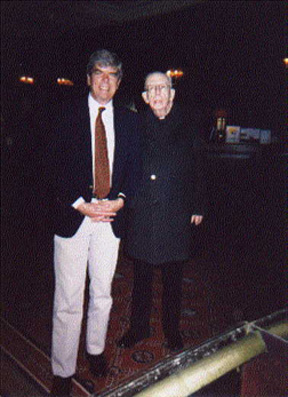
Father
Francis Jerome Gray, OFM, the Dept head of History at Quincy
College, known as FJ retired to Chicago. Tought me that learning
something new is way to much
fun.

FJ in his QC
years.

I
worked for IBM in Philadelphia, PA
for two years. Digital
Equipment Corp. was the
next job for 13 years in St. Louis, Philadelphia, NYC, San Mateo, CA.
and Boston. From Digital in Boston, I went to Sun Microsystems, Inc. in
1983 in
their Boston office for a year. In 1984, I opened Sun's PA office in
Wayne, PA.
During that time I have lived in Wayne, PA., Brooklyn Heights, NY, St. Louis, MO., Woodside, CA., Harvard, MA [outside of Boston], and then back to Wayne, PA. outside of Philadelphia (N40.03'04", W75.24'34") and then to Ocean Ciy, MD.
I married Diane Marie Rider on Sunday, March 11, 1979, at St. Ursula's Catholic Church in Baltimore, Maryland. Diane Rider, 1-28-1948--, was born in Baltimore, Md. Diane's parents are James L. Rider 1924--1989, and Lois Koenig, 1927--, both born in Baltimore, Maryland. Both are descendants of German and Irish immigrants.
Two days after Diane was born Mahatma Gandhi was assassinated. Bread was 14 cents a loaf and gas was 16 cents a gallon. Harry S. Truman was president and there wasn't a vice president due to the death of Roosevelt.
Diane and I went to visit the Australian McTiernan's in October 1988. Frank and Suzanne Watson and Marie Blake were great hosts. Unfortunately, Marie's husband, Eric Blake was at sea during this visit. We had a great time in Brisbane, Australia, seeing the World 1988 EXPO come to a close and all the great sights along the coast of Brisbane.

The great events besides getting married was
playing
polo at Chukker
Valley Farms in Gilbertsville, PA and playing with the cadets in
indoor
polo during the winter at Valley Forge Milatary Academy in Radnor, PA
from 1970 to 1979. The indoor polo arena was built by Carnegie
after The Great War. Almost every big city had a downtown
armory
manned by the US Army Calvary. Many had indoor polo fields as
playing
polo keeps the calveryman sharp as the 8 polo swipes at the ball are
the same as saber strikes.

Then in the 1990s it was yacht racing at the Liberty Yacht Racing Club
in center city Philadelphia on the Delaware River with the Ben Franklin
Bridge above.
Diane and I did
live
outside of Philadelphia in Wayne, PA.
and had two children. They are,
 5.4.2.3.1.1. Jeremy Patrick
McTiernan,
8-24-1978--10-8-2017, born in Omaha, Nebraska on Thursday,
8-24-1978,
at 12:45 PM and died in Philadelphia, PAA at 12:08 AM on 10-8-2017.
Jeremy was baptized by Father George Thomas at Our Lady of
the Wayside Catholic Church in Portola Valley, Calif., on 11-2-1980.
Joe Feeney and Patricia Sheridan were the sponsors.
Joe and Patti eventually got married.
5.4.2.3.1.1. Jeremy Patrick
McTiernan,
8-24-1978--10-8-2017, born in Omaha, Nebraska on Thursday,
8-24-1978,
at 12:45 PM and died in Philadelphia, PAA at 12:08 AM on 10-8-2017.
Jeremy was baptized by Father George Thomas at Our Lady of
the Wayside Catholic Church in Portola Valley, Calif., on 11-2-1980.
Joe Feeney and Patricia Sheridan were the sponsors.
Joe and Patti eventually got married. Jimmy Carter was president and Walter Mondale was vice president when Jeremy was born. Bread was 42 cents and gas was 63 cents a gallon.
Jeremy attended the Village Nursery School in Harvard, MA. He attended kindergarten at the New Eagle School in Wayne, Pa. Jeremy attended St. Katharine of Siena grade school in Wayne, Pa. till the end of 5th grade. He attended The Haverford School in Haverford, Pa for the 6th grade. Jeremy attended the Delaware Valley Friends School (DVFS) in Haverford, Pa. for the 7th, 8th and 9th grades.
Jeremy spent his 10th and 11th year of High School at The Malvern Prep School in Malvern, Pa. Jeremy finished his 12th year, graduating from Conestoga High School in T/E Township, PA in 1997. Jeremy's best subjects are math and reading.
Himself attended St. Anselm College in Manchester, NH in September 1997 for his first year of college and later attended Mitchell College in New London, CT.
Jeremy has played
organized junior baseball and was one of the best
inside right wings in the Junior soccer league. He is also an avid
swimmer and soccer player. He made the All Star Little League baseball
team in 1987 and 1989. He played an exceptional 3rd base in the 1991
Radnor league. Later, in High School he played ice hockey and did rock
climbing. He also is an accomplished snow boarder and recently has
taken up SCUBA diving.
Jeremy was on the LaCross team at Mitchell College.
Jeremy joined the
United States Marines in January 2006 and went
through Parris Island boot camp in SC. After transferring from
Camp Lejune in NC to 29 Palms in southern CA,
Jeremy volunteered to go to Iraq and was stationed at Camp Grizzly
in Falluja, Iraq. Jeremy's job was to provide convoy
security.
Ronald Reagan was president and George Bush was vice president when Meghan was born. Bread cost 89 cents a loaf and gas was $1.17 a gallon. Meghan attended nursery school at The Good Samaritan School in Paoli, Pa. Meghan attended The Crossroads School in Paoli, Pa. for grades K, 1st and 2nd. In 1993 Meg started in the 3rd Grade at the Devon Elementary School in Devon, Pa. and attended the middle school in T/E Township. Currently Meg is attending Conestoga High School and really loving it.
Meg loves to ski and
ice skate with a heart that will not quit. Meg
has played soccer and baseball with a never stop trying attitude. After
only one lesson Meg became a great skier. In 1998 Meg won two blue
ribbons in her first horse show at
the HRE of the Devon Horse Show in Devon, PA. In June 1998 Meg also won
a 1st place gold medal in her first ISI figure
skating competition in Newark, DE and a 3rd place medal in
St. Louis at the ISI Competition in August 1998. In 1999, Meghan did
her first SCUBA dive in St.
Maartens, DWI.
On 9-9-2017, in
Strafford PA, at Our Lady of Assumption Catholic Church, Meghan married
Eric Pitts. They intend to live in Wilmington, DE.
In 1890, St. Louis became the 4th largest city in America. NYC, Chicago and Philadelphia were the first three. The reason the McTiernan family may have settled in the St. Louis, Missouri area might well have been the large extensive railroad complex that existed in East St. Louis, Illinois in the later part of the 19th century. It appears that the only way to get from east coast to the west cost was to go through St. Louis. This drew a large number of Irish to the St. Louis area. When airplane travel became the norm it killed the need for a country wide hub for railroads like St. Louis.
Father Catterlin, a Redemptorist priest, was highly regarded by Anne McTiernan, nee McGreal. Anne may have insisted that the family settle near the Rock Church on Grand Ave., in St. Louis where Father Catterlin was stationed. Her sisters were already in St. Louis when Hugh VI and Anne immigrated which might have been their reason for settling there. Why the McGrail or the McTiernan family picked St. Louis rather than Boston or NYC is unknown at this time.
Kerry Patch, a neighborhood section of early St. Louis, MO was the traditional area where most of the Irish settled. Kerry Patch was bordered on the west by Jefferson Ave., on the east by the Mississippi River, on the south by Easton Ave. and on the north by Natural Bridge Blvd.
5.4.3. Patrick McTernan, 2-6-1869-->1900, was the third child born to Hugh McTernan V and his wife Mary Carney. Patrick was born in Sheskin, he was baptized on February 6, 1869. The sponsors were Francis Dolan and Mary Carney. Francis Dolan may have been Hugh V's cousin, descendent from Hugh McTernan's III wife, Mary Dolan. Nothing is known about the other sponsor, Mary Carney. Carney was the maiden name of Patrick's mother.
According to his brother John and verbal family history, Patrick McTernan worked in a shop in the town of Carrick-on-the-Shannon as a young lad. Hugh McTernan VIII told me in 2002 that Hugh McTernan V used to walk from Sheskin to Carrick-on-the-Shannon and back to visit Patrick when he worked in the shop.
It is believed that Patrick joined the British Army around 1900, and was killed while he was in the army. He may have gone to fight one of Queen Victoria's Little Wars in the Sudan or East Africa as they were called. Very little is known about Patrick. The British Regiment that he joined might be the Connacht Rangers or the Inniskilling's Regiment.
5.4.4. Jane Mary McTernan, 1872--c.1872, was the fourth child born to Hugh McTernan V and his wife Mary Carney. Jane was born in Sheskin and baptized on July 13, 1872. The baptismal sponsors were Michael Carney and Jane Dolan. Michael Carney may have been Jane's uncle, the brother of Mary Carney. Jane Dolan might have been Hugh McTernan's V cousin, descendent from Hugh McTernan's III wife, Mary Dolan. Jane Mary McTernan died at birth or soon there after.
5.4.5. John McTernan, 1874--1949, was the fifth child born to Hugh McTernan V and his wife Mary Carney with the sunshine in his vest pocket.
 John was the youngest
of Hugh V and Mary Carney's children. He was
born in Sheskin, Drumahaire, on Wednesday, August 12, 1874. John was
baptized on December 1, 1874. The sponsors were Joseph Woods and
Bridget Gallagher. John farmed Sheskin, the McTernan family land.
John was the youngest
of Hugh V and Mary Carney's children. He was
born in Sheskin, Drumahaire, on Wednesday, August 12, 1874. John was
baptized on December 1, 1874. The sponsors were Joseph Woods and
Bridget Gallagher. John farmed Sheskin, the McTernan family land.
John married Ellen Woods, 1878--6-19-1940. Ellen was born in 1878, and may have been the daughter of Joseph Woods, one of the baptismal sponsors of John McTernan, 1874--1949. Ellen lived about seven years in America before returning to Leitrim to marry John McTernan. Ellen's sister also went to America. She lived at 1017 Madison Ave., Bridgeport, CT
One of the things the
John McTernan family might have done in the
1930's was go to the all night dances that were being held in various
places in County Leitrim. Killargue
had such a place. It was called Tommy
Liddy's loft. The Liddy's
supplied the music and played and danced all night.
The "Loft" building was built by Con Kelly. They also had a dance
hall by the name of The
Rainbow Room in Glenfarne, Co Leitrim.
At 74, John died on Tuesday, July 5, 1949. Ellen McTernan, nee Woods passed away at 62 years of age on June 19, 1940. Both John and Ellen are buried in the McTernan grave at the Abbey of Creevelea, near Drumahaire (T) according to Abbey records.
John McTernan and Ellen Woods had three children. They are,
5.4.5.1. Mary Anne Flynn, nee McTernan, 12-11-1911--9-18-1990, married John Flynn. Mary Anne and family immigrated to England in March 1943. John had three children from a previous marriage, one lives in South Africa, one in Dublin and one in Co. Donegal. Mary Anne died in England on September 18, 1990 and was buried in Coventry on September 24, 1990. John's children are,
5.4.5.2. Hugh McTernan VIII, 4-16-1916--6-6-2006, lived on Sheskin until right after the Second World War and the lived right outside of Manorhamilton in Toothfield.
Photo of Florie and Hugh McTernan VIII. Hugh VIII still farms Sheskin which has been in the McTernan family since before 1850.
Photo of John (Mickey) McTernan and his first cousin Hugh McTernan VIII About 1970 or 1971, Hugh VIII met John Francis McTiernan, 1901--1989, in Ireland. This was the first time in almost a 100 years that the Irish and American branches of the McTernan family had come together.
5.4.5.3. Ellen Flynn, nee McTernan, 7-1-1919--7-1989, married Thomas Flynn Sr., 1914--5-1994. Tom came over from Ireland in the early 1930s by working boat as a crew. He had told the captain that he had been to sea before. The boat hit bad weather on the Irish Sea and Tom spent the 3 days on ship in bed not working.
Photo of Tom Flynn and his wife Ellen McTernan taken in England
Ellen and her sister immigrated to England in 1943. Tom and Ellen lived at 66 Faseman Ave., Tile Hill, North, Coventry, West Midlands. Tom died in England in 1994 at the age of 80. Ellen died in England in July of 1989. Her brother Hugh was able to attend the funeral services in England. Ellen and Tom had five children all living in England. Angela Maureen not hown. The other four are,
 5.4.5.3.1.
John
Joseph Flynn, 5-17-1945--, born in
England. John married Carol Yates, 7-23-1949--. As of 1998, the family
lives in Cornwall, England. They have two children. They are,
5.4.5.3.1.
John
Joseph Flynn, 5-17-1945--, born in
England. John married Carol Yates, 7-23-1949--. As of 1998, the family
lives in Cornwall, England. They have two children. They are,
5.4.5.3.1.1. Simon John Flynn, 3-17-1969--, born in Coventry, England. Simon married Jacqueline and have two daughters. They are,
5.4.5.3.1.1.1. Lawen Flynn, the first of two children of Simon John Flynn and his wife Jacqueline, born in England
5.4.5.3.1.1.2. Robyn-Ellen Flynn, the second of two children of Simon John Flynn and his wife Jacqueline, born in England
5.4.5.3.1.2. Jason Anthony Flynn, 2-6-1971--2021, born in Coventry, England.
5.4.5.3.2. Angela Watson 1946--, born in England, the second oldest child of Ellen and Tom Flynn. Maureen married a man by the name of Watson who died at a young age and had four daughters. They are,
5.4.5.3.2.1. Unknown Watson,
5.4.5.3.2.2. Unknown Watson,
5.4.5.3.2.3. Unknown Watson,
5.4.5.3.2.4. Unknown Watson,
5.4.5.3.3. Maureen Bower, nee Flynn, 7-16-1947--, born in Coventry, England. Maureen married Carl John Eyre Bower, 1943-7-29-2021, on 11-21-1965. They live in Cheshire. They both came to visit the American McTiernan's in August 1996 on the way to the Olympics in Atlanta, GA. While they were there their daughter Sharon gave bitth to her son, Peter. Carl and Maureen made another visit to us in September 2001 for a week. We all went sailing on a 34 foot Pearson sloop in the Chesapeak Bay. The first overnight was spent in the cove at Queenstown, MD and was very beautiful even with the 40 to 50 mile per hour wind that came through during the night. The second night at anchor was at Annapolis, MD. Even when on the way we ran aground, it was still fun. They have four children. They are,

5.4.5.3.3.1.1.
George Dunne, 8-4-1996--, born in London,
England. See photo at left. George lives in Viet Nam.
5.4.5.3.3.2. Craig
Thomas Eyre Bower, 1-6-1967--, born in
Nuneaton, England. Craig made his living selling real estate for some
time. He then went on a grand tour of America in the Fall of 1989.
Craig paid a visit to the McTiernan's in Wayne, Pa. in September of
1989.
At the age of 22 he was still very active in the local football league,
playing for the Styles Team in the Saturday league. Craig then spent
some time working for one of the larger worldwide cruse lines, seeing
many parts of the world. He is also racing scrambler motorbikes in his
spare time as his dad did. In 1996, he graduated with a degree in
Mechanical
Engineering and was working for the Land Rover Company in England.
Craig is now a part owner and managing his uncle's partnership business
and plant. Craig
was married in December 2001 in England to a lovely woman by the name
of Lucie who is in Oncology / breast reconstruction surgin. They
have two children.
5.4.5.3.3.2.1. Jack
Bower, 10-2003--, born in England.
5.4.5.3.3.2.2. Ella Bower, 5-7-2006--, born in England.
5.4.5.3.3.3. Anita
Denise Eyres, nee Bower, 2-24-1969--,
born in Nuneaton, England. Married John Eyres and have four
children. Anita and John have bought and manage a PUB in
Cheshire, England.
5.4.5.3.3.3.1. Courtney May Eyres, 5-17-1994--, born in England.
5.4.5.3.3.3.2.
Samuel John Eryes, 11-24-1998--, born in
England. currently lives in Brisbane, QLD, Australia.
5.4.5.3.3.3.3. Holly Eryes, 12-31-2008--, born in England.
5.4.5.3.3.3.4. Freddie Eryes, 1-13-2006--, born in England.
5.4.5.3.3.4. Heidi
Marie Bower, 2-24-1973--, born in
Nuneaton, England. In 1996, Heidi was working in Greece in 1997 and
then worked in Manchester, England. Heidi paid a visit to the
McTiernan's in Wayne, PA. in March 1998 while on holiday in
America. Heidi was married to Brad Atkins in the summer of
2004. They have two children.
5.4.5.3.3.4.1.
Gracie May Atkins, 4-26-2006--, first of two children of
Heidi
Marie Bower and Brad Atkins born in
England.
5.4.5.3.4. Thomas Anthony Flynn Jr., 6-2-1950--1-5-2121, born on Friday in Coventry, England. Thomas married Jane Bray, 1-28-1953--, and has two children,
5.4.5.3.4.1. Stephen John Flynn, 2-29-1979--, born in Coventry, England.
5.4.5.3.4.2. Russell Flynn, 9-22-1981--, born in Coventry, England.
5.4.5.3.5. Theresa Angela Lane, nee Flynn, 6-23-1956--, born in Coventry, England. Angela married Stephen Lane on 2-21-1976. Angela and Steve live in Coventry. They have four children. They are,
5.4.5.3.5.1. Darren
Stephen Lane, 8-7-1978--, born in
Coventry, England. Is married with two children.
5.4.5.3.5.2.
Garreth Paul Lane, 2-14-1980--, born in
Coventry, England. Garreth Paul Lane and his wife have three
children.
5.4.5.3.5.3. Carly Lane, 5-2-1982--, born in Coventry, England.
5.4.5.3.5.4. Nicole Lane, 1988--, born in Coventry, England.
In America, the 1890's, were called the "Gay Nineties". Apparently life in the west of Ireland during the 1890's, must have been much harder. Three of the four Sheskin McTernans left Ireland for new lives in different parts of the world. Michael McTiernan left for Australia, John McTernan remained in Ireland as did his son, Hugh VIII while two of John's daughters immigrated to England. Hugh McTiernan VI left for America, and Patrick McTernan's final destination is unknown, perhaps the British Army records will tell.
As of 1998, there are
at least ten known generations of McTernan's
with over one hundred known descendants of Hugh McTernan I. The
descendants of the first Hugh McTernan I, born in 1708, are living in
at least four different countries, Ireland, America, England, and
Australia.
My direct line of descendants from the McTernan family from Sheskin and the Carney family from Carrigeencor have been in America since 1895, in Australia since approximately 1892, and in England since approximately 1943. It is a late chapter of the flight of the wild geese but none the less, part of the heritage of Ireland and the McTernan's.
The 30 page history of the McGreal / McGrail family from Lisfuiltaghan and the Beirne / Bryne / Byrne family from Drumrewey.
The 10 page history of the Carney / Kearney family from Carrigeencor
Others looking for information on their McTernan / McTiernan families, McGreal / McGrail families, Carney / Kearney families and Beirne / Byrne / Bryne families.
All known McTernan descendants from Sheskin.
St. Theresa Oratory, Creevelea Drumkeeran, Co Leitrim.
Brand new is the Family Tree Maker JAVA program that shows my entire family, cousins, uncles, aunts and ancestors etc. in a graphical box layout allowing you to search the entire file to see if you are included. That home page is at http://www.familytreemaker.com/users/m/c/t/Michael-P-Mctiernan/tree1.html
Based on the DNA test started in 2001 there are currently 141 MacTighernans that have completed the test and fall into the 21 different DNA catagories. They live in thirteen countries on five continents. Of those completed 141 tests, 58 are in the USA, 24 in England, 33 in Ireland, 8 in Canada, 6 in Australia, 6 in Scotland, 6 in Northern Ireland, 2 in Indonesia and one each in New Zealand, Zimbabwe, Iraq, Spain and South Africa. So far 93 of the 141 MacTighernan families originate from Co Leitrim, 9 from Co Sligo, 4 from Co Cavan and 2 from Co Roscommon and 1 each from Cos Cork, Kerry and Mayo with 53 not knowing their townland and 26 not knowing their county. While 115 know their counties, the specific townland of origin for 53 of the 141 is still unknown. If you know of any male McTernan / McTiernan / MacTiernan that would want to be included in our family DNA test please let me know.
The
O'Connor Don, Cathal Crovderg O'Conor's DNA scores are in and so far
none of the MacTighernans in the DNA test relate to him.
Help solve the
Great
MacTighernan Mysteries, http://mctiernan.com/10mysteries.htm
On the my maternal side I descend from Tara, or more specifically the mtDNA subgroup T4, who was one of the 7 European daughters of Eve Even though I am a male McTiernan, my mother was a Fries and her mother was a Blaies and her mother was a Bender so I have their mtDNA but my children would not. They would have their mother's mtDNA not mine. The mtDNA is passed down maternally not paternally. The maternal mtDNA tracking is explained at http://mctiernan.com/mtdna.htm
Regards
PO BOX 3039
Ocean City, MD 21843 USA
610.256.7447
michael@mctiernan.com
http://mctiernan.com
NOTES
Ellen Flynn, nee McTernan told me many years ago that she thought the first name of her Great Grandfather was Patrick. Based on the fine research done by the Ulster Historical Foundation in January 1999, it has been determined that Ellen Flynn's, 1919--1989, Hugh VIII's, 1916--2006, and Mary Anne Flynn's, 1911--1990, Great Grandfather was named Hugh, shown in this history as Hugh McTernan IV, c. 1791--. [see chart for a better view of this]
There was a Hugh McTernan baptized in Inishmagrath on February 4, 1838. His parents were Tom McTernan and Anne McGuinan. It could be that this Hugh is Hugh V.
Anne McTiernan, nee McGreal, 1870--1958, was given a plot of land located in Maryland Heights, MO, USA. as payment for a debt from a Mr. Schafer.
A Bryan McTernan married Jane McDermott and had at least one child, named Hugh McTernan who was living in the Townland of Rushill, Kilronan civil parish, Co. Roscommon in 1815. In 1818, he may have been living in Gurtruska (Gortnacorkoge?).
There was a Sept of the McTernan family that were chiefs of Teallach Donnchadho (modern Tullyhunco), in Co. Cavan. This sect was extremely important from 1250 to 1550.
The Compossicion Boke of Conought is a book that list the agreement of the Irish Chieftains to accept the Common Law in 1585. It was signed by a Farrell McTiernan, Gentleman of Cloylagh, civil parish of Ahamlish, Co. Sligo.
Three different McTernans at three different times married three McMorrow girls, two named Anne and one named Mary. 5.4.1. Michael McTernan, 1867--1937, married Anne McMorrow, 1864--, in Australia in 1892. Charles McTernan, <1870--, married Anne McMorrow in 1880, in Ireland. Owen McTernan, 1831--1900, married Mary McMorrow, <1840--<1900.
Additional names without a confirmed connection to the McTernan or McGreal families are;
1. Patrick McTiernan, <1844-->1866, married to Mary McMorrow, <1844-->1866, with a daughter,
1.1. Catherine McTiernan, 12-1-1866--, born in Drumkeeran.
2. Charles McTernan, --<1911, married Mary Dolan. They had at least one son.
2.1. Farrell McTernan, --3-9-1911, married to a woman named McDonald. Farrell died in Edinburgh, Scotland of Emphysema.
3. Hugh McTernan, 1804-- 4-13-1866, died in the Townland of Killavogey, parish of Killanummery at 62 years of age.
A John McTernan was present at Hugh's death. Hugh was married at the time.
4. Nora McKernan ?
5. McWorthy ?
6. Judge
7. Captain McTernan, 1837--1911, this name was mentioned by Ellen Flynn, nee McTernan, 1919--1989, and is also noted in the 1880 dispute called the Land League of Leitrim. Seems as though Captain McTernan offered 6/8 discount on the land rents and the rest of the Leitrim landlords were offering 2/4 discount to the starving farmers. He had estates in Mount Allen and Lyonstown both in Co Roscommon and Heapstown, Co Sligo.
8. McHugh, a name mentioned by Anne McTiernan, nee McGreal was a local person in Co. Leitrim near her home. Most likely this was the P. A. McHugh that was the editor of the "Sligo Champion" and the person that was very active with the Nationalist Movement along with Bernard McTernan.
The McNiff family must have had the best looking girls in Co. Leitrim. There are three McNiff women that married into the McTernan and McGreal families.
1. Bridget McNiff, married Thomas Byrne sometime before 1837.
2. Peter McTernan, <1815--, married Anne McNiff, on July 20, 1835, and had a son named Hugh McTernan. (Peter's connection to the descendants of Hugh McTernan I is not confirmed.)
Thomas Byrne may have been the father of Mary Byrne, the wife of Bartley McGreal Jr.
3. Patrick McTernan married Mary McNiff on February 20, 1835. Patrick McTernan was the son of Hugh McTernan III and the father of Hugh McTernan V. Anne McGreal, the wife of Hugh McTernan VI added the "i" in the name McTernan, making it McTiernan. The McTiernan's in Australia did also.
Getting married on Saturday must be a modern way to do things. Most of the earlier weddings took place during the week. An explanation might be that, as farmers, the McTernan's worked every day of the week, with the possible exception of Sunday. So being married on Tuesday wasn't any different than Saturday.
Listed below are several people that have no clear connection to the McTernan family line in this history, except the same name and approximately the same residence, Killargue or Drumahaire.
1. James Judge was the witness at the wedding of Thady McTernan, 1826--, and Mary McGoey on January 29, 1866. Thady's father was named Owen McTernan.
They were married at the Chapel of Mullies, in the District of Lurganboy, Union of Manorhamilton. Rev. Stephen McTernan is buried at the rear of the Church of the Annunciation Mullies. John McTiernan, 1901--1989, remembered his mother talking about an Irish friend named Judge.
2. Mary Byrne, c.1845--, from Moneyduff, Drumlease parish married James Feeney, c.1845--, from Greenaun, Drumlease parish on June 6, 1865, at the Chapel of Drumlease, District of Lurganboy, Union of Manorhamilton. Patt Byrne was listed as Mary's father. He was a farmer. Bernard McHugh was listed as a witness at the wedding.
3. Patt McTernan, 1838--, married Mary Galagher, 1839--, on November 19, 1866, in the Chapel of Killargue, Barony of Drumahaire, Union of Manorhamilton. Patt's father, Owen McTernan, was listed as a laborer. Both Patt and Mary were listed as servants and living in the Townland of Louahughtha.
4. Bryan McTernan, 1830--, married Mary McHugh, on October 15, 1865, at the Chapel of Killargue, Barony of Drumahaire, Manorhamilton. Bryan was a widower from the Townland of Gortnacorkoge, Killarga parish which is right across the road from Sheskin.
5. Hugh McTernan, c.1846--, married Margaret Giligan at the Chapel of Cloonclaire, Barony of Drumahaire, Manorhamilton. Hugh's father, John McTernan, was listed as a carpenter. Hugh was a shoemaker. A witness to the wedding was Michael McTernan. This Hugh McTernan, c.1846--, may have been an additional child of Owen McTernan, 1821--1900.
6. Thomas McTernan, 1841--, married Mary Flynn, 1845--. They were married on June 8, 1865. Thomas was a shoemaker living in the Townland of Corcalancy, Barony of Drumahaire, Union of Manorhamilton. Thomas' father was Owen McTernan, listed as a farmer on the wedding certificate.
7. Pat McTernan, 1836 (1846?)--, from Attar married Anne Flynn on February 1, 1866, at the Chapel of Killargue, Drumahaire, Manorhamilton. Pat's father was Michael McTernan, a farmer. Owen McTernan was listed as the witness.
8. James McTernan, 1843--, married Margaret Harrogan, 1845--, at the Chapel of Killargue, Drumahaire, Manorhamilton. James' father was Jerry McTernan. Thady McTernan was the witness. James was a widower at the time he got married and was living in England.
9. Jeffry McTernan, rented land from George Lane-Fox in the Townland of Drumconor, Killanummery parish in 1857.
10. Hugh McTernan, --<1921, married a girl named Mary, 1846-- 3-12-1921. They lived in the Townland of Lisfausum?, District of Drumkeeran, Union of Manorhamilton, and had at least one son.
10.1. Charles McTernan, -->1921.
11. Patrick McTernan, -->1918, married to a girl named Mary, 1844--9-25-1918. They lived in the Townland of Lisgorman, Cloonlogher Catholic parish, Killarga civil parish, Barony of Drumahaire, Union of Manorhamilton.
12. James McTernan, --<1924, married a girl named Mary, 1844--12-28-1923, and lived in the Townland of Tullycoly, Killanummery parish, District of Drumahaire, Union of Manorhamilton. They had a daughter.
12.1. Ellen McTernan, -->1924, lived with her parents in Tullycooly in 1924.
13. Anne McTernan, --2-14-1835, died in Inishmagrath parish.
14. Bernard McTernan, --2-14--1838, died in Inishmagrath parish.
16. Mary
McTernan, 1847--, married Pat Cunningham, 1842--,
at the Chapel of Drumlease, Registrar of Lurganboy, Poor-Law-Union of
Manorhamilton on April 27, 1865. Mary's father was named Bryan McTernan
from
the Townland of Conray and previously to that the family lived in
Moneyduff. Bryan also had a son by the name of Patrick who in
turn had a son by the name of Michael who in turn had a son by the name
of Thaddy.
17. Peter McTiernan, <1807-->1827, married Winifred Clancy. They were from the parish of Killarga. Left for St. John, New Brunswick, Canada on July 12, 1827. They had at least 3 daughters,
17.1. Margaret McTiernan, -->1827, left with their parents for New Brunswick, Canada.
17.2. Winifred McTiernan, -- >1827, left with their parents for New Brunswick, Canada.
17.3. Bridget McTiernan, -->1833, lived at 121 Franklin St., New York City, N.Y., as of July 15, 1833.
The 1857 Griffith's Evaluation list a Bryan, Thady and Charles McTernan as being house holders in the Townland of Curry. They may be the sons of Owen McTernan, --<1857, who were listed previously as living in the Townland of Curry. Curry is one Townland away from Sheskin
The  R.M.S. Campania.
was
the ship that brought 5.4.2. Hugh McTernan VI, 1866--1944,
and his wife Anne McGreal to America in June of 1895.
R.M.S. Campania.
was
the ship that brought 5.4.2. Hugh McTernan VI, 1866--1944,
and his wife Anne McGreal to America in June of 1895.
It was commissioned
by the Cunard Line in 1893. The ship was only
two years old when they made the trip. It held over 2,000 passengers.
It was built in Scotland and could do 22 knots per hour, if you could
shovel 20.5 tons of coal per hour to keep it going. It once broke a
speed record by crossing the Atlantic in 5 days, 17 hours and 27
minutes.
Two years after the S.S. Campania took Hugh McTiernan VI to America it was chosen in 1897 to be used in the Queen Victoria Diamond Jubilee Celebration and was reviewed by Queen Victoria on the Anniversary of her 60th year of reigning the British Empire. The S.S. Campania was the largest ship of the Cunard Line. It carried 2,000 members of the Press and the entire British House of Commons during this review.
 Around 1915, it was
refurbished by the British for use as an aircraft carrier. In a
collision with the battleship HMS Revenge in the Firth of Forth Sea off
Scotland the S.S. Campania sank on November 5, 1918.
Around 1915, it was
refurbished by the British for use as an aircraft carrier. In a
collision with the battleship HMS Revenge in the Firth of Forth Sea off
Scotland the S.S. Campania sank on November 5, 1918.
From the annals of the four masters it states that in the year 1433 there was a famine in the summer and that year was known as "the summer of slight acquaintance", because no one recognized friend or relative to avoid being asked for food in consequence of the great shortage.
SOLVE
Locate the personal papers of Rev. Stephen McTernan, 1811- -1906, called the "copybook" last known whereabouts was St. Clair's Chapel in Manorhamilton. This is the daily diary of the McTernan family of Sheskin . It will tell a vast amount of information on the McTernan family line.
Solved: the pamphlet written by James McTernan, <1815--1856, the first of the Mount Allen McTernans to settle at Heapstown, Co Sligo entitled "An Address to my Fellow Countrymen", in which he claimed descent from Tiernan O'Rourke, Prince of Breffni. [Taken from John C. McTernan's book, "In Sligo Long Ago" , p 581]
Locate the American descendants of John McTernan, 2-18-1862-->1906. He was in America in 1906. John is the son of Owen McTernan, 1831--1900, and the nephew of Rev. Stephen McTernan. He may have visited the family of Hugh McTernan VI in St. Louis around 1906.
Deed search for the McTernan's for the Townland of Sheskin. Registry of Deeds, Henrietta St., Dublin, Ireland.
A Celie McTiernan from Drumkeeran arrived in the US between 1897 and 1902.
John McTiernan from Drumshanbo arrived on the S.S. Teutonic between 1897 and 1902.
Kate McTiernan from Drumahaire arrived in the US between 1897 and 1902. A Kate McTernan met her brother, John, 1885-->1905, in New York as he got off the ship, S.S. Columbia. John arrived from Glasco, Scotland on April 16, 1905. Kate lived at 5 West 128th St. in New York.
A Catherine McTiernan was also met on the boat from Glasco by her cousin, James Dolan who lived at 540 East 17th St., NYC.
Charles McTiernan, of South Carolina has found a Col. Pat Tiernan that was on George Washington's Staff at Yorktown.
John C. McTiernan of the (Albany) Little Falls, NY line stated that a soldier by the name of Tiernan was in the boat with George Washington when he made the famous crossing at the Delaware River. Other research by Charles McTiernan from SC. states that this (Mc)Tiernan was rebuked by Washington for not having his entrenchments built on time. This is detailed in the famous portrait entitled "Washington before Yorktown",
The following names come from the book, "Drumahaire, Story and Pictures" by P. O'Duigneain.
At the Drumlease National School, 1912 to 1990.
The Newtownmanor National School in 1931 had the following students:
Charles McTernan was the one teacher in the Doonkelly National School in Drumlease parish in 1826.
J. McTernan was the teacher in a Day School in Killargue in 1835.
Michael McTernan, 1876--1960, (in the T3D DNA group) and Annie McCann had 2 sons that became priest. They were:
1. Monsignor Michael McTernan P.P., 1919--, born in Glenague, Drumlease parish, the son of Michael McTernan and Annie McCann, was ordained in 1942 in the Diocese of Bermingham. He has ministered in the Diocese of Bermingham and returns to his native parish of Drumahaire on a regular basis.
2. Rev. Sean
McTernan, 1926--, born in Glenague, Drumlease parish.
15. Thomas McTernan, <1854-->1874, and his wife Anne McCann of Killaboggy, parish of Killanummery had a child whose birth was registered at the Registrar's District of Manorhamilton and the Barony of Drumahaire. Thomas McTernan was listed as a farmer. Thomas and Anne's son was,
15.1. John
McTernan, 12-24-1874--,
James McTernan, c.1835--<1910, (unconfirmed link to Hugh McTernan IV) married a girl named Mary, 1837--9-12-1910. They lived in the Townland of Ussihmash[?]. There is a townland of Unshinagh in Inishmagrath just west of Lough Allen very near the ancient Abbey of Tarmon. If the two townlands are in fact the same then this James McTernan, c.1835--<1910, is James McTernan, 1836--1-13-1891, who died at Inchina and is buried at the Ancient Abbey of Tarmon. His wife Mary, 1837--9-14-1910, is also buried there. Their son Patrick McTernan, 1868-- 8-10-1879, and their daughter-in-law, Anne, 1865--5-27-1907, are also buried there. (There is a Mrs. McTernan, <1910--9-1925, and a James McTernan, 1863--11-13-1950, that are also buried in the Ancient Abbey of Tarmon.) This may well be the McTiernan family from Tullycorka, Inishmagrath, Co Leitrim.
The Ancient Abbey of Tarmon is the ancestral burial site for the McGrail family from Lisfuiltaghan, Inishmagrath civil and Catholic parish, Co Leitrim. Anne McTiernan, nee McGrail's family, [wife of Hugh McTernan VI, 1866--1944] is buried in this abbey.
Mary McTernan, 1837--1910, died in the District of Drumkeeran, in the Union of Manorhamilton. She had a son,
James McTernan, -- >1910,
Additional McTernan's from the Linen Board of Ireland from March 10, 1796 to June 1, 1796 for growing flax are:
A Thomas McTiernan and his family were evicted from his farm in the parish of Killenummery in August of 1887.
The evictions of Irish farmers in North Leitrim were numerous. In December 1887, Captain Hugh McTiernan from Mount Allen, Co. Roscommon held court in the Dowra Petty Sessions where 3 men and 7 women were imprisoned for intimidating a bailiff from Drumkeeran.
A Joe Woods from Killargue was an organizer of the P.A. McHugh's team for Irish football in 1886. A McTernan was on the committee to organize the G.A.A. team. John McTernan, the youngest son of Hugh V and Mary Carney married a Ellen Woods.
In 1887, the members of the Manorhamilton Workhouse committee met several times to manage the Workhouse. A Hugh McTiernan was on the 1891 committee that had several sessions dealing with the Parnell divorce case.
A James McTernan from Glencar was listed as a member of the meeting of local coopers on May 8, 1889, that was held in Manorhamilton.
E. McTernan from Manorhamilton was entered in a big bicycle race in Sligo in July 1891.
Below are listed the rent adjustments made in the 1880's on various estates in North Leitrim.
Martin McTernan, 3-3 to 2-0 on the H.W.L. Montgomery Estate.
Catherine McTernan, 3-11 to 2-20 on the George Marsham Estate.
Below is a list of McTernan's and McGreal's that were on the branches of the Irish National League in North Leitrim.
-----------------------
Drumkeeran (March 1887)
--------------------
Killenummery (Jan 1889)
Geoffrey McTiernan
--------------------
Creevelea (Dec 1887)
P. McTernan
A John Byrne ran for the board of Guardians for the Manorhamilton Workhouse. He was defeated in 1839. He was appointed Master of the Manorhamilton Workhouse shortly thereafter. Frances Byrne ran but lost for the position of Matron.
John Byrne and his family received financial aid to emigrate to Australia in 1848.
James McTiernan from Gurteen was picked as warden for the district of Cloonlougher.
In 1848, the Poor Law Commissioners asked for an investigation of the death of John McTiernan in the Manorhamilton Workhouse. The circumstances of his death were not given.
In the week of March 18, 1847 an Elizabeth McTernan had died in the fever shed attached to the Manorhamilton Workhouse.
Miss Margaret McTernan was a teacher at the school in Kilcoosy, Drumlease parish in May 1934.
In the parish of Drumlease in 1826, a Charles McTernan was the teacher at the Doonkelly School. He called the school facilities a miserable cabin.
In 1835, J. McTernan was one of the teachers of the Day School in Killargue
Rev. Michael McTernan was a curate at Drumlease from 1891 to 1895.
Brother Urban McTernan, 1909--1983, from Doonkelly, Fivemilebourne died at St. Michaels Hospital, Dun Laoighre.
Sister Mary De Sales McTernan, 1906--1965, from Doonkelly, Fivemilebourne, Rossinver civil parish, Kenlough Catholic parish went to Texas in 1923 and joined the Sisters of Incarnate Word. She died there in 1965.
The Griffith's Valuation House Books list an Edward McTiernan of the Townland of Killavoggy in the parish of Killanummery as owning a corn mill.
In 1881, a Catherine McTiernan was on the committee to establish a branch of the Land League for ladies in the Drumkeeran area of Co. Leitrim.
A Hugh McTernan from Sweetwood Lower, a farmer, signed the Oath of Allegiance for the Defenders on March 11, 1785. The may well have been the Hugh from MtAllen who would have been about 25 years old at the time.
A Thomas McTernan was part of a group that was arrested in 1881 for rock throwing. They were trying to tell the R.I.C. people that they did not like the British Coercion Bill that had become law in March 1881.
A list of subscribers for the St. Patrick's Church fund circa 1890 were:
A most interesting ceremony took place at Killasnet National School on December 21, 1889. The Rev. F. McTiernan, M.R.I.A., in company with a number of Manorhamilton gentlemen conducted an examination of the children on their knowledge of the Irish language. After a close scrutiny of their attainments in reading, writing, and singing in the old Gaelic tongue, the visitors were treated to a sumptuous repast by Father [Stephen] McTiernan.
In 1991, Father Michael McTiernan was the Cure' at St. Paul's Catholic Church in Phoenix, Mauritius in the Indian Ocean between Africa and India. He entered the Holy Ghost Fathers in September 1939. He was ordained in 1950. He then spent the next 15 years in Tanzania, Africa working with the future President, Julius Nyerere. In 1967, Father Michael transferred to Mauritius. He retired in 1984 to being the parish priest of St. Paul's on the island of Mauritius in the middle of the Indian Ocean between India and East Africa.
Father Michael
McTiernan, 1-31-1922--, was born in Dublin, Ireland.
His father was John McTiernan, 1879--c. 1929, born in Geevagh Catholic
parish, Co. Sligo. His mother was Bridget Redican, 1882--1922. John
McTiernan had 12 siblings and Bridget Redican had 7 siblings. Father
Michael has 84 first cousins. Father Michael had 2 brothers that lived
in
Ireland. His older brother Sean McTiernan, 1920--, lived in Dublin.
This is Felix and
Eoghan McTiernan's line, originally from
either the townland of Tap or Ummeryroe, Co Sligo. Based on the DNA
testing that has been done this
family and Leo McTiernan's family from Boston are related as Leo and
Eoghan are 4th cousins with their Great Great Grandfather's being
siblings. Jim (MA) and his siblings are also Eoghan and Leo's 4th
cousin.
A list of 50
MacTighernan family gravesites in ireland http://mctiernan.com/McT-gravesites.htm
John C. McTiernan was the director of the movie "Hunt for Red October". His family emigrated from Drumshanbo [parish?], Co. Leitrim in 1832 and settled in the Albany, NY area.
And more McTernan names and data
And YET more McTernan names and data
And YET again more McTernan names and data
Eoghan McTiernan's extensive family web site is at http://www.e.mctiernan.btinternet.co.uk/Welcome.html
Killarga Parish, Co. Leitrim, Census of Ireland, 1901
McTiernans / McTernans buried in various cemeteries in and around Killargue and Drumahaire.
The Beirne / Bryne / Byrne History
Michael McTiernan



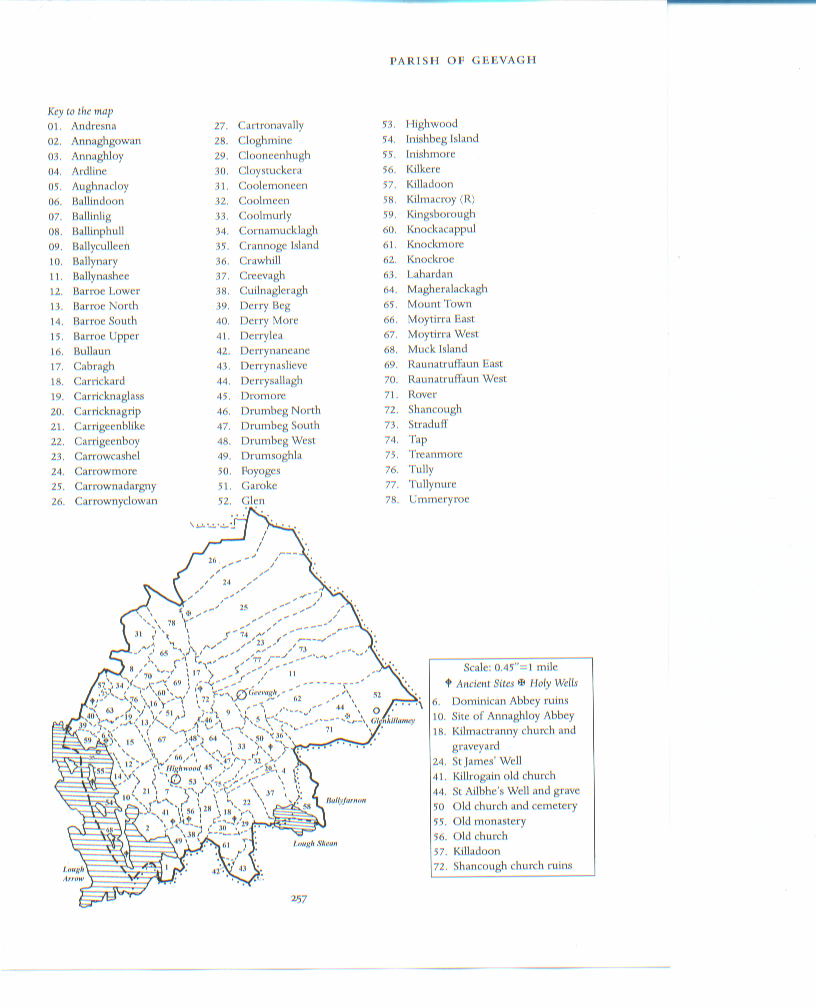


![Central High School [1870 photo].](cenths.jpg)


